



Pop'n Music 10 on PlayStation 2 is like stepping into a sugar-coated anime festival where musical notes wear tiny faces and the protagonists are a rabbit and a cat arguing about tempo. The series is known for cheerfully refusing to pretend it's a real instrument and instead celebrates the absurd: nine oversized buttons, cartoon characters that live or die by your timing, and a score that tops out at a blissful, unambiguous 100,000. This installment shipped alongside a revised PS2 controller - essentially the franchise's way of saying "we're still committed to padded, clickable blobs of joy." The game's DNA (bright colors, bubbly character sprites, and a baffling variety of modes) is all here, but what makes Pop'n Music 10 worth revisiting is less about mechanics and more about the little dramas played out by its cast of icons every time you hit - or hilariously miss - a note.
Pop'n Music's interface is a confident middle finger to realism: nine colorful buttons arranged in two rows (five on the bottom, four on top) map to nine falling columns of notes. The notes themselves, called Pop-kun, are anthropomorphized - they have faces. They fall. You hit them when they cross the red line. Great/Good/Bad is the judgment menu of shame or pride, and combo counts tick upward like a petty scoreboard that remembers every missed opportunity. Mechanically the game is straightforward but deep. The Groove Gauge monitors your performance: play well and you inch into the "clear zone," keep it topped and you trigger Fever - a purely visual flourish that changes your character's animation and makes victory look extra smug. The scoring caps at 100,000, which is sort of satisfying in a nihilistic way: no hidden bonuses, no score inflation - you're either rhythmically competent or you're not. Pop'n Music 10 inherits and polishes a smorgasbord of modes that allow characters to develop arcs across play sessions. Enjoy Mode (the laid-back, entry-level path) is where beginners meet Mimi (the rabbit) and Nyami (the cat) as timid, hopeful protagonists learning their chops. Expert Mode slams the door and throws these characters into an endurance narrative: stamina bars, harsher judgment tiers including "Cool", and a sense that the rabbit might finally confront its fear of ninth-button chords. Challenge and Cho-Challenge modes are comparable to a character subplot where rules are twisted - Norma goals and Ojama disruptions become antagonists, turning your chosen mascot into a beleaguered underdog battling through chaos. Battle Mode writes short, comedic rivalries: two players using three buttons duke it out, building a power meter to trigger minigames and fling Ojama - little performance-sabotage sequences - at each other. This is where your character's persona becomes rivalry fuel; a win animation is effectively the punchline to their arc. Osusume Mode (Recommendation) plays matchmaker, assigning Expert courses as if the game knows the inner tastes of your chosen avatar better than you do. Net Taisen (Net Battle) adds a broader social drama, trading the solo indie-film vibe for a soap opera where cabinets across Japan are your theater and leaderboards are the cliffhangers. Options let the player direct their favorite character's journey. Hi-Speed and Random rewrite the flow of notes, escalating tension like a director throwing new obstacles at the protagonist. Pop-kun and Appearance tweak the aesthetic, transforming the world your character inhabits - sometimes to their delight, sometimes to their emotional ruin. Ultimately, Pop'n Music 10's gameplay is less a cold set of rules and more a stage on which your characters perform episodic stories: fumbling beginner, confident pro, fallen hero who stages a comeback during Fever, or the glory-hogging winner of the minigame all depend on you and your timing.
True to the series, visuals lean into a bold, flat-color style: solid shapes, high-contrast palettes, and character sprites that emote aggressively depending on how you play. There aren't complex backgrounds or cinematic cutscenes; the focus is the characters and the notes. That intentional minimalism is a strength - it makes each expression and celebration feel like the entire point. When the Groove Gauge hits maximum, "Fever" triggers elaborate, often comically overblown animations. These are the game's mic drops: a tiny rabbit pumping fists like a discount idol, a cat striking a pose with such confidence it almost becomes a personality transplant. The characters themselves are the graphical centerpiece. Songs have mascots and genres have visual archetypes: the Reggae guy looks perpetually relaxed, the Eurobeat persona is bright colors and sweatbands, the Anime Hero is dramatic enough to carry its own theme song. The Classic-series medleys show up as more formal, sometimes tongue-in-cheek caricatures of orchestra conductors or ballet dancers. Because there's almost no visual clutter beyond the characters and the nine-note lanes, every faceplant or victory dance reads loud and clear - which is crucial when the story of each playthrough is told in two minutes and nine buttons.
Pop'n Music 10 is a delightful, odd little soap opera in rhythm-game form. It never pretends to be more than a game where characters live and breathe through your timing, but it understands that those tiny animated flourishes are where real charm lives. The core mechanics are accessible but offer a brutal climb for players who want to see Mimi and Nyami evolve from squeaky novices into clinically precise, fever-fueled dance machines. The PS2-era controller revision that accompanied this release felt appropriate: this franchise demands a toy-like instrument, and the hardware delivers. If you want a rhythm game with narrative subtlety, look elsewhere. If you want something that frames every success and failure as a character moment - a tiny emotional micro-arc where your rabbit experiences triumph and your cat experiences melodramatic disdain - Pop'n Music 10 delivers in spades. It's whimsical, sometimes unforgiving at high difficulty, and wonderfully expressive. That combination is why I give it an 8/10: polished, charming, and still one of the more character-driven rhythm experiences if you're willing to read stories into button presses.
 Pop'n Music 11 on PS2
 Pop'n Music 14 Fever! on PS2
 Pop'n Music 13 Carnival on PS2
 Touhou Spell Bubble on Switch
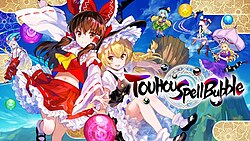 Nodame Cantabile on PS2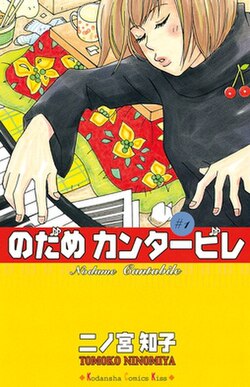
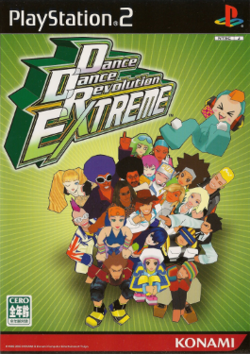
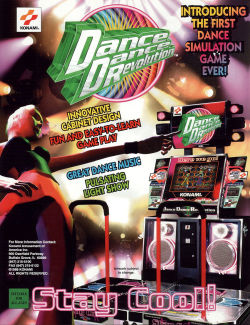 Dance Dance Revolution Extreme on PS2
 Pop'n Music 5 on PlayStation












 Another SquareThought Site