

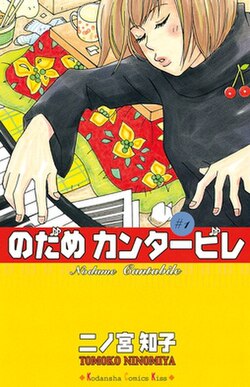

If you know Nodame Cantabile only as a laugh-out-loud manga about messy pianos and snobby Czech dreams, the PS2 tie-in is the equivalent of handing that manga a metronome and telling it to behave. Released by Banpresto in July 2007, the PS2 entry sits squarely in the niche of licensed music games: it's less about flashy action and more about translating the series' classical obsession into interactive challenges. The game doesn't try to be a rock concert simulator or reinvent rhythm mechanics; instead it leans on the intellectual and emotional core of Nodame's world - practice, performance anxiety, the tiny technical details that make or break a concerto - and turns those into obstacles for the player to overcome. For players who love the series, that's a comforting promise. For rhythm-game veterans, it's a reminder that music games can demand the same kind of discipline real musicians need: repetition, ear training, timing and, yes, the humility to be bad at something for a while before you're suddenly good enough to make a conductor cry.
The challenge identity of the PS2 Nodame Cantabile game is defined by the intersection of two things: the source material's obsessive attention to classical repertoire and the limitations of a mid-2000s console rhythm-genre sensibility. The result is a game that asks you to practice - not figuratively, but mechanically - the same way Nodame and Chiaki practice: a lot, with tiny, precise adjustments. On a pure-skill level, expect the usual suspects that make music games both addictive and educational. Timing is king. The core tasks reward millisecond-accurate presses, consistent rhythmic feel, and the ability to ride tempo changes without flinching. Where some rhythm games give you a narrow lane of forgiveness, the Nodame experience often nudges you toward stricter windows: soft passages demand restraint and exactitude, while forte moments ask for a confident, sustained input. Your ability to keep a steady pulse, subdivide beats in your head, and resist the urge to mash buttons will determine whether you sound like a promising student or someone who actually practices with a metronome. A second, underappreciated skill the game punishes or rewards is listening. This isn't a pop-anthem stomper; it's built on classical cues and variations. You'll need to identify motifs, follow dynamic swells, and react to melodic shifts. If you've ever been in a music class and been asked to clap the offbeat while someone sings a melody, you have a rough idea of what the game expects of your brain. Pattern recognition feeds directly into your scoring: sequences repeat with subtle variations, and your job is to recognize when a phrase has altered and adjust accordingly. That trains your musical memory in a way that a button-mashing session never will. There's also an aspect of multitasking that sneaks up on you. Ensemble pieces (or levels that simulate them) split the musical responsibility across multiple cues; you might be tracking a piano line while a background orchestra introduces counter-rhythms. The game forces you to prioritize: do you lock onto the melody and risk the accompaniment dropping, or split attention and risk losing precision on both? Good players learn to translate the visual cues into filtered attention - an exercise that closely mirrors real-world conducting or chamber playing where listening is simultaneous and selective. Difficulty progression is handled like a conservatory syllabus. Early stages are forgiving: simple motifs, broad timing windows, and generous visual cues that let you build confidence. As you advance, the game tightens the scoring, introduces tempo rubato, and layers in stylistic demands like legato phrasing and staccato attacks. The jump between intermediate and advanced challenges is where many players will hit a wall; it's the game's way of making you practice - repeat the same phrase until your thumbs and ears sync. The psychological challenge is worth mentioning because it reflects the series' theme of personal growth under pressure. The game stages 'recitals' or performance scenarios in which perfection, not participation, is the expected outcome. Nerves are simulated by sudden tempo shifts or by restricting visual guidance, forcing you to rely on your internalized rhythm. This layering of tangible gameplay constraints over the intangible pressure of performance is surprisingly effective: it trains not just fingers, but the temperament needed to deliver under scrutiny. If you're the kind of player who enjoys mastery, this game gives you that slow burn. There's reward in incremental improvement: a phrase that used to trip you up becomes second nature; a run you could not complete without error becomes a clean performance. For players more interested in spectacle or constant novelty, the grind can feel tedious. But the grind is faithful to the subject matter - classical training is notoriously repetitive - and the payoff, in the form of satisfying well-timed cadences and full-score clears, can be genuinely moving. Accessibility is a mixed bag. The game tends to assume some basic musical literacy: knowledge of tempo markings, an ear for phrasing, and patience for repeated practice. Newcomers won't be alienated, but if you arrive expecting an immediately casual, pick-up-and-play arcade experience, you may be surprised by the level of commitment the game nudges you toward. That said, the learning curve is honest: it never hides the skill ceiling behind randomness or poor design. If you fail, it's because you missed the beat, not because the game cheated. From a control perspective, the PS2's gamepad is up to the task, but the game rewards a calm, steady input method. Rapid-fire button presses rarely substitute for clean rhythm; the most satisfying runs are the ones where each press feels deliberate and musical. If you're coming from other rhythm titles, prepare to recalibrate your expectations: precision trumps speed in many of the puzzles here. Finally, the game's challenge is enriched by its narrative tie-ins. Scenes inspired by the manga - practice rooms, jury evaluations, impromptu chamber rehearsals - provide context for each test. That makes failure less abstract: you're not just losing points, you're flubbing Nodame's audition. That narrative glue can be a surprisingly effective motivator for players who like their accomplishments wrapped in story.
Visually, the PS2 Nodame game wears its origin on its sleeve: it's a licensed title that prioritizes faithful character moments over next-gen graphical fireworks. Expect character illustrations and stylized cutscenes that echo the manga and anime sensibilities rather than photorealistic models. Backgrounds are often functional and sometimes spare, which fits the source material - the manga itself can be minimalistic in places, letting character expressions and musical moments take center stage. The in-game score and note highways (if you're picturing a rhythm strip) are clear and serviceable, designed to be legible more than lavish. There's charm in the modesty: the visuals won't steal the show, but they won't distract either. If you want eye-candy, this won't blow your socks off; if you want a setting that supports the music and the mechanical challenges, the game's presentation is perfectly tuned.
Nodame Cantabile on PS2 is a niche dish: a classical-music-flavored rhythm/character game that expects you to do some real learning. It's not an easy ride for the casual tap-and-forget player, nor does it try to be. Instead, it asks for time, patience, and the willingness to train your ear and timing like a conservatory student with a stubborn metronome. When it clicks, the game provides satisfying mastery moments that echo the emotional payoffs of the manga and anime - the brave recital, the tiny technical breakthrough, the look of stunned approval from a virtual conductor. For fans of the series and players who enjoy rhythm challenges that value musicality and discipline over flashy combos, it's worth a go. For everyone else, consider it an acquired taste: rewarding, sometimes demanding, and a little bit classical-school strict. Score: 7.0/10 - solid, focused, and musically earnest, with a challenge curve that respects your time and your practice routine.
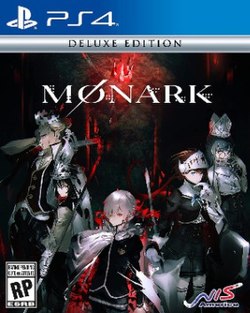
 Monark on Switch
 Mistover on Switch
 Tobal No. 1 on PlayStation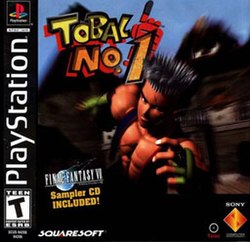
 3rd Super Robot Wars Alpha: To the End of the Galaxy on PS2
 Bakuretsu Hunter: Sorezore no Omoi...Nowaan Chatte on PlayStation
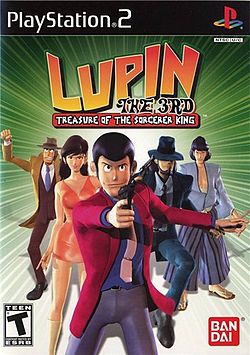
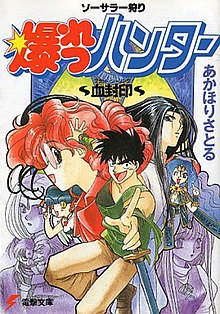 Lupin the 3rd: Treasure of the Sorcerer King on PS2
 Bakuretsu Hunter: Mahjong Special on PlayStation












 Another SquareThought Site