

 Oct 2019
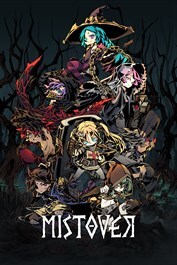

Mistover is the kind of game that smells faintly of wet stone, burned candles, and developer intent to make players feel tiny and exposed. On the Nintendo Switch it dresses that bleak ambition in an arresting anime-gothic coat: cute character portraits shoved into a world that wants to chew them up and spit out their bones. Krafton designed the game to be deliberately punishing. It borrows the aesthetics and mechanical scaffolding of Darkest Dungeon and Etrian Mystery Dungeon, then doubles down on permadeath, resource attrition, and visibility-sapping mist. The result is a roguelike dungeon crawler where the real story is not just what the devs wrote, but the slow-motion tragedy or triumph you author for every single recruit in your Corps Crew. This review is not a dry breakdown of stats. It is an in-depth, character-led autopsy of the tiny lives you shepherd through the Pillar of Despair, and how Mistover turns class archetypes into micro-dramas of survival, obsession, and occasional heroics.
Mistover stages its drama through a simple theatrical device: your party members are both curtain and cast. Mechanically the game combines tile-based exploration with turn-based combat. Every step you take burns hit points and yet another sliver of light, which means exploration itself is a slow-burn story beat. The mist is both setting and antagonist: it narrows vision, spawns tension, and forces choices. What makes Mistover interesting for anyone who likes character stories is that the mechanical framework constantly rewrites personal narrative. The eight character classes are the raw materials for those narratives. Each class comes with a preset appearance and a fixed backstory-so while recruits are randomly generated, they arrive with personalities and pasts. That setup means the moment a Paladin, Ronin, or Sister walks into your roster, they already carry a headline: a Paladin is a stubborn line of defense, a Ronin is a quietly dangerous blade-singer, a Sister is a zealous medic with a history. The Sister's origin is an explicit example: she heard a voice she believed to be 'God' at the brink of death and becomes almost gleeful when attacked. That eccentricity flips the usual healer trope into small character comedy and also into mechanical tension-you want her alive for heals, but she becomes more animated and dangerous to manage when she takes damage. Permadeath is Mistover's narrative engine. When a character dies, they're dead for good. The replacement is a new recruit with a new appearance and a new fixed backstory. This procedural cycling of life and death creates emergent story arcs that are partly authored by the player and partly by whatever cruel RNG is on duty. A Grim Reaper class character might start as a mysterious loner and, after surviving a series of impossible runs, end as a grizzled veteran who has lost more than they've saved. Conversely, a randomly generated Witch who was initially presented as fragile may, through careful upgrades and tactical positioning, become the party's decisive exile breaker. Those arcs matter because the game intentionally makes success feel earned: the developers wanted players to feel on the edge of a precipice and to savor small victories. Each class has distinct skillsets that read like plot beats. The Paladin is a moving bastion who can charge and reposition, literally changing the battlefield dynamics and plot momentum. The Shadow Blade is an archetypal assassin whose functions invite stealth arcs; she starts as a foil to frontal tactics but can become the party's reconciliation with risk when players choose gambles. The Onmyouji and Witch classes bring occult flavor and high-risk, high-reward mechanics: powerful effects that often come with a nasty side effect. That design choice is a character-writing trick in mechanical form. When you use an ability that deals massive damage but cripples a stat afterward, you're not just choosing numbers, you are giving that character a weakness, a scar to live with, and narrative consequences to later explain. Over time, a pattern of using reckless skills defines a character's personality within your corps: a hero who self-sacrifices for a single KO, or a cautious veteran who only chips away. Resource management in Mistover is ethically charged. Food, light, and the mysterious Light Flowers act as prop devices. Choosing to burn a Light Flower to push deeper into a dungeon is like forcing a character to continue a doomed monologue for one last flourish. These are narrative decisions disguised as inventory micromanagement. The 'Cursed Weapons' and mist contamination help write story twists: wield a tool that amplifies power but imposes a cost, and suddenly your champion's arc tilts toward a fall or an uneasy triumph. Combat itself is a positional minidrama. Only the party leader is directly visible during exploration; the others appear in combat, and their placement on the battlefield is the difference between a moving subplot and a full-blown tragedy. The Corps Crew composition-five characters-encourages class interplay. The Sister can heal and stun, toggling between saint and combatant. A Paladin charging ahead can rescue a floundering archer, or march into a death trap engineered by the mist. The game favors players who read their party like a small-cast theater troupe, anticipating character responses and building arcs through resource investments: which skills you upgrade, who you solo-reward with equipment, and who you treat as disposable. That last choice is harsh but narratively potent: the game leaves space for guilt, denial, and the quiet habit of naming lost heroes. Mistover's randomization is a double-edged sword for storytelling. On one hand, the procedurally generated dungeons and characters mean you rarely repeat the exact same sequence of emotional beats. On the other hand, critics complained that the randomness makes some narrative threads inconsistent; a character with an interesting backstory might never get the chance to shine due to bad RNG or repeated wipeouts. That tension is built into the game's identity: it is designed for players who enjoy crafting patience-hardened sagas out of chaos. If you like coherent, author-backed personal arcs with set beats and cutscenes, Mistover will frustrate you. If you like bootstrapped biographies-where the player's decisions and the well-timed consumption of Light Flowers create meaning-then the game becomes a strangely intimate soap opera of ashes. The developers openly embraced difficulty and permadeath as storytelling tools. Han Dong-hoon and Woo Seok Lee designed the world to feel on the verge of extinction so that risk would carry emotional weight. That intention is noble and often successful. The combat animations-short stylized vignettes that play when skills activate-work like tiny cinematic moments that resonate more because the characters are fragile. After a dozen runs, you begin to care not because the game holds your hand, but because you've infused companions with narrative value by naming them, equipping them, and deciding when to let them gamble for glory. DLC like the Guilty Gear crossover injects comedic relief into the otherwise grim setting. Dr. Faust's Otherworldly Adventure is literally a break in tone you can buy, and it functions like a guest director turning your tragedy into improv for an afternoon. That oddball energy highlights how Mistover's core loop thrives on tonal contrast: the occasional levity makes the default despair feel earned rather than numbing. In short, the gameplay loop is an engine for tiny human stories. Mechanically lean but narratively rich in the sense of emergent character arcs, Mistover asks the player to become both a tactician and a storyteller. Sometimes the system is punishing and repetitive; sometimes randomness mucks up your carefully scripted plots. Those failings are real, but they are integral to the experience the devs set out to build.
Visually Mistover is a deliciously grim postcard. The art style is an anime-goth hybrid that critics praised and which translates well to the Switch's screen. Character portraits are decorative and expressive, which helps a lot when most of your lore is text and small animations. The isometric maps, fog-of-war, and mist effects create atmosphere without taxing the hardware; the Switch port runs smoothly and looks tidy. Combat animations are brief but satisfyingly stylized, giving each skill activation a moment to feel like a beat in a scene. The downside is that the game is sometimes more style than mood: a few reviewers felt the dungeon-crawling lacked a sustained sense of atmosphere beyond the constant tension. Still, for players who appreciate character portraits and moody palettes, Mistover delivers a consistent look that supports its grim narrative ambitions.
Mistover on Switch is a love letter to players who enjoy building stories out of scarcity. It is not the most forgiving game, and when its randomness leans cruel it can feel repetitive and grinding, which is precisely what many critics pointed out. Yet it achieves something rarer: the ability to convert tactical decisions into personal narratives. The eight classes arrive pre-seeded with personality, and permadeath with procedural recruitment forces you to either recycle tragedies into meaning or to become a cold logician who treats recruits as numbers. If you want curated character arcs with cinematic payoffs, this is not your game. If you want to play director-producer of an ugly, heroic sandbox populated by eccentric Sisters, stoic Paladins, and reckless Witches-where every Light Flower and cursed blade writes another line of biography-then Mistover is a grim, sometimes brilliant companion. Keep in mind the unfortunate reality that the game was delisted from digital stores in June 2022, so unless you have a physical copy or find a secondhand cartridge, this particular troupe may be hard to recruit. For those who can grab it, expect misery, small triumphs, and stories you will tell in the voice of someone who lost too many good recruits but still keeps going.
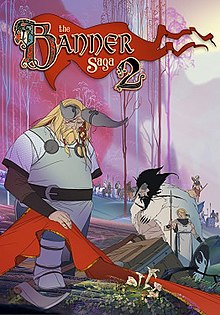
 The Banner Saga 2 on PS4
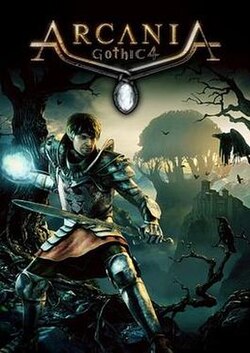
 Arcania: The Complete Tale on PS3
 Predecessor on PS4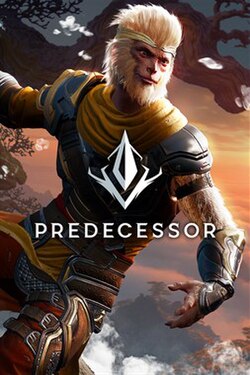










 Another SquareThought Site