

 Aug 2024
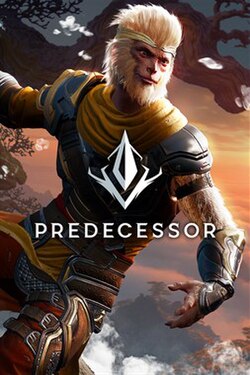

Predecessor arrives on PS4 as a third‑person MOBA that wears its Paragon DNA on its sleeve and tries to do more than ape the past: it wants to give each playable icon the feel of a tiny, playable novella. Built in Unreal Engine 5 by UK studio Omeda Studios, the game sets up a familiar battleground - symmetrical maps, lanes with towers and inhibitors, minions that scale after structural destruction - and then hands the story baton to the players. This is not a single‑player epic with set cutscenes; it's a living anthology where the arcs are written in spikes, item buys, and clutch team fights. The documentation around Predecessor focuses on systems more than lore, which is where the game's narrative ambition becomes interesting. Instead of prepackaged character biographies, it gives you archetypes (assassin, support, bruiser, mage, marksman) that arrive at the same narrative forks: growth, sacrifice, escalation, and sometimes hubris. If you want a campaign with chapters, Predecessor hands you a match and asks you to author the arc. That design choice means the characters' stories are emergent - they unfold through role selection, ability usage, item decisions, and how you interact with teammates and towers on the four zones of the map: Offlane, Jungle, Mid Lane, and Duo Lane.
Every MOBA claims agency through choice, but Predecessor makes the consequences of those choices feel theatrical. A match is a five‑versus‑five tug of war: destroy the enemy core and your team writes the final line. The map architecture - two towers and an inhibitor per lane, minion waves that buff after structural destruction - sets up recurring dramatic beats. Those beats are the scenes in which your character's arc plays out. Early game is exposition: you test abilities, secure the first kills, and build your identity. Midgame is complication: towers fall, minions thicken, the jungle offers skirmishes that test your character's moral code (will you gank for glory or farm for power?). Late game is resolution: either your item choices redeem the team or your hubris feeds the enemy core. Predecessor's role system nudges emergent storytelling. Before the match starts you pick a preferred role and the game shows teammates those preferences; if two people want the same role the mechanics arbitrate a compromise, which introduces interpersonal microdrama into the draft. That tiny, frustrating moment - the support who wanted mid or the jungler forced into duo - becomes part of the narrative scaffolding. Players who accept the suffering and adapt can forge an arc of sacrifice and growth, the kind of quiet character development that doesn't need voice acting: you can feel it when a former lane hog learns to peel for the carry and suddenly the team has a backbone. Abilities in Predecessor - one basic attack plus four unique abilities - are narrative verbs. An ability that blinks someone across the map becomes a deus ex machina; an invisibility effect is a secret whispered in a crowded arena; a time‑manipulation item is a rewrite of past mistakes. Items are the character development trees: you buy them with gold earned by lane control and objectives, and they alter abilities, adding new verbs or modifying old ones. A timid support who invests in teleportation and survival items learns to show up where it matters; an assassin who buys damage amplification items crescendos into a predator who finishes the antagonist's act. Items that grant invisibility or time manipulation are particularly potent story devices - they let players retcon failed engagements or craft cinematic flank plays that feel like plot twists. Experience and level progression supply steady character growth. Stat gains - strength, attack speed, health - are the beats of incremental maturation. Unlike single‑player RPGs with explicit cutscenes, Predecessor's character arcs are measured in small rituals: last‑hitting minions, surviving an inhibitor fight, stealing the enemy jungle camp. Each ritual, when strung together, forms an arc: the underleveled rookie becomes the late‑game anchor who carries a 4v5 with a clutch ultimate. Because the game is multiplayer, arcs are social narratives as much as mechanical ones. A player's rise can be the team's redemptive climax, or their overreach can become the tragic hubris that costs the match. The game's lane structure fosters classic drama: Offlane is where stoics and tanks prove their mettle; it's the place of stubborn resistance and quiet sacrifice. Mid Lane is where mages and high‑tempo duelists tell compact, intense stories of control and outplay; it's the monologue that can flip the scene in a decisive skirmish. Duo Lane encourages buddy comedies and bromances: the marksman and support that learn to synchronize stuns and heals develop synergy arcs that feel earned. The Jungle is a wandering antihero's realm - shadow moves, opportunistic plays, and timing‑based rescues all read like a rogue's subplot. Taken together, these spaces let each archetype pursue a distinct narrative, and the meta of the match stitches them together into a shared tale. There are, of course, limitations to the emergent approach. The documentation available focuses on mechanics rather than curated storytelling, which means lore‑seekers hoping for crafted character biographies or narrative campaigns might walk away disappointed. Predecessor's characters get arcs only insofar as players create them. That places a premium on matchmaking, role discipline, and the social culture of the lobby: if you end up in matches where players don't cooperate or where roles are constantly contested, the arcs feel stunted. Conversely, in coordinated matches the game surfaces deeply satisfying narratives - a support's redemption through clutch saves, a jungler's slow‑burn metamorphosis into an unstoppable force, or a laner's tragic downfall after too many risky dives. The game's four abilities per character and the item system mean there's a lot of room for expressive play. Passive enhancements change how abilities are read: a passive that grants slight lifesteal turns a once‑fragile duelist into a durable outcast, and an ability that grows with attack speed can transform a marksman from a damage tool into an auto‑attack ballet. Teleportation items are narrative accelerants: they allow characters to make dramatic entrances, turning isolated skirmishes into cinematic rescues. Items that manipulate time are the most meta: they let teams unwind mistakes - but because they're limited resources, using them becomes a plot point, a moment of either genius or folly. Finally, because Predecessor is built on Unreal Engine 5 and launched through a process that included early access and open beta phases, the overall character experience still feels like a work in progress. The game's foundations are promising, but the depth of its emergent narratives depends heavily on balance and the continued evolution of the roster and items. Omeda Studios' Paragon‑inspired pedigree and Epic MegaGrant funding gave the team runway to aim high, and when the systems click, Predecessor can produce some of the most emotionally satisfying multiplayer arcs: underdog stories, sacrificial heroes, and last‑minute reversals that read like well‑written finales.
Predecessor runs on Unreal Engine 5, which gives it a visual vocabulary that can sell the dramatic arcs the gameplay promises. While the PS4 hardware is a generation behind the top of the line, the engine still allows for crisp character models, expressive animations, and particle effects that punctuate those key narrative beats: a teleportation sash that leaves a luminous afterimage, an invisibility cloak that dissolves into motes, or a time‑bending ability that warps the battlefield with a solemn hush. Clean map design helps the storytelling too - lane architecture and clear defensive structures mean the visual rhythm of a match (tower lines, minion waves, inhibitor crumbling) is always legible. That legibility is important for character arcs: when the stakes are visually readable, the player's choices land with more drama. On PS4 you won't get every ray‑tracing glint possible on next‑gen consoles, and some high‑frequency animations may be tuned down, but the core experience remains satisfying. The aesthetic leans toward the cinematic rather than the cartoonish, which suits a roster meant to feel heroic and consequential in each encounter. For players who value clarity in the heat of team fights, Predecessor's visuals do the job - they support the story without overshadowing the mechanical storytelling.
Predecessor is a MOBA that asks players to be the authors of character arcs rather than readers of a scripted tome. On PS4, the game delivers the systems necessary for those arcs - distinct lanes, a role system that creates interpersonal drama, a four‑ability per hero structure, and a flexible item pool that can rewrite the course of a fight. Its reliance on emergent narrative is both its charm and its Achilles' heel: when players cooperate and the balance is sound, matches become compact dramas with satisfying rises and falls. When those elements are missing, arcs falter and the match reduces to a string of frustrating skirmishes. Omeda Studios gives us a solid mechanical stage, and Unreal Engine 5 lends the visuals a cinematic polish even on last‑gen hardware. The game's development history - Paragon inspiration, Epic MegaGrant support, early access and open beta phases - shows a studio playing its cards carefully and iterating in public. For players who love to stitch together personal stories out of mechanics and who enjoy the social theater of role negotiations and late‑game comebacks, Predecessor on PS4 is a rewarding place to write small, intense tragedies and comedies. If you want a fully authored narrative with character biographies and cinematic campaigns, this isn't it. For everything else - emergent arcs, clutch heroism, and the occasional ridiculous time‑manipulation save that feels like cheating in the best way - Predecessor earns a respectable 7.5 out of 10.
 Predecessor on Xbox Series X/S
 Planet Coaster 2 on PS5
 One Piece Grand Battle! on PS2
 One Piece Grand Battle! 3 on PS2
 Battle Calculator on Switch
 Bakugan Battle Brawlers: Battle Trainer on DS










 Another SquareThought Site