



One Piece: Grand Battle! 3 arrived in the early 2000s like a crate of treasure washed ashore - flashy, full of familiar faces, and carrying the slightly sticky scent of licensed products of the era. Developed by Ganbarion and published by Bandai, this entry in the Grand Battle! series lifts the anime's eccentric cast and throws them into a frantic, arcade-style fighting game that sat comfortably on the PlayStation 2 and GameCube. If you approach Grand Battle! 3 expecting the nuanced systems of a modern fighting title, you will be disappointed. If, however, you want a loud, colorful ring where the Straw Hats and their rivals trade exaggerated blows and signature moves, it delivers exactly that. This review takes an unusually fan-oriented route: instead of only dissecting inputs and hitboxes, it examines how the characters' in-game behaviors, movesets, and stage design echo their narrative arcs in Eiichiro Oda's saga. Expect talk of Luffy's never-say-die momentum, Zoro's measured brutality, Nami's cunning, Usopp's growing heart - and how all of that translates into pixels and health bars. If you're 18 and nostalgic for the PS2 era, or simply curious how a licensed fighter can also be a compact study of characterization, read on.
Grand Battle! 3 is an arcade-minded fighter in the old-school licensed mold: approachable controls, quick matches, and a heavy emphasis on spectacle over strict balance. Basic attacks chain into flashy combos, special buttons produce character-unique moves, and items or stage hazards can suddenly turn a one-sided duel into chaotic hilarity. The roster and platform support (PS2 and GameCube) promise local multiplayer mayhem, which is where this game truly shines. Where the game becomes interesting is how its mechanics double as shorthand for story. Monkey D. Luffy plays like a walking embodiment of a shounen protagonist: stretchy reach, unpredictable recovery, and a special meter that rewards aggressive, risk-on play. In narrative terms, this maps perfectly to Luffy's arc: boundless will, tendency to throw himself into danger, and that final stretch of energy when everything looks lost. In the middle of a match he feels like he does in the manga during a climactic beatdown - when he taps that meter, he often swings the fight back from death's door with a move that looks like it's powered by stubbornness. Roronoa Zoro's moveset is an exercise in controlled force. His attacks are slower but hit harder, and his special options feel like committed gambits - play with him like a duelist who reads your intention and punishes mistakes. That mechanical personality reflects Zoro's story arc: relentless training, a calm but terrifying presence, and a habit of cutting through whatever stands between him and his promise. In battle he is less flashy than Luffy but just as decisive, which is narratively apt. Nami's kit is a delightful combo of zoning and trickery; she manipulates the area and uses weather-themed gadgets - her attacks hint at a navigator who turned cunning into survival. For players who know the Arlong saga, each clever feint or trap reads like a footnote about her past: the bargaining, the subterfuge and the eventual reclaimed pride. Grand Battle! 3 uses stage elements and temporary assists in a way that makes Nami's battlefield dominance feel earned by wits rather than brute force. Usopp is the underdog translated into a playstyle: ranged, opportunistic, and benefiting from setups. Early Kanon-style play with Usopp can feel brittle, but when you string his projectiles into combo starters he blossoms into a reliable team member. That mirrors his story arc of growth from liar to courageous sharpshooter - in game terms, he rewards patience and creativity. Sanji's movement is balletic and flirtatious; his kicks have good reach and many anti-air uses, making him feel like the chivalrous fighter who protects from above. Chopper's presence is adorable yet mechanically interesting: small frame, surprising burst potential, and transformations that briefly alter his stats. His arc about acceptance and inner strength is cleverly suggested when a timid-looking character turns into a match-changer mid-fight. The game provides simple but evocative super moves. Ganbarion's emphasis on recognizability - giving each character moves that look and feel like their anime counterparts - is the title's secret sauce. It invites players to play characters not only because they're mechanically viable but because they 'feel right' to fans. In that sense, Grand Battle! 3 functions as interactive fan-fiction: you can physically perform Luffy's stoic grin in the form of an unstoppable attack, or reenact Zoro's solemn resolve by chaining a devastating combo. Balance is not Grand Battle! 3's religion. Characters can feel uneven, and the lack of online competition makes technical optimization a niche pursuit. But in local play - where you and a friend are yelling at the TV about whose Arlong revenge is more righteous - the feel and personality trump minute balance issues. The game's visual clarity during fights, combined with easy-to-execute signature moves, lets the character arcs speak through gameplay even when the mechanics are rudimentary. Modes are the usual suspects: arcade ladders, versus matches, and some unlockable content that acts as a small museum for fans. While there is no sweeping story mode that retells entire sagas, the stages and music snippets nod to canonical events, providing a compact, playable highlight reel of One Piece's early arcs.
Graphically, Grand Battle! 3 wears its era proudly. The PS2 hardware is used to produce chunky 3D models and vibrant stages drenched in cell-shaded color. Faces can be a little stiff in close-up, and backgrounds occasionally look like illustrated dioramas rather than living islands. That said, the game scores major points for faithful character silhouettes and recognizable costumes; you can tell who's who from a glance, and the signature attacks are animated with enough zeal that they read as tiny animated sequences of the anime itself. The artistic choices serve the review's thesis: this is a character-first fighter. Lighting, particle effects, and camera flourishes are deployed to underline a moment - Luffy's Last Resort, Sanji's aerial flourish, Zoro's cold slash. Those moments land precisely because the presentation is tuned to make each character's personality pop. Frame rate holds steady through most skirmishes, though heavy on-screen effects can produce stuttering on older kits. For 2003's standards, the visuals are less about polygon counts and more about fidelity to the source, which is exactly what fans wanted. Sound design is similarly fan-service oriented: recognizable musical cues, punchy impact sounds, and voice clips that, while limited, give each hit a sense of identity. If the music occasionally repeats tracks across stages, it still captures the anime's adventurous vibe, and that helps the game act as a tiny, noisy celebration of the One Piece world.
One Piece: Grand Battle! 3 is not a technical masterpiece, nor is it trying to be. It is a licensed fighter that understands its primary job: making fans feel like they can step into pivotal moments of the series and enact them in a thousand tiny, ridiculous ways. Ganbarion and Bandai built a playground where characterization and spectacle trumped tight competitive balance, and for many players that is more than enough. If you love One Piece for its cast and story arcs, Grand Battle! 3 rewards you by making each character feel mechanically distinct in ways that echo their narrative journeys. Luffy's indomitable spirit, Zoro's iron discipline, Nami's cunning, Usopp's evolution - these arcs breathe life into the fighting mechanics so that matches sometimes feel like miniature chapters. For an 18-year-old looking to revisit the PS2 era, or someone seeking a low-commitment brawler with a colossal anime roster, this is a charming pick. Competitive purists will scoff, but the title was never aimed at them. It was made to be played in a living room with friends, where the clatter of controllers and shouts of "Do it, Luffy!" are part of the score. Score: 7.5/10. Solid, entertaining, and unashamedly fan-first - a good treasure chest for casual fights and character-driven nostalgia.
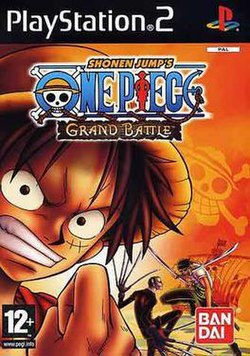 One Piece Grand Adventure on PS2
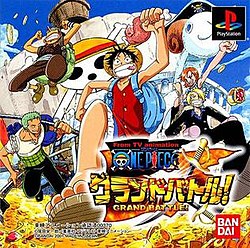
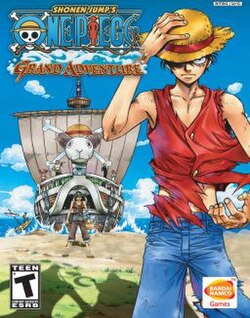 From TV Animation - One Piece: Grand Battle! 2 on PlayStation
 ACA Neo Geo: Art of Fighting 2 on Xbox One
 ACA Neo Geo: The King of Fighters '98 on Xbox One
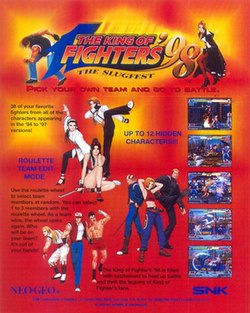 Art of Fighting Anthology on PS2
 ACA Neo Geo: Art of Fighting on Xbox One
 Jump Super Stars on DS
 From TV Animation - One Piece: Grand Battle! on PlayStation
 One Piece: Unlimited World Red on PS3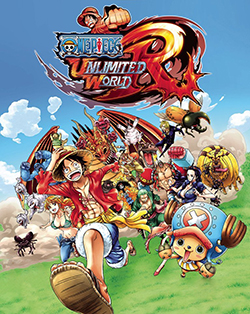












 Another SquareThought Site