

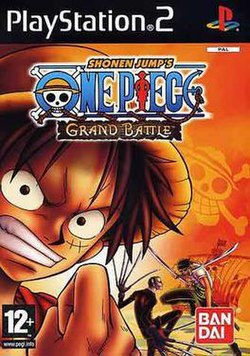

One Piece: Grand Battle! is the kind of licensed fighter that wears its anime heart on its sleeve and its arcade sensibilities in its knuckles. It's the fourth and final entry in the Grand Battle line from Ganbarion, an earnest PlayStation 2 (and GameCube) romp that squeezes the East Blue saga up through the Foxy arc into a compact, character-heavy brawler. If you like your fights loud, your characters faithful to the source material, and your difficulty served with a side of unpredictability, this is where you plant your flag. This review will stop flirting with the obvious (pretty characters = instant win) and instead do what the game's Training mode begs you to do: talk about challenge. Grand Battle isn't a deep competitive fighter that will overturn the textbook-it's an accessible, often uneven, mash-up of arcade accessibility and anime spectacle. Still, buried in that spectacle is a set of challenge checkpoints that will test your timing, adaptability, and patience, especially if you want to unlock, master, and actually win with some of the more awkward crew members.
Grand Battle lays out its challenge across a handful of modes that on paper look like your standard fighting-game buffet: Grand Battle (one- or two-player fights with unlockables), Story Mode (character-specific progression through the East Blue/Foxy arcs), Training (your practice dojo), and Tourney (a bracketed tournament mode). Oh, and because this is a One Piece game and anime logic is a law unto itself, there's also a baseball mode for when you've had enough punching and prefer to whack people with bats instead. Modes are important to the challenge because they define where you learn and where you suffer. Training mode is the only polite way to put it: mandatory. The game's control scheme and move lists are simple enough to feel welcoming, but that simplicity masks a lot of nuance. Each character carries a distinct rhythm - Luffy's rubbery exchanges, Zoro's sword arcs, Nami's tricksy gadgets, Usopp's ranged oddities, and so on. You can win a lot of casual rounds by flailing into specials and hoping the computer glitches in your favor, but if you want to climb the Tourney ladder or survive later Story fights you'll need to do more than mash. Skill set #1: spacing. A surprising portion of Grand Battle's fights comes down to controlling the map. The stages are not just pretty backdrops; they shape how you approach enemies. Some fighters excel up close and punish mistakes aggressively, others poke from distance. Learning where your character wants to be at any given moment is essential. This isn't a frame-tight technical fighter, but it rewards players who think in distances rather than panic swings. Skill set #2: timing and read-reactions. The AI will throw a lot of different attacks from unexpected angles. Since the game blends rapid combos with single-hit specials, the ability to read an opponent's telegraphed move and react appropriately (block, dodge, counter, or punish) makes a massive difference. The Training mode exists so you can test your muscle memory here; if you skip it you'll be surprised how often you get clipped by something you thought was an animation. Skill set #3: adapting to archetypes. The roster lists characters everyone recognizes: Luffy, Zoro, Nami, Usopp, Sanji, Chopper, Nico Robin, and a parade of villains and allies from the early arcs: Kuro, Don Krieg, Arlong, Buggy, Smoker/Chaser, Crocodile, Mr. 2 Bon Clay, Mihawk, Shanks, Enel, and new roster faces like Foxy and Aokiji. The variety is the game's secret crank: while the control stick and face buttons remain familiar, each fighter plays like a different mini-game. Zoro will teach you patience and commitment; Usopp will force you to learn to keep enemies at bay and use traps; Luffy wants you to be opportunistic and forgive your own mistakes. Good players learn to switch mental models mid-match depending on the opponent's kit. Skill set #4: pattern recognition and punish windows. The AI and even some human players lean on a handful of moves repeatedly. Recognizing those patterns and exploiting the small recovery window after a whiff is where matches flip from chaotic to tactical. This is not a discipline for the instant-gratification crowd: the reward comes for those who anticipate and punish. Unlocks and progression add another layer. Grand Battle's Grand Battle mode and Story mode spoon out unlockable fighters and stages; that means some of the juiciest toys aren't available at the start. If you're trying to play competitively within your friend group, expect a period of catch-up where people learn who requires real practice and who is a walking beating stick. Multiplayer is where the challenge turns social. The balance is uneven in places; some characters feel purpose-built to annoy, and a couple of matchups swing hard in one direction until you learn the counter-play. That's true for most licensed fighters of the era: the match-ups are fun and messy rather than painfully balanced. The Tourney mode is a solid place to test your mettle because a single bracket exposes you to multiple styles in one session, forcing you to adapt quickly. Tips for players who want the challenge without the tears: - Spend real time in Training: this is not optional unless you want to get demolished by characters you don't understand. - Learn two characters: one for close-quarters pressure and one for spacing/poking. Switching between them lets you handle a wider range of opponents. - Study the stage layouts: not all arenas are equal. Some favor ranged harassment, others reward aggressive corner play. - Use Story mode as an intermediate gauntlet. It forces you to play different matchups and introduces attacks and hazards gradually. Where the challenge stumbles: predictability and occasional shallow design decisions. Critics in the day noted that beyond the fan-pleasing visuals, the game doesn't reinvent the wheel. That criticism translates into gameplay as an inconsistent difficulty curve - some fights will be memorization tests against cheap AI habits, and others require legitimate execution. If you're coming from the hardcore fighting scene, Grand Battle won't satisfy your craving for frame data precision, but if you approach it like a hobbyist fighter that values character flavor and spectacle, it provides a fair and sometimes delightful challenge. Finally, the baseball mode and other offbeat mini-games function as palate cleansers. They don't level up your competitive fighting skill, but they do test reflexes and situational awareness in a different key - and sometimes what feels like a dumb minigame can sharpen your timing in the main modes. Weirdly useful, like stretching before a fight but with more bats and fewer discipline points.
One of the game's most steady strengths is its visuals. Critics who sniffed at the game's lack of innovation still conceded that the presentation is charming - GameSpot summed it up: fans will love the visuals. On the PS2 hardware, Ganbarion manages to capture the anime's bold character designs, bright colors, and exaggerated expressions in a way that keeps fights readable while being visually energetic. If you've spent time with the One Piece anime, character models and animations land with satisfying familiar beats: attacks feel cartoonish and over-the-top, which is the point. That being said, the game looks like a mid-2000s licensed product: pleasing and faithful, but not groundbreaking. Backgrounds are pleasant and stage variety keeps fights feeling different, but texture detail and stage interactivity are limited compared to modern standards. The flashy attacks and character portraits, though, keep the fan-service meter high enough that you'll often forgive the technical limits. In short: it's pretty for its time, expressive more than photorealistic, and excellent at communicating the anime's tone during the chaos of battle.
One Piece: Grand Battle! is a competent, often fun licensed fighter that frames its challenge more like an arcade cabinet than a pro tournament. It asks players to develop practical fighting-game skills - spacing, timing, adaptability, pattern recognition - without promising the cold, surgical depth of niche competitive titles. If you live for anime authenticity, want a reasonable local multiplayer brawler, and enjoy learning character quirks at the expense of immaculate balance, Grand Battle will scratch that itch. If you're chasing a hardcore fighting experience with ruthless balance and frame-accurate tech, look elsewhere. The game's charm is its roster, presentation, and that distinct One Piece personality; the challenge is the sort where you learn to love the characters and get better the more you play, rather than the sort that teaches you how to read frame data in your sleep. Final verdict: a solid 7.0 out of 10. It rewards time and attention, gives you room to grow as a player without demanding you become a lab rat, and still manages to be a satisfying party brawler. Bring a friend, pick two characters you want to train with, and let the chaos teach you the ropes. You'll laugh, you'll lose, and eventually - like any good pirate - you'll come away richer for the adventure.
 One Piece Grand Adventure on PS2
 From TV Animation - One Piece: Grand Battle! 2 on PlayStation
 ACA Neo Geo: Art of Fighting 2 on Xbox One
 ACA Neo Geo: The King of Fighters '98 on Xbox One
 Art of Fighting Anthology on PS2
 ACA Neo Geo: Art of Fighting on Xbox One
 Jump Super Stars on DS
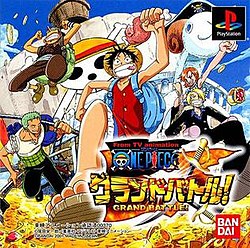
 From TV Animation - One Piece: Grand Battle! on PlayStation
 One Piece: Unlimited World Red on PS3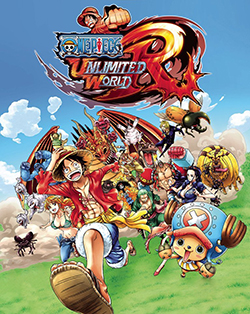












 Another SquareThought Site