

 Aug 2025
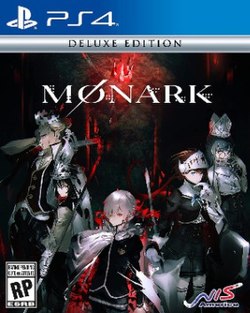

Monark is the kind of game that smells faintly of incense, adolescent angst, and the faint ozone of weird JRPG pedigree. Built by Lancarse with a writing core led by Fuyuki Hayashi and supervisory notes from Kazunari Suzuki, Monark drops you into Shin Mikado Academy - a boarding school ringed by a barrier, wrapped in a maddening mist, and clearly very bad at basic maintenance. Its pitch is deliciously grim: a bunch of students trapped in a school gone sideways, given powers to enter an "Otherworld" and punch daemons into submission while their own desires mutate into literal mechanics. If that description sounds like an angsty Persona or Shin Megami Tensei spin-off having a very dramatic sleepover, you're not wrong, and the game leans into those influences. What it tries to do differently, and where it stumbles, comes down to how well it makes its characters feel like real people whose arcs are reflected in both story beats and combat systems. This review isn't a blow-by-blow of levels and button combos. Instead, it's an in-depth look at the people Monark invites you to babysit as they fracture, fuse, and occasionally find themselves. The writing team wrote every major character's scenario and dialogue, and you can feel the deliberate push toward personal, often dark, character work. Whether Monark succeeds at turning troubled teen melodrama into a satisfying narrative arc is an easy question to ask and a complicated one to answer - particularly when the game's systems sometimes grind that narrative momentum to a halt.
Monark splits its time between two modes that feed each other: the daylight, campus-based exploration where students "evolve their desires," and the nightmarish Otherworld battles against daemons. That mechanic is the connective tissue linking narrative to gameplay, and it's where character arcs are supposed to breathe. The idea is neat on paper: your party's inner wants literally change their capabilities. Want power? Risk arrogance. Want to protect others? Gain defensive strengths but maybe lose blunt aggression. This system makes the cast feel like living, shifting things instead of static job-classes. When it works, a battle becomes a moral choice: do you let someone drown in ambition for a temporary DPS spike, or temper them into a support role that better fits their slow-burn redemption arc? The protagonist is, by design, a framing device: you are the anchor for a group of students slowly losing their grip on sanity. Because Monark emphasizes group dynamics, the narrative forces you to watch relationships fray and reforge. The gameplay reflects this theme: as students explore the campus and interact, their "desires" morph and unlock new abilities, but these choices also come with trade-offs capable of changing how they perform in combat. This is where Monark earns its best, most interesting moments. A student who talks tough in the canteen might become a reckless glass cannon in the Otherworld, and you will have to reconcile whether the story you're telling about that person fits the results you need in battle. Combat itself is a tactical affair that borrows from Lost Dimension-style systems and leans toward high-risk, high-reward design. Nintendo Life praised this crispness - landing big plays can feel cinematic and consequential. On the flip side, multiple outlets complained about repetition and grinding. The combat loop's friction cuts into character development: instead of savoring a protagonist's crisis of faith or watching supporting cast members come into their own, you might find yourself stuck replaying the same corridors and encounters until your characters are proficient enough to progress. That friction undercuts narrative pacing, making some arcs feel episodic or artificially extended. Monark also uses a party member progression system that some reviewers found limiting. In practice, certain character growth paths can feel locked until you hit arbitrary points, which is narratively awkward. When a character's personal arc demands a moment of growth but the systems refuse to grant the mechanical benefits you'd expect until later, the emotional beat loses impact. It's like watching a confession scene and then being told the person can't actually act on that confession for twelve hours of gameplay. One of the most important and problematic things to mention when talking about character arcs is the game's treatment of identity. Critics flagged the portrayal of at least one character - Perrine - as transphobic in parts of the narrative. That's a serious narrative misstep. A game that wants to plumb adolescent pain and identity should be thoughtful, not exploitative. When Monark dips into cheap or insensitive portrayals, it stains otherwise earnest attempts at character depth. It's worth noting that the writing team is capable of evocative character moments; Hayashi's scripts for major characters often provide textured, introspective lines, and the involvement of staff with Shin Megami Tensei experience shows in how the game isn't afraid to flirt with uncomfortable themes. But tone policing and sensitivity - or the lack thereof - matter. When a story aims for the personal, it must respect the people it depicts. There are, however, moments where Monark nails what it's reaching for. Party dynamics in juicy one-on-one exchanges - the silent leader forced to choose between sacrifice and salvation, the joker who finally stops hiding behind sarcasm - are present in the script. These arcs are most effective when you can link them to concrete gameplay outcomes: when a student overcomes a fear and the player sees that reflected in a new passive ability, the narrative and the mechanics reinforce each other. Likewise, the Otherworld is more than a battleground; it's a mirror that externalizes fears. The daemons act like distorted reflections of the student body's anxieties, and clearing certain daemons off the board can feel like exorcising a storyline. Monark's pacing problems complicate this interplay. Critics often cite bad pacing and repetition - and this criticism is fair. When a plot beat depends on the player grinding for levels, it queues the story to wait on the player's stamina rather than allowing character growth to follow narrative cause and effect. Still, for players who enjoy peeling back layers of adolescent dread and moral ambiguity, Monark offers enough narrative meat to chew on. The game's headline is personalness: it wants you close to the characters, and often it gets you there. It's just that sometimes the path is a muddy slog.
Graphically, Monark is modest, and reviewers noted the Switch version shows its limits. The environments are serviceable but repetitive: the school and its alternate-world echoes reuse assets in ways that can make exploration feel like walking through a gothic Tumblr template. Fans of high-fidelity visual storytelling will be disappointed, but Monark isn't trying to be a tech demo. Its strength lies in atmosphere rather than polygon counts. The creepy aesthetics - dank hallways, fogbound courtyards, and grotesque daemon designs - support the horror-tinged tone, even if the textures and models lack polish. The presentation leans heavily on audio and cutscenes to lift character moments. The opening cinematic and vocal tracks received praise for giving the game an identity beyond its polygons, and that assistive soundtrack work helps sell emotional beats when the visuals remain restrained. If you're buying Monark for AAA-level visuals on Switch, you'll be underwhelmed. If you come for mood, voice, and the way a melody can make a confession feel like a confession, the game does enough to keep the creepy vibe intact.
Monark is a mixed bag with honest ambition. It sets out to craft a school-based, character-first tactical RPG about desire, madness, and the costs of power, and some of its best scenes are legitimately affecting. The mechanical idea of evolving desires is clever and often rewarding, and the high-risk combat can deliver thrilling payoffs. The writing team's fingerprints are on every major character, and that focus on character-driven moments is both the game's heart and its highest expectation. Unfortunately, pacing issues, repetitive combat loops, and some tone-deaf narrative choices - notably the criticized treatment of Perrine - limit Monark's reach. The Switch version is playable and atmospheric, but it's not a technical showpiece. If you're the kind of player who enjoys dissecting jagged, adolescent character arcs and don't mind some mechanical grinding to get to the good parts, Monark will give you moments worth remembering. For everyone else, the game asks for patience in exchange for depth, and that's a trade some will gladly make and some will swiftly refuse. Score: 6.5/10 - an ambitious, occasionally brilliant character study trapped in systems that sometimes force it to repeat its best lines until they lose their meaning.
 Monark on PS5
 Combat Elite: WWII Paratroopers on PS2
 The Banner Saga 2 on PS4
 Mutant Year Zero: Road to Eden on PS4
 Mordheim: City of the Damned on Xbox One
 Lost Dimension on PS3
 Space Bust-A-Move on DS
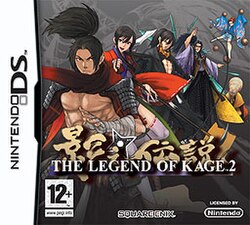
 The Legend of Kage 2 on DS
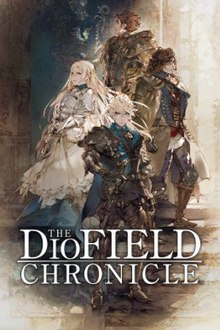
 The DioField Chronicle on PS5
 The Diofield Chronicle on Xbox Series X/S










 Another SquareThought Site