

 Aug 2025
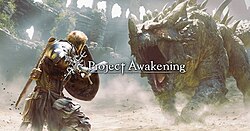

Project Awakening still wears the cloak of mystery better than most masked rogues in fantasy RPGs. Announced back in 2016 and formally revealed for PlayStation 4 in 2018, this Cygames Osaka project has been teased in snippets - closed-room E3 footage, tech showcases, PEGI demo registrations - but the full tale remains unopened. The official materials frame it as a high-fantasy, open-world action RPG with heavy combat focus and multiplayer co-op flavour, an attempt by Cygames to nudge open the door to western console audiences. Because the narrative details are scant, the most useful way to talk about Project Awakening right now is to do what literature professors do in the absence of the book: extrapolate character arcs and thematic intent from the bones we have. Consider this less a spoilery postmortem and more a speculative autopsy with a sense of humour and a soft spot for dramatic character beats.
Given Cygames' stated goals - high-end visuals, open-world ambition, combat-forward systems, and cooperative play - Project Awakening reads like a game designed to derive its narrative momentum from its characters' journeys through conflict. If the teams were influenced by Monster Hunter and Dragon's Dogma, as early previews suggested, then expect character arcs that are forged on the anvil of struggle and companionship rather than delivered as tidy exposition dumps. The Protagonist: the world will likely hand you a blank slate: an avatar sculpted by the player yet framed by a set of narrative burdens. In many action-RPGs influenced by the titles cited, the main character starts as an outsider-an exiled hunter, a displaced noble, or an amnesiac with a destiny. The arc is predictable in outline but rich in texture: from survival-driven loner to reluctant leader to someone who must choose between a personal desire and the fate of a wider community. Where Project Awakening could make that arc sing is by leaning into combat as character development. Weapon choices, combat styles, and cooperative synergies can double as psychological shorthand. A player who spends hours dual-wielding and charging into frays becomes a protagonist defined by headlong bravery; a patient bow user becomes a protagonist whose growth is measured by careful strategy and restraint. If Cygames ties mechanical progression to narrative beats-unlocking memories through mastering a combat discipline, for example-the protagonist's arc could feel earned rather than authored. The Companion(s): co-op aspects imply companions will be more than meat-shields. Multiplayer often encourages a 'party as family' dynamic, and Project Awakening appears poised to exploit that. Expect a cast of allies who function as thematic foils. The Muscle: a blunt-force warrior with a tragic past about protecting family; their arc could explore guilt and catharsis as they re-learn what it means to protect without controlling. The Scholar: an NPC whose curiosity about ancient technology or magic seeds exposition, and who evolves from detached observer to morally engaged actor. The Rogue: morally ambiguous, fun to control, and essential for that character who forces the protagonist to question black-and-white choices. Good writing can turn these archetypes into people who disagree at the campfire, make mistakes, and refuse to forgive one another until the plot puts their contradictions in a crucible. The multiplayer design nudges these arcs toward collaborative redemption: you don't just rescue your companion's honour in cutscenes - you do it in real encounters where you literally help them survive. The World as Character: high fantasy open worlds from Dragon's Dogma onward have a habit of leaving the environment to do the heavy emotive lifting. Project Awakening's art direction, entrusted to Ryosuke Aiba, is one of our best hints of tone. If the environments are cinematic, towering ruins and weather-scarred villages can function as memory palaces for the world's trauma. The world's arc would likely trace cycles of awakening and decay: something ancient stirs (the titular 'Awakening'), the institutions that once contained it have crumbled, and communities are left to reinterpret myths as survival strategies. That encourages story arcs where local characters are small-scale mirrorings of the global crisis: a shepherd who becomes a leader, a lord who learns to relinquish power, a cultist who realizes their faith was weaponized. Those are the human notes that give an 'epic' setting its heart. The Antagonist(s): when early footage hints at towering beasts and heavy combat, the antagonist often becomes two things: a set of external antagonists (monstrous, territorial, primal) and an internal antagonist (institutional rot, misguided ideology). Following the Monster Hunter influence, many confrontations could read as rites rather than simple fights; slaying a beast doesn't end the problem, it reveals a deeper imbalance. The antagonist's arc is then less about 'defeat' and more about 'revealing'. A fortress lord who once protected people might become corrupted by the methods they used to keep peace; an ancient guardian awakened to save the world might be convinced its preservation requires purging lives. The most interesting arcs will be those that push players to choose between defeating a monster and understanding why the monster exists-classic Dragon's Dogma moral fog. Narrative Delivery and Pacing: Project Awakening's strength will depend on how it spaces revelations. With an open-world shell, the temptation is to scatter narrative nuggets into every corner-journals, environmental storytelling, NPC errands. That can lead to a satisfying mosaic, where character arcs emerge as players stitch together clues. But it's fiddly: if the game forces emotional payoffs behind tedious fetch quests, arcs flatten into checklists. Ideally, Cygames will use combat encounters as narrative punctuation. Imagine a companion's reveal happening mid-battle, their confession cutting through the noise when healing is on cooldown. Combat becomes exposition by proxy-a gamble that, when executed, turns mechanical tension into narrative catharsis. Player Agency and Character Growth: the director Junji Tago and producer Kenichiro Takaki have framed Project Awakening as combat-centric, and that design choice can reinforce character arcs when progression systems reflect identity shifts. If the player can swap archetypal roles-tank to mage, solo to co-op specialist-then arcs can be multi-threaded. A character once defined by vengeance might mature into someone who protects communities, and that evolution can be bound to new abilities and dialogue options. That makes growth visible and functional, which is leagues better than simply changing dialogue tags. Risks and Opportunities: without actual story details, the biggest risk is leaning on clichés. High fantasy loves its prophecy clichés, and open-world games love padding. But the opportunity is to synthesize combat, cooperative play, and environmental storytelling into arcs that reward exploration both mechanical and emotional. If Cygames sustains the 'awakening' theme as a gradual, morally ambiguous revelation, then the cast's arcs can be surprisingly intimate amid sweeping vistas. If they don't, we might get another pretty empty tableau with beefy hitboxes and forgettable NPCs. Tone and Humor: based on early hints about aesthetic ambition, the game's tone could swing from grim to heartfelt. Given Cygames' pedigree with narrative-driven titles, a sly humor woven into the banter-especially in co-op-will humanize arcs. Players remember a sidekick who cracks a joke before pulling an all-nighter to save the town. To sum up this speculative deep-dive: Project Awakening's character work will likely succeed if it treats combat as a language of emotion, companions as relational catalysts rather than consumable quest items, and the open world as a living memory that forces characters to respond. If those pieces align, we may have a game that uses mechanical struggle to gesture at moral change-a rare trick that, when pulled off, transforms bosses into tragic milestones and victories into meaningful growth.
From the footage shown in closed sessions and the tech conferences, Project Awakening's visuals have been the part that makes designers in the audience go faint with joy. The Cyllista engine (as it's been labeled in early documentation) and the involvement of Ryosuke Aiba suggest an ambition to render a cinematic, painterly high-fantasy world. Textures in the trailers looked rich enough to commit to Instagram sonnets, and creature design hinted at a blend of grotesque and beautiful that helps storytelling: a monster that is visually mournful already nags at the player's moral instincts. Character design in particular will matter for the arcs discussed earlier. If faces are expressive and animations carry nuance-subtle slumps of shoulders, a hand raked through hair at a hard decision-then the player's emotional read of a character will be immediate. The risk with hyperreal visuals is uncanny valley or plasticity: beautifully sculpted NPCs who feel hollow. The key is to let animation and voice act pick up the slack. Given the multiple footage showcases and Cygames' intent to court the western market, it's reasonable to expect English-language performance and localized nuance. On consoles like PS4 (and possibly PS5), the visuals will be a selling point; whether they become the medium for character beats or merely a shell for combat spectacle remains to be seen.
Project Awakening is, for now, a promise more than a finished novel. The bones are attractive: a high-fantasy open world, combat-first design, co-op possibilities, and an art-led vision. Those elements are fertile ground for character-driven storytelling if Cygames ties mechanical systems to personal arcs and uses the open world to mirror internal change. The most compelling potential for Project Awakening lies in letting fights reveal who people are, not just how hard they hit. That said, the paucity of concrete narrative details means the current 'review' is a preview-essay-an optimistic map of routes the game could take. On a purely provisional scale, I'm giving Project Awakening a 7/10. That score reflects strong promises: the team, the visual tech, and the design goals all point toward something that could be great. It also accounts for uncertainty: open-world ambition can bloat, combat focus can overshadow story, and long development windows can shift priorities. If Cygames follows through by making companions matter, making the world's history something players must engage with, and by letting combat function as narrative punctuation, this could be a go-to title for players who love character arcs etched in steel and soot. Until then, I'll keep my torch lit, follow the breadcrumbs, and hope the awakening is worth the wait.
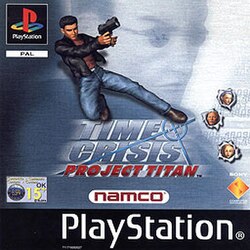
 Time Crisis: Project Titan on PlayStation
 Project Cars on PS4
 Combat Elite: WWII Paratroopers on PS2
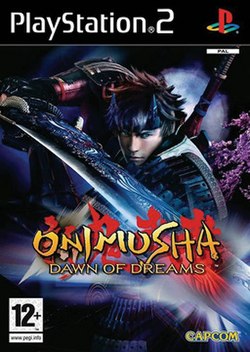
 Onimusha: Dawn of Dreams on PS2
 Action Man: Operation Extreme on PlayStation
 Project Sakura Wars on PS4










 Another SquareThought Site