

 Aug 2025
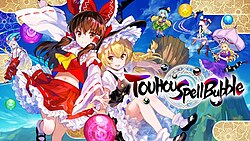

Touhou Spell Bubble arrives wearing the comfy sweater of Puzzle Bobble and the glittery cosplay of the Touhou Project, and it's here to tell a surprisingly melodramatic tale about video games, rivalries, and midair bubble ethics. The narrative is split like a bad friendship breakup: you can play through Reimu's perspective or Marisa's, each offering 22 levels of visual-novel-tinged cutscenes and arcade puzzle action. Instead of a straight rundown of mechanics, this review takes a cozy, slightly nosy approach-peeling back character arcs and showing how Taito squeezes personality out of colorful bubbles, rhythm microgames, and menacing junk-bubble attacks. If you like your puzzle games with a side of melodrama, bubbly music, and waifus who also file trademarks, read on.
At first glance Touhou Spell Bubble is Puzzle Bobble with an existential soundtrack: you fire colored bubbles from the bottom of the screen, match three to pop, and try not to cry as the tempo literally determines how fast you can shoot. That mechanic does more than keep the tempo lively; it becomes the narrative heartbeat for each character. Reimu's route feels measured and deliberate, and the tempo mechanics reflect that. When you play as Reimu you often find yourself in levels where the music gives you room to plan-matches require a little spatial thinking and restraint. Her three spell cards are like tasteful emotional beats: short, decisive, and very much "I will handle this calmly, thank you." Marisa, by contrast, stars in a perspective that drums faster and plays looser. Her spell cards are flashy and chaotic in a way that screams "I stole the rules and made them mine," which matches the cutscenes about her inventing the magically charged game "Spell Bubble" and making a spectacle of an otherwise orderly tournament. The rhythm microgame is the key storytelling device disguised as a minigame. When you make a large enough cluster pop, you get sucked into a pounding rhythm segment where both players see the song's timeline; if you hit the notes on time, you send colorless junk bubbles to your opponent. Thematically this is beautiful: the microgame is a duel of composure. A calm, methodical Reimu can outscore aggression by staying steady; an excitable Marisa converts recklessness into a blitz of punishment. The microgame's pressure mirrors the tournament's social stakes in the visual-novel beats-win the rhythm and you humiliate your rival in a flash of sentient confetti. Unlocking characters is a little like collecting alternate universes of personality. There are 20 playable characters total, and each has three spell cards. Those spell cards aren't just gameplay tools: they're narrative shorthand. Cirno's inclusion (and the presence of "Cirno's Perfect Math Class" on the soundtrack) gives her a goofy, self-satisfied arc-play her and you get a bouncy, mischievous rhythm that encourages riskier plays. Characters with heavier, more dramatic tracks (Night of Knights, Bad Apple!!) feel like they walk into a level wearing sunglasses and destiny. The story mode alternates between Reimu and Marisa, using visual novel-style cutscenes to narrate the tournament mysteries and Marisa's invention of the game. The arcs are simple but effective: Reimu is the reluctant guardian who tolerates chaos with a sigh and a perfectly aimed bubble; Marisa is endorphins with a wand. Side characters show up with short beats that amplify the main rivalry-some provide comic relief, others are brief antagonists who exist to test whether your hand-eye rhythm matches their smugness. You gain in-game currency regardless of win or loss (adjusted by opponent skill), which you spend on new songs and spell cards-this loop links narrative progression to your ability to customize a character's arc through loadout choices. There are rough edges. The learning curve can feel like being shoved into a stage combat class midway through rehearsal: the tempo-driven firing rate makes some matches feel instinctual rather than strategic, and that rubbed some reviewers the wrong way. The game initially launched without online multiplayer, which meant a lot of tournament drama had to stay local or in single-player form. Taito later added online battles in a free update in November 2021, which patched the storybook of community rivalry with a few new chapters-still, the initial omission is a notable wound for a competitive puzzle title. The inclusion of doujin songs like "Bad Apple!!", "Marisa Stole the Precious Thing", and "Cirno's Perfect Math Class" is more than fanservice. The tracks give each character a musical identity that often determines how they should be played. Sometimes a song's arrangement will shove you into a rhythm microgame where your failure feels like an on-stage slip-up; other times it rewards patience, reinforcing a character's stoic arc. The gameplay and story don't always resolve in a neat satisfying epilogue-some character arcs are intentionally lightweight, like holiday postcards-but the synergy between music, spell cards, and cutscenes makes for a remarkably character-driven puzzle game.
Visually, Touhou Spell Bubble is tidy and affectionate. The artwork is bright, anime-leaning, and faithful to Touhou's fanon-characters pop off the screen with exaggerated expressions that match their dialogue. Stages are functional rather than lavish, because the real show is the interface: colorful bubbles, clean HUD elements, and rhythm timelines on both sides of the screen that look like musical duel scoreboards. Animations are crisp enough to sell spell-card effects and rhythm hits, and pop-ups that signal incoming junk bubbles are satisfyingly dramatic. Because the game relies on rhythm and music, presentation choices matter more than they might in a standard puzzle game. The soundtrack arrangements and the timing windows in the rhythm microgames are polished enough that hits feel meaningful. On Switch the game runs well, and local multiplayer is a joy: nothing bonds friends like watching someone get buried in colorless trash clouds. Some reviewers complained about translation quibbles in the physical Asian release-these are mostly flavor issues and don't break the visuals, but they can make some character dialogue read a little flat if you were expecting a Shakespearean Gensokyo novella. DLC added extra music packs and side story content (some region-locked), which both expand character interpretive possibilities and give more arcs room to breathe. If you love a certain character, there's a good chance a DLC track will let you feel them at 11/10.
Touhou Spell Bubble is a weird, delightful hybrid: a puzzle game that thinks like a visual novel and sings like a doujin album. Its strength lies in how character and gameplay swing together-the tempo mechanic, rhythm microgames, and spell cards collectively let you perform each character's personality. Reimu's stoicism and Marisa's gleeful anarchy are both represented in ways that affect how you play, not just what you read between cutscenes. If you love Touhou lore and enjoy music-driven puzzles, this title is a fashionable cosplay of two beloved franchises that mostly works. It occasionally sacrifices long-term strategic depth for immediate rhythmic thrills, and the early lack of online multiplayer hurt its competitive ambitions, but the later online update and DLC content sweeten the deal. For casual matches with friends, or for digging into character-centric runs while blasting "Bad Apple!!" at full volume, it's a lot of fun. Score-wise, it's a competent, charming experiment: 7.7/10. Buy it if you want a rhythm-puzzle that actually gives characters arcs instead of just costumes; skip it if you crave the cold, unemotional purity of classic Puzzle Bobble planning. Either way, expect to hum the soundtrack for days and to have very strong opinions about how Marisa handles her wand.
 Touhou Gouyoku Ibun ~ Sunken Fossil World on Switch
 Touhou Sky Arena: Matsuri Climax on Switch
 Puzzle by Nikoli 4: on PS4
 Twinbee Taisen Puzzle Dama on PlayStation
 Tokimeki Memorial: Taisen Puzzle-Dama on PlayStation
 Professor Layton and the Last Specter on DS
 Densha de Go! Professional 2 on PS2
 Densha de Go! Final on PS2
 Densha de Go! on PlayStation
 G-Darius on PlayStation
 Darius Gaiden on PlayStation










 Another SquareThought Site