



There comes a point in every established arcade franchise when someone in a windowless meeting room asks the inevitable question: 'What happens if we take these characters and drop them into a puzzle game?' TwinBee Taisen Puzzle-Dama is Konami's tidy answer to that question. Launched for the PlayStation on December 9, 1994, this title grafts the candy-coloured, bell-toting world of TwinBee onto the mechanics of Konami's own Taisen Puzzle-Dama series. It is, to put it bluntly, a crossover no one demanded and a crossover many of us secretly enjoyed. The game arrives at a curious junction in the 16-bit-to-32-bit transition: the hardware allows for slick presentation, the audience expects arcade-style immediacy, and puzzle games are enjoying both commercial and cult success. TwinBee's cheerful aesthetics are a logical skin for the straight-forward, competitive puzzle play that Taisen Puzzle-Dama offers. The result is less a revolution and more a comfortable, well-appointed room in which you already know the furniture and where all the cushions squeak in pleasingly familiar ways.
At its mechanical heart, TwinBee Taisen Puzzle-Dama keeps faith with the Taisen Puzzle-Dama formula: simple, head-to-head puzzle matches where smart chaining and quick reactions matter far more than frantic button-mashing. The PlayStation release does not attempt to reinvent the wheel; rather, it applies the TwinBee motif as a cosmetic and thematic layer on top of a proven competitive system. Players match colored pieces and trigger reactions that send hazards to the opponent's field, and the scoring economy rewards chained clears and timing. For veterans of competitive puzzle games there will be little that surprises: familiar rhythms of setup and execution, emphasis on planning a chain while preventing an opponent from building a decisive counter, and the stress-and-release of a sudden comeback. For newcomers the learning curve is forgiving. The core engine is concise and honest about what it expects from the player. Konami's design intent is obvious - make a puzzle game that is easy to pick up and brutally satisfying once you understand the underlying chain mechanics. Where TwinBee Taisen Puzzle-Dama tries to earn its keep is in personality. The cast of TwinBee - Light, Pastel and the rest of the cartoony crew that the series introduced more fully in Detana!! TwinBee - are present as avatars, cut-ins and animations. These little touches do more than look pretty; they help the game breathe. The occasional celebration animation for a particularly mean combo or the bemused expressions when you get hammered by a counterattack give matches an arcade soap-opera quality. It turns what could have been an austere abstract puzzle into something with a pulse. The single-player content is serviceable. Expect the standard ladder of CPU opponents, each represented by familiar faces from the TwinBee universe and tuned to escalate in difficulty. There are the expected training and practice modes, which are genuinely useful for learning how to string multi-stage combos. The multiplayer is where the game hums: two-player competitive matches are quick to set up and often result in tense, trash-talk-free duels where the only condescension is delivered by a cascade of falling blocks. There are limits. The game does not wrestle with the deeper design questions many puzzle aficionados crave: there is no extensive puzzle-editor, no novel single-player puzzle campaign with elaborate set pieces, and no online connectivity (this being 1994 and the PlayStation's sober infancy in that department). Those who come hoping for a PlayStation-shaped reinvention of Taisen Puzzle-Dama will be disappointed. Those who want a competent, attractive, portable-feeling puzzler to sit beside their other PlayStation discs will find exactly that.
Visually, TwinBee Taisen Puzzle-Dama is faithful to the franchise's cartoon sensibilities. The series' shift toward Shuzilow HA's character aesthetic - the same illustrator credited with shaping TwinBee's look since Detana!! TwinBee - is reflected in the game's sprites and cutscene artwork. On a machine that was just beginning to flirt with 3D nonsense, Konami opts for crisp 2D art, colourful bells, and expressive character portraits. The PlayStation's CD medium lets the title present a respectable array of animations and jingle-laced fanfare between matches, and menus are clean and immediate. Performance is steady: there are no frame-rate stumbles to speak of and transitions are handled with that mid-90s polish Konami seemed to produce on autopilot. The backgrounds are decorative rather than ambitious; the game never pretends to be an audiovisual showpiece. Instead it invests in clarity - a sensible choice for a puzzle title where visual legibility is paramount. If you were buying this in 1994 because you wanted cutting-edge PlayStation spectacle, you'll be slightly underwhelmed. If you were looking for a game that looks charming on a CRT and never gets in the way of the playfield, it's a success.
TwinBee Taisen Puzzle-Dama is, in the honest way a competent sausage machine is honest about sausages, a good example of what it sets out to be. It is neither the most daring TwinBee spin-off nor the most revolutionary entry in the Taisen Puzzle-Dama lineage, but it does one thing very reliably: it provides quick, satisfying, characterful puzzle duels wrapped in the TwinBee aesthetic. The Christmas-tree brightness of the presentation and the friendly mug-shots of the cast make losing slightly less painful and winning slightly more gloating-friendly. There is an argument to be made that Konami played it safe. The Saturn port planned for 1995 was cancelled, and perhaps that curtailed opportunities to expand the package. Still, if you accept the game on its own terms - a Japan-only PlayStation puzzler from late 1994 that trades flash for clarity and personality for novelty - it offers a neat place to practice chaining, to settle scores with a friend, or to kill an afternoon without moral consequence. Score: 7.5/10. Recommended for TwinBee fans and collectors of 1990s puzzle games; less essential for those seeking ambitious reinvention. It is, in short, a dependable way to make bells fall on someone else's head and feel very virtuous about it.
 Tokimeki Memorial: Taisen Puzzle-Dama on PlayStation
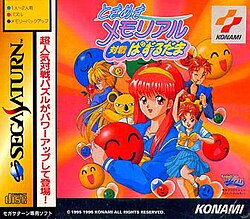 Tokimeki Memorial 2 Taisen Puzzle Dama on PlayStation
 Puzzle by Nikoli 4: on PS4
 Professor Layton and the Last Specter on DS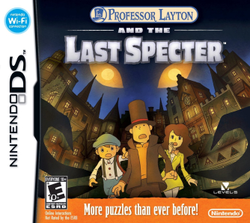
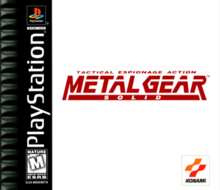 Metal Gear Solid: Integral on PlayStation
 ISS Pro Evolution 2 on PlayStation
 Pro Evolution Soccer 2 on PlayStation
 Metal Gear Solid 3: Snake Eater on PS2
 Dance Dance Revolution Best Hits on PlayStation












 Another SquareThought Site