



Tokimeki Memorial has a legacy of teenage crushes, stat cards and calendar tetris: you spend three years of simulated high school deciding whether to study, go to club practice or ask out someone whose entire personality is conveyed by a handful of image frames and a very reliable elevator music cue. Tokimeki Memorial 2 Taisen Puzzle Dama is Konami's cheeky compromise: take the melodrama and the cast of Tokimeki Memorial 2, shove them into a versus puzzle engine, sprinkle in enough character art and music videos to make a shrine out of your memory card, and call it family-friendly chaos. Released on PlayStation in 2001, it's not trying to be a deep narrative sequel - it's a grab-bag celebration. That said, if you squint, listen to the background soundtrack and let the puzzle pieces fall where they may, you can still see the outlines of the characters' arcs. This review will treat the game like the soap opera it secretly wants to be: analyzing how Hikari, Kasumi, Sumire, Mei, Kaori, Homura and the rest get condensed, caricatured, and occasionally elevated by being trapped in a falling-block gladiatorial arena.
On paper Tokimeki Memorial 2 Taisen Puzzle Dama is simple: two-player (or CPU) puzzle matches, combos, counters, and the usual frantic scramble to not let your side of the screen look like a metaphor for your life choices. In practice it's also a little idol showcase, a greatest-hits package of character portraits, and a conveyor belt of micro-narratives. The real hook for fans isn't the novelty of the puzzle engine - it's the way each heroine's personality is translated into a handful of interstitial moments. Because this is a spin-off, the game's narrative scaffolding is recycled and highly compressed. Those who've played Tokimeki Memorial 2 or its Substories already recognize the archetypes: Hikari Hinomoto as the energetic, often earnest friend; Kasumi Asou the composed, 'cool senior' type; Sumire Nozaki with her frivolous charm and possible idol sheen; Mei Ijuuin the composed, possibly enigmatic presence; Kaori Yae's soft-spoken warmth; Homura Akai's fiery spark. In the puzzle arena those arcs don't get three years and a calendar to bloom - they get a picture, a bite-sized voice clip, and a victory screen that implies everything you ever wanted to know about them. That compression is both the game's strength and its weakness. If you're the kind of player who treats profile art and unlockable videos like treasure, Puzzle Dama gives you satisfying rewards: win a match with Kasumi and you unlock a music video sequence or a gallery image. Lose to Hikari and you might instead unlock a comedic interlude. Each reward acts as a tiny epilogue or teaser for the characters' larger stories in the mainline games. The puzzle mechanics become the gatekeepers for these micro-arcs, which is charming - if unexpectedly transactional. Gameplay-wise, the title is competent. The versus puzzle rules are what you'd expect from a mid-1990s Konami puzzle experiment: clean input, predictable chaining, and a satisfying hit-sound when you send garbage to the opponent. It's the kind of thing that rewards quick pattern recognition and the forethought to set up multi-stage combos. For single-player fans the CPU offers a decent curve, while local multiplayer will happily consume an evening. The audio cues and character voice lines during matches keep the action from feeling sterile, and the animated frames between rounds give the whole thing the glossy pedestrian romance of school-life anime compressed into snackable portions. Where the game flirts with narrative interest is in how each heroine's typical Tokimeki arc is recreated through the lens of puzzle victory conditions. Hikari's arc, for instance, turns into hustle: quick combos, scrappy comeback animation, voice line of encouragement - she remains the teammate who pulls you out of a slump. Kasumi's arc is translated into cool efficiency: her win screens are understated but striking, implying competence and restraint. Sumire and Mei keep their more performative sides: they get music video slots and pose-heavy gallery images, as if their story beats are best told through song and stage presence. Twins or supporting characters that appear in the Substories series - like Miho and Maho - are treated as novelty characters whose arcs are reduced to sibling gags and mirror-image framing. That reduction can be frustrating for players who want emotional payoff. Tokimeki's dating sims build tension over time, turning slight choices into long-term consequences. Taisen Puzzle Dama instead turns attachment into collection: you collect images and clips like stamps, and the glimpses you get of the heroines are evocative, not exhaustive. But if you accept the premise - that puzzle matches are proxy dates and unlocks are little confessions - the game does an excellent job of honoring the cast. It makes you feel like you're still in the same universe, just with fewer arithmetic consequences and more dramatic arced chains of colored orbs.
Graphically this is a PlayStation era title wearing its generation on its sleeve: pixel-polished 2D sprites, bright portrait art and pre-rendered animated sequences that wouldn't shame a budget visual novel. Konami clearly leaned on the character art - win portraits and gallery images are often the highlight, lovingly drawn and animated just enough to sell a mood without becoming an actual anime episode. Backgrounds during matches are functional rather than showy, prioritizing clarity so you can focus on chaining combos instead of enjoying painterly sunsets. The music video unlocks (a neat touch referenced in the Tokimeki Memorial 2 Music Video Clips material) are where the game goes full fan-service: short, catchy, and accompanied by remixed Tokimeki melodies. They act as the game's equivalent of a well-shot end-credit montage, distilling a character's aura into music and a few well-composed frames. It's not groundbreaking art direction, but it's sincere, polished and effective in the way a good yearbook photo can be. If you came for the girls, the visuals will not disappoint; if you came for cutting-edge graphics, you'll be reminded that this is primarily a nostalgia-driven side-quest.
Tokimeki Memorial 2 Taisen Puzzle Dama is, in equal measure, a puzzle game and a shrine to a cast of characters whose full arcs belong to other games. If you judge it by the standards of a three-year dating sim, it's a skimpy appetizer. If you judge it as a fan product - a lovingly produced capsule of portraits, music clips and quick narrative morsels - it's a surprisingly affectionate souvenir. The biggest question is who this game is for. If you're a Tokimeki completionist or someone who measures romance in unlock percentages and gallery fills, this PlayStation title is basically a mobile-era gacha before gacha was a thing: you grind matches, you collect clips, you feel the quiet satisfaction of filling out a roster. If you're a puzzle purist looking for deep single-player narratives, it's an appetizer that occasionally promises the meal but never sits you down at the table. Ultimately, the game succeeds at what it sets out to do: translate the charm of Tokimeki Memorial 2 into a fast, approachable multiplayer puzzle package that doubles as a character showcase. The arcs of Hikari, Kasumi, Sumire, Mei, Kaori and others aren't replaced; they're compacted into glances, victorious smiles and music-video finales. It's like reading a diary that's been condensed into Polaroids - some nuance is lost, but the emotional beats are still there, framed and ready for the mantlepiece. For nostalgic players and portrait collectors, that's enough. Score: 7.5/10.
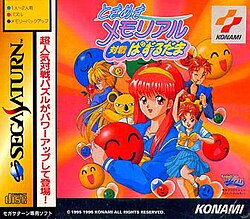
 Tokimeki Memorial: Taisen Puzzle-Dama on PlayStation
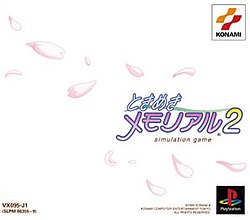
 Tokimeki Memorial 2 on PlayStation
 Test Drive: Off-Road 2 on PlayStation
 Test Drive: Off-Road 3 on PlayStation
 Test Drive: Off-Road on PlayStation
 Metal Gear Solid: Integral on PlayStation
 ISS Pro Evolution 2 on PlayStation
 Pro Evolution Soccer 2 on PlayStation
 Metal Gear Solid 3: Snake Eater on PS2
 Dance Dance Revolution Best Hits on PlayStation












 Another SquareThought Site