

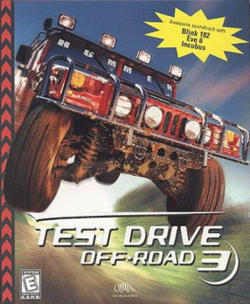

It is late 1999, the PlayStation is sagging under the weight of ambitious ports and arcade racers, and Infogrames drops another entry in the Test Drive family. Named Test Drive: Off-Road 3 (sold as 4X4 World Trophy in Europe), this is the franchise's bid to carve a rut out of the asphalt-based racing market and throw us into mud, ruts and very photogenic suspension travel. The cover boasts a gleaming 1999 Hummer H1 and the game's marketing promises muscular trucks, rugged tracks and the undignified exhilaration of making a real car do things its manufacturer never intended. Reception was, in a word beloved by magazine editorial letters sections, mixed; the PlayStation version averaged roughly a 61% on aggregate sites and split opinion across publications from GamePro to GameSpot and NextGen. I approached this with the cold, impartial eye of a reviewer who has seen too many racing games that dress up old concepts in shinier menus. The aim here is to figure out whether Off-Road 3 is a satisfying detour from pavement-based racers, or just another over-polished gravel pit where the novelty wears off by the first puddle.
Test Drive: Off-Road 3 delivers what its title promises: off-road racing. The game offers single-player and multiplayer modes, a selection of licensed vehicles (including the attention-grabbing Hummer H1 that graces the North American box), and a series of open, bumpy circuits that prioritize sliding, lifting and sometimes getting hopelessly wedged in terrain features. The series pedigree shows in the basic structure: pick a truck, pick a track, and go. The experience is oriented towards driving real-world-style vehicles over rugged terrain rather than providing an arcade of power-ups and shortcuts. What this translates to in play is a game that leans into vehicle character - weight, suspension travel and traction matter. Steering is deliberately more ponderous than your typical arcade racer; trucks tilt and wallow, and momentum has consequences. This is both a strength and a liability. When the physics lock in and your truck feels like the hulking thing it should, the sensation of hauling a hundred pixels of suspension up a hill is oddly satisfying. Too often, however, the feel wanders into inconsistency: the same maneuver can produce wildly different outcomes on similar surfaces, and some opponents exhibit rubber-banding tendencies that chip away at the illusion of competitive racing. Modes are utilitarian rather than deep. There is no career mode with a satisfying progression tree; instead the structure is a handful of event types and cups that allow you to unlock tracks and vehicles at a glacial pace. Critics at the time were split on whether this was a deliberate focus on straightforward racing or an omission of features the genre was beginning to demand. NextGen called the PlayStation release "fairly well done" but noted there were not enough new features to push the game beyond 'fair.' That sums up the experience: competent, sometimes pleasurable, rarely transcendent. Controls deserve a special mention because they were a sticking point in contemporary reviews. GamePro's reviewers gave graphics and sound respectable marks but were more critical of the controls, handing out middling scores in that area. The PlayStation controller's analog stick and shoulder-button braking scheme are serviceable, but tight maneuvers can feel imprecise and the game's camera occasionally exacerbates problems by folding awkwardly around hills and trees. Multiplayer exists and provides short-term enjoyment; there is something reliably fun about smashing a friend in a four-wheeled behemoth and blaming lag, but the longevity of multiplayer appeal is limited by track variety and AI quirks. If you prize authentic-feeling off-road vehicles and don't mind a rather thin wrap of modes and unlockables, there is enough here for several evenings of fun. If you were hoping Off-Road 3 would reinvent off-road racing or provide a deep, replayable campaign with meaningful progression, you will be disappointed. Air Hendrix of GamePro advised that hardcore fans might rent the game to check out the cool rides, while everyone else should steer clear; that blunt rental-or-pass opinion still hits the mark in 2025.
The PlayStation hardware is a ten-year-old miracle and a millstone in equal measure by late 1999. Test Drive: Off-Road 3 leans into the machine's strengths and limps past its weaknesses. On one hand, the truck models are impressively detailed for the platform: reflections on chrome, believable bulk in the chassis, and some care taken with cockpit views and damage textures. GamePro's reviewers were enthusiastic about the visual styling, awarding solid marks for graphics and even higher marks for sound in one of their write-ups. The environments are painterly and the tracks often have concrete moments of visual charm - sunlit ridgelines, dust plumes and splashing water effects that sell the off-road fantasy. On the other hand, there are the inevitable artifacts. Draw distance and pop-in are present on many tracks; foliage is often billboarding that collapses into flat textures if you look at it the wrong way; and some track surfaces are disappointingly repetitive once the novelty of the initial lap fades. The game's frame rate is serviceable for the most part but will stutter during busy scenes or when multiple trucks are bunched together, which can compound control frustrations. Sound design gets praise in the contemporary press - engine growls and suspension clucks give feedback that many racers of the era glossed over - but audio cannot mask the fact that, visually, Off-Road 3 sits somewhere between competent and unremarkable. In short: the game looks the part when it wants to, and the visual highs are genuine, but they are interleaved with typical PlayStation-era compromises. If you picked up the cartridge expecting a revolution in realism you would be let down; if you wanted a rugged-looking racer with some real charm, you might be satisfied.
Test Drive: Off-Road 3 is a transitional product. It arrives with the modest ambition of giving players real-world trucks and dirt rather than arcade abstractions, and it achieves that goal unevenly. When the physics, visuals and audio line up, the result is a gratifyingly mechanical off-road experience: the trucks feel hefty, the tracks bite, and the Hummer on the cover is not a lie. Problems with inconsistent handling, shallow mode design and occasional camera or performance hiccups prevent the game from being a must-own. Reviews at the time were split for good reason. The aggregate for the PlayStation version sits in the low 60s percent, with outlets ranging from enthusiastic enough to hand out solid marks to scathing enough to give a D+. Contemporary critics like NextGen concluded the title was competent but not innovative; GamePro's two reviewers even disagreed within the same magazine about whether the package was compelling enough to buy. My verdict lands with the pragmatic counsel of a late-90s rental aisle: fans of off-road machinery and those curious about driving licensed 4x4s across muddy courses will find enjoyment and moments of unexpected satisfaction. The casual racer, or someone chasing depth and longevity, should rent first and buy only if the brief test run hooks them. Test Drive: Off-Road 3 is not a crime against racing games, but it is also not a rescue of the subgenre. It is a decent detour for an evening of gritty torque and flying gravel - the sort of title that makes a competent addition to a collection, but rarely the one you reach for when you want to show off what the PlayStation could really do.
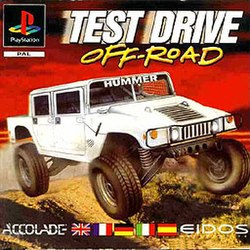
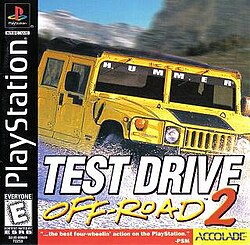 Test Drive: Off-Road on PlayStation
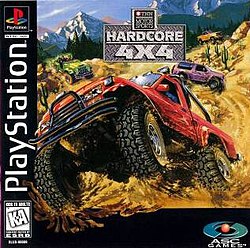
 TNN Motor Sports Hardcore 4x4 on PlayStation
 Roary the Racing Car on DS
 Team Sonic Racing on Switch
 Garfield Kart: Furious Racing on Switch
 Ben 10: Galactic Racing on PS3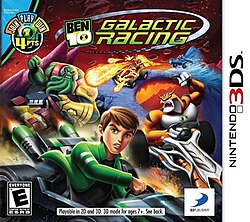












 Another SquareThought Site