

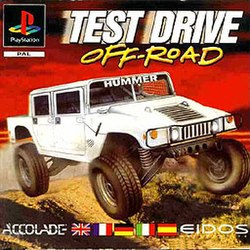

Test Drive: Off-Road arrives with the kind of confidence usually reserved for people who have never seen a mud puddle they couldn't dramatize. It's part of the venerable Test Drive series, but with dirt under its nails and a small collection of licensed off-road machines - the sort you imagine would look menacing parked outside a suburban PTA meeting. Released for PlayStation in 1997 and developed by Elite Systems, the game promised the blissful chaos of off-road racing without the responsibility of changing oil or learning how differentials work. The game's reputation settled into the comfortable middle ground of 'adequate and occasionally maddening'. Critics found things to admire: a toolbox of real vehicles, some satisfying engine noises, and tracks that have character. They also found things to complain about: awkward pop-up, loose steering that liked to improvise, and a vehicle roster that could be counted on one hand and still have fingers left over. Sales were respectable - over 500,000 copies by March 1998 - which suggests people either enjoyed the mayhem or simply misread the phrase 'off-road' as 'off your money'. This review is the deadpan tour through what actually matters when you sit down to play the PlayStation version: does it feel like driving a hulking Hummer through mud, or like pushing a toy car across a coffee table while someone flicks the table? The answer is both, depending on your expectations and tolerance for jagged pop-up cliffs.
Test Drive: Off-Road opts for a straightforward approach: jump into a vehicle, pick a track, and attempt to be the first at the finish line while the environment politely reminds you it's in charge. The game gives you two main modes. Class Racing restricts competitors to the same type of vehicle, which is the video-game equivalent of a 'no surprises' policy. Unlimited mode throws different vehicle classes together and encourages the kind of chaos that occurs when heavy trucks and nimble buggies share the same lane. Tracks are where the developers did most of their creative homework. They are oddly elaborate for the era: winding mountain passes, desert stretches, and forested routes with enough bumps and jumps to make your rear-view mirror reconsider its life choices. The tracks boast a pleasing complexity that can be satisfying the first few times you race them. After the tenth lap, they develop the personality of a repetitive acquaintance: familiar, predictable, and slightly exhausting. Opponents are competent enough to keep you moving, but rarely offer the kind of cutthroat challenge that produces glorious comebacks. Mostly they chug along like distracted mid-pack drivers who occasionally collide for dramatic effect. Handling sits in the awkward space between simulation and arcade. The game leans toward arcade action: collisions are noisy, the vehicles drift with theatrical flair, and there's an underlying sense that physics is optional but entertaining when it happens. That looseness is fun in brief bursts. It also means precision driving is temperamental. Tight corners require more forgiveness than you might expect, and sometimes the controls feel like they have ideas of their own. GamePro and several reviewers flagged the 'loose controls' as a major gripe, and they were not wrong. When you want responsiveness, the game occasionally answers with charm and grace; when you need it most, it answers with something that could charitably be called improvisation. Graphical pop-up is unavoidable. Objects, trees, and parts of the track tend to materialize like NPCs arriving at a party five minutes late and apologizing with a shrug. This is a PlayStation-era technical quirk, and here it's a frequent one. Pop-up can change the rhythm of a race by forcing last-second steering decisions or denying you sightlines that were present a second ago. Gamers with the patience of monks will learn to account for it; those who prefer a clean visual ledger of what lies ahead will find it aggravating. The selection of licensed vehicles is honest if minimal. The roster includes recognizable machines but not in numbers that inspire collection mania. Electronic Gaming Monthly appreciated the use of real vehicles, but also pointed out the small selection. If you were hoping to unlock a dozen different trucks and endlessly tinker with specs, you'll be disappointed. If your goal is to pick a hulking Hummer, enjoy the satisfying rumble and go embarrass a few palm trees, the game will do that reliably. Multiplayer exists and functions as a pleasant diversion. Racing against a friend on the same console adds the human element that AI sometimes lacks: deliberate wrecking, offended taunts, and the kind of 'accidental' nudges only a living person can provide. The game's single-player longevity is average: tracks are fun, but repetition erodes charm. In short, the gameplay is competent, occasionally clever, and predictably flawed.
On PlayStation hardware, Test Drive: Off-Road wears its limitations like a leather jacket - stylish in certain light, a bit stiff in others. The environmental detail is variable: some areas show a respectable amount of texture and elevation, while others reveal the console's memory constraints through sudden appearances of trees and rocks. Pop-up is the game's visual signature. It can be amusing when a cactus suddenly announces itself mid-jump; it is less amusing when an unseen wall appears between you and first place. Vehicle models are serviceable. They have enough detail to be recognizable and to please anyone who enjoys the odd satisfaction of a pixelated hood ornament. Animations are straightforward: suspension compresses, dirt kicks up, and wheels spin with the determined optimism of things made to go forward. Lighting and draw distance are typical for 1997: sufficient to get you oriented, not sufficient to inspire awe. The soundtrack and engine sounds get a shout-out here because they contribute more than the visuals to the game's atmosphere. Engine noise is satisfyingly authentic for the era, and the soundtrack is functional and sometimes catchy. GamePro praised the realistic engine sounds, which help sell the sensation that you are piloting a heavy, combustible object rather than a conceptual racing token. From a modern perspective, the graphics are nostalgic rather than impressive. From a contemporary 1997 viewpoint, they were competent with frustrating technical hiccups. If you can imagine flipping through an old photo album of late 90s gaming, Test Drive: Off-Road would be the page with the slightly fuzzed-out group shot where everyone is mid-laugh and someone blinked.
Test Drive: Off-Road is the kind of game that could be recommended while wearing a shrug. It's not a masterpiece, nor is it a disaster; it exists in a comfortable middle distance where critics can be politely decisive about what works and what doesn't. Strengths include interesting track design, a handful of licensed vehicles, and audio that convincingly sells the idea of hulking off-road machines. Weaknesses - loose controls, frequent pop-up, and a limited vehicle roster - keep the experience from being consistently great. For an afternoon of chaotic, jump-heavy racing with a friend on the couch, the PlayStation version holds up. For players seeking finely tuned handling, deep vehicle customization, or AI opponents that will give them hell, it will feel thin. The game sold reasonably well, which suggests that many players found the formula enjoyable enough; the sequel that followed leaned into that audience. If you enjoy off-road racing in the arcade tradition - loud engines, dramatic jumps, and a forgiving approach to physics - Test Drive: Off-Road is an acceptable, occasionally charming diversion. If you demand precision and polish, you may want to look elsewhere. Either way, it makes for a decent nostalgic trip, and if nothing else it offers the pleasure of driving something large, noisy, and unquestionably off-road while the world obligingly rearranges itself right in front of you.
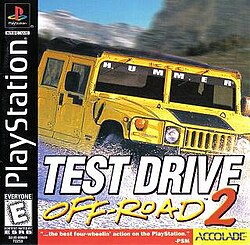 Test Drive: Off-Road 3 on PlayStation
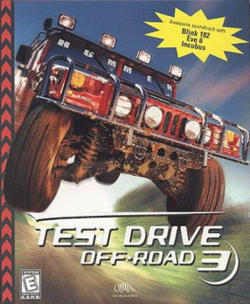 TNN Motor Sports Hardcore 4x4 on PlayStation
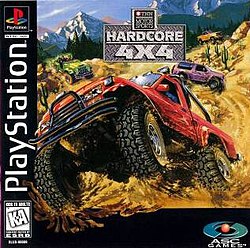 Roary the Racing Car on DS
 Team Sonic Racing on Switch
 Garfield Kart: Furious Racing on Switch
 Ben 10: Galactic Racing on PS3












 Another SquareThought Site