

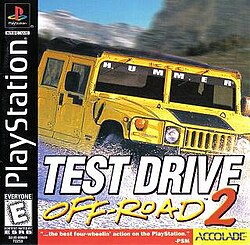

Test Drive: Off-Road 2 - released as Test Drive 4X4 in some territories - is the late‑90s answer to the question "what happens when a mainstream arcade racing franchise straps on mud tyres and a lift kit?" Built on the existing Test Drive 4 engine and co‑developed by Accolade's internal team and Pitbull Syndicate, the PlayStation version arrived in North America in October 1998. The game's marketing push was part of a larger Accolade campaign (they reportedly invested heavily in advertising across the Test Drive line), and the package shipped with licensed off‑road vehicles - a draw for petrolheads who liked their trucks with factory certification. Critical reception was mixed: reviewers appreciated the concept and licensed roster but were divided on execution, with aggregate PlayStation scores sitting in the mid‑60s. This review takes the nostalgic off‑road romp apart with a focus on technical design: engine choices, handling model, AI, performance and rendering tradeoffs, and how those engineering decisions shape the player's experience.
The core idea of Off‑Road 2 is elegantly simple: take the Test Drive template, swap asphalt for mud, and feed the result to players hungry for licensed trucks and rally‑style courses. On the PlayStation, the game preserves the series' arcade DNA - short, punchy runs rather than protracted simulation sessions - while introducing elements expected from off‑road racing: varied terrain, higher ride height, and vehicles that are meant to feel less precise on tarmac and more pendulous off it. From a technical perspective the most important thing to understand is the pedigree: the game uses the Test Drive 4 engine. That means the codebase, rendering pipeline, and likely much of the collision and physics scaffolding are inherited rather than built specifically for an off‑road context. Engine reuse is sensible - it accelerates development and leverages battle‑tested systems - but it also imposes constraints. A paved‑road engine expects consistent friction models and predictable surface normals; an off‑road game demands variable traction, transient wheel slip on soft surfaces, and suspension articulation. Where the team leaned on the parent engine you can detect compromises in the fidelity of surface interaction. The physics model aims for arcade accessibility rather than authentic suspension kinematics: vehicles feel weighty and toy‑like instead of simulating dynamic load transfer and tire deformation. Vehicle variety is one of the game's stronger technical selling points: the inclusion of licensed off‑road vehicles provides accurate visual silhouettes and brand recognition, which in turn informs how each vehicle should be tuned in game. In practice the tuning manifests as differing top speeds, acceleration curves, and rough handling archetypes (heavy truck vs. nimble buggy). The depth of the tuning options isn't sim‑level, but the roster design gives players obvious tradeoffs to weigh: torque and ground clearance versus agility. The tradeoff design is effective for a pick‑up‑and‑play audience, though mechanically-minded players might wish for adjustable differentials, tire compounds, or suspension tuning. Controls and input mapping on the PlayStation target immediacy. Steering is responsive but deliberately forgiving; the steering ratios are tuned to keep the rear end from immediately turning into a paintbrush on corner exits. Brake and gas scaling are arcade‑leaning; the engine aids recovery rather than punishing imprecision. That approach aligns with the game's multiplayer focus - split‑screen races are designed for couch chaos rather than technical lap perfection. AI behavior is pragmatic and predictable. Opponents follow racing lines with some variability to simulate competition, but they rarely perform complex overtaking maneuvers or exhibit exploitable errors that feel emergent. This makes for consistent lap‑to‑lap difficulty and helps keep races competitive on consoles where frame‑by‑frame input variability can be large. From a code architecture standpoint, the AI appears rule‑based rather than learning or adaptive; this is unsurprising for a late‑90s console title and it keeps CPU cost and complexity down. The track and level design prioritize readable obstacle placement over organic realism. Off‑road environments are composed of discrete surface types (dirt, gravel, occasional loose sand) and the game uses those surface types to moderate handling changes. The designers balance the need for visual variety with technical considerations: tracks are segmented into chunks that reuse assets and layout patterns, a memory‑friendly approach that reduces load times and keeps polygon counts in check. From a pacing perspective, tracks deliver short, varied bursts of challenge, which suits split‑screen sessions and the era's tolerance for repeated, fast restarts. Multiplayer is a critical component: the PlayStation supports multiplayer races that benefit from the arcade control model and forgiving physics. Split‑screen mode reduces per‑player rendering budgets, which means the engine must dynamically manage LODs and draw calls to maintain playability. The decision to support local multiplayer required engineers to prioritize consistent frame pacing over raw graphical fidelity, and that tradeoff is visible in the game's presentation choices. If you want to race your friend and not stare at slowdowns during wheel‑to‑wheel combat, the design decisions mostly pay off. Progression, unlocks, and the meta‑game are serviceable. There's an incentive structure tied to winning races and unlocking tougher events, but the loop is straightforward: win to advance, try different vehicles to find a preferred handling envelope. For players who care deeply about tuning minutiae, the lack of deeper vehicle customization will feel like a missing layer. For players who prefer a direct, tactile experience with a selection of licensed trucks, the approach is fine. Reception from critics reflects the same technical split: reviewers praised the licensed vehicle roster and the off‑road concept but pointed out that the underlying engine and arcade orientation leave the physics and environmental fidelity wanting. GameRankings aggregated the PlayStation reviews into a mid‑60s score, and publications ranged from GamePro and PSM's relative praise to GameSpot and IGN's more reserved impressions. In short, the gameplay design is competent and occasionally fun, but it rarely aspires to be the definitive off‑road simulation.
Graphically, Test Drive: Off‑Road 2 is a study in late‑generation PlayStation pragmatism. The game runs on the Test Drive 4 engine, which was originally optimized for more conventional racing environments. That heritage means the rendering pipeline, material systems and LOD strategies were adapted to support off‑road visuals rather than built around them. The assets are competent for the era: vehicle models capture brand silhouettes well enough to be recognizable, and the cover art's Hummer H1 makes sense as a marketing hook because the in‑game models share that imposing geometry. Textures are serviceable but unsurprising. The PlayStation's VRAM and texture memory constraints force artists to prioritize what the player looks at most - vehicle bodies and nearby terrain - while using repeating texture tiles for the rest. That repetition is a cost‑effective approach that preserves frame rate at the expense of environmental variety. Lighting is largely baked or implemented with simple dynamic elements; advanced per‑pixel effects and complex shadowing were outside the reach of both the engine's expectations and the console's real‑time budget. The Test Drive 4 engine's reuse shows up in how the world is assembled: tracks use modular pieces stitched together, which keeps memory churn low but can result in visible seams or repeated geometry patterns. Level streaming and draw distance handling aim to hide pop‑in, but the PlayStation era's limits mean occasional LOD changes and short‑range pop are evident. Those are tolerable for an arcade racer, but they prevent the environments from feeling truly immersive. Performance and frame pacing are where the team made directional choices. Supporting split‑screen multiplayer forces a lower per‑player rendering budget, and the engine does a decent job of maintaining playability by reducing detail and prioritizing steady input responsiveness. Reviewers' mixed reactions reflect this engineering tradeoff: some outlets appreciated the consistent multiplayer feel and forgiving controls, while others expected more visual ambition or smoother single‑player presentation. Particle effects and surface feedback are simplified. You get dust plumes, occasional debris, and surface discoloration to indicate skids, but these are economical implementations rather than the lush, physics‑driven effects modern players expect. In the context of 1998 PlayStation hardware, those choices are defensible and keep the game's interactive frame rate playable across modes. Ultimately, Off‑Road 2 looks the part at a glance - recognizable trucks, dirt tracks that read as dirt, and the sort of visual shorthand that sells the fantasy of off‑roading. Up close, the limits of the era and the reused engine architecture show through in texture repetition, modest lighting, and LOD transitions. For fans of late‑90s console racers the presentation reads as nostalgic competence; for players seeking graphical innovation it will feel conservative.
Test Drive: Off‑Road 2 is a competent piece of engineering that prioritizes fast, approachable off‑road racing and local multiplayer over deep simulation or graphical risk. Using the Test Drive 4 engine allowed the team to ship a polished, recognizable package with licensed vehicles and accessible handling, but it also inherited constraints that keep surface physics and environmental fidelity from reaching simulation levels. Critics' opinions were predictably split: some praised the pick‑up‑and‑play arcade fun and the licensed roster, while others wanted deeper vehicle dynamics and a more immersive off‑road feel. If your priorities are technical curiosity about how an existing racing engine is adapted to new terrain, or if you enjoy couch split‑screen races and the charm of late‑90s console design, Off‑Road 2 is worth a look. If you demand precise suspension modeling, adaptive AI, or graphic bravado, you'll encounter the era's and the engine's limitations. The 6.6/10 score reflects that middle ground: engineers made sensible tradeoffs to deliver a stable, multiplayer‑friendly experience, but those tradeoffs cost the title the kind of ambition that would have elevated it above the mixed reception it received on release.
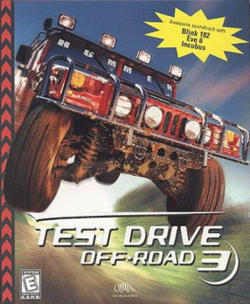 Test Drive: Off-Road on PlayStation
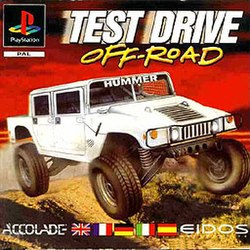 TNN Motor Sports Hardcore 4x4 on PlayStation
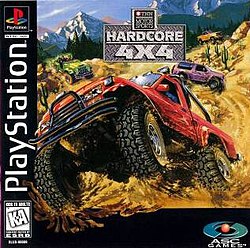 Roary the Racing Car on DS
 Team Sonic Racing on Switch
 Garfield Kart: Furious Racing on Switch
 Ben 10: Galactic Racing on PS3












 Another SquareThought Site