


 Aug 2025
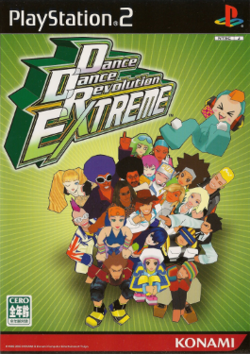

If rhythm games were a high school class, Dance Dance Revolution Extreme would be the terrifying final exam that comes with sweat stains and the teacher who insists on curve-flattening. This entry in the DDR lineage is less about cutesy avatars and more about confronting your coordination, timing, stamina, and ability to not trip over your own confidence. Released in arcades in Japan in late 2002 and later ported to PlayStation 2, Extreme stands out for treating players like actual dancers: it gives you a punishingly large soundtrack, the return and refinement of brutal modes (Nonstop and Challenge), and an Extra Stage system that basically dares you to be amazing. If your idea of fun is being rewarded for surgical footwork and the occasional ego-crushing combo break, Extreme is your kind of rhythm therapy.
Dance Dance Revolution Extreme is built for players who want challenge stacked on top of challenge, with legitimate risk-reward systems that force decisions under pressure. At its core it's standard DDR: arrows scroll, you hit corresponding panels with your feet, and timing windows evaluate your inputs. But Extreme layers in modes and mechanics that separate casual button-punchers from players who actually learn to move like a metronome. Difficulty and approachability are simultaneously improved and tightened. Beginner mode is useful if you're brand new; it replaces background noise with an on-screen dancer who cues step patterns and even auto-passes your first stage. It's a gentle onboarding tactic in a game that otherwise relishes punishment. More important to the long-term player are the two main endurance/challenge modes: Nonstop and Challenge. Nonstop nails the 'endurance check' idea: you play four consecutive songs without pausing, and the dance gauge behaves like your lifeblood. The twist is brutal - as you move further into a nonstop course, missed steps cost increasingly more of your bar. This means early mistakes compound, and you learn to manage stamina and pacing across an entire run, not just a single three-minute song. Challenge mode is Extreme's crown jewel for masochists with discipline. Borrowed from earlier arcade iterations but refined here, Challenge mode in the arcade gives each player four lives. You lose a life if you break a combo by hitting a step judged as 'Good' or worse, or if you fail to maintain freeze arrows (hold notes). The result is a mode that rewards absolute consistency and penalizes sloppy flurries. Some songs will reward you with regained life for successful completion, but run out of lives mid-song and the game ends for that player. On PS2 the Challenge mode is presented as a set of objectives - pass this section, hit this modifier, or reach a certain score - which changes the skillset from pure endurance to target practice under duress. A technical flourish in Extreme is the introduction of the Marvelous timing window (present in Nonstop and Challenge modes). Marvelous is a stricter window than Perfect, meaning the game rewards you for superhuman timing precision. The catch: in stock arcade builds Marvelous is only displayed during specific modes and isn't visible during normal play, so you learn to chase a judgment that sometimes hides itself. Fan mods later made Marvelous available everywhere, which says a lot about how players wanted to climb the timing ladder. Extra Stage mechanics turn high-level performance into both carrot and gauntlet. Hit AA or better on Heavy/Challenge and you unlock an Extra Stage; unlike some previous games you can pick any song for the Extra Stage, but built-in modifiers still force the environment: 1.5x speed, Reverse scroll, Heavy difficulty, and No Recovery meter. Beat The Legend of MAX with AA on Extra Stage and you can trigger One More Extra Stage - the arcade's ultimate test - where Dance Dance Revolution (the eponymous song) greets you with 3x speed, Reverse, Challenge difficulty, and Sudden Death. It's basically the game's way of saying: congrats, now prove that was not a fluke. Reading patterns becomes a vital skill here. Extreme's charts include new step types and denser patterns from several Bemani titles, meaning you have to parse complex rhythms quickly. The Challenge difficulty exists largely to punish poor reading and reward predictive footwork and anticipation. Freeze arrows (hold notes) force you to split attention between maintaining stamina and landing precise timing windows; letting go of those arrows costs you a life in arcade Challenge, which teaches respect for sustained beats. Beyond raw timing and reading, Extreme rewards physical control and economy of motion. Fancy, theatrical stomps get applause from an audience, but the game prefers compact, efficient stepping so you can recover in time for the next burst. Stamina management is a real skill: the jump from Light to Heavy to Challenge isn't just about faster arrows - it's about conserving breath and foot energy across long runs. Nonstop and Workout modes make DDR Extreme as much an exercise regimen as a rhythm game, demanding cardiovascular fitness if you want to perform consistently through an entire course. Modifier literacy (speed changes, Reverse, Sudden Death, etc.) is another pro-level skill. Speed modifiers change how arrow streams look and are crucial for sight-reading dense sections; Reverse flips scrolling direction and requires re-mapping visual cues; Sudden Death gives you one slip and it's over. Smart players use modifiers to sculpt a song into their comfort zone for higher accuracy, while also learning to handle imposed modifiers during Extra Stage runs. The PS2 version adds accessibility features and extra content: lesson mode, Party Mode minigames (some EyeToy-enabled), and a song wheel redesign that improves navigation. Party Mode offers harmless distractions like Hyper Dash and Feeding Time, but if your heart is set on improving as a dancer, the meat of Extreme remains in Nonstop, Challenge, and the Extra/OMES ladder. Million-point technical players will also be drawn to the soundtrack variations across regions and the communal bragging rights that come with mastering songs on Challenge. If you want to get better at Extreme, your training should have layers: start with timing drills and the game's lesson mode to cement rhythm windows; then practice sight-reading by doing a variety of songs at higher speed modifiers so your eye learns to track arrows earlier; finally, build endurance with nonstop runs while learning to manage your bar and avoid combo-breaking hits. Watching high-level replays or arcade masters is also a fast way to internalize foot positioning and the economy of motion you need for higher difficulties.
Graphically DDR Extreme is functional rather than flashy. The song wheel got a solid rearrangement in this installment, centered and scrolling left-right with banners on top and foot ratings below, which is a surprisingly important UI upgrade when you're flipping through 200-plus tracks and trying not to drool on the controller. Backgrounds and dancers are serviceable and designed to prioritize visibility of arrows, which is what you want when every millisecond matters. The PlayStation 2 home releases vary by region in soundtrack and presentation, but the visual priority remains the same: arrows must be readable and timing information must be clear. Party Mode sprinkles in EyeToy-enabled gimmicks for home players who want handheld chaos, but when it comes to the core challenge the graphics are deliberately unflashy so your eyes can focus on the math of the beat.
Dance Dance Revolution Extreme is less a casual diversion and more a test bench for rhythm-game chops. It asks for timing that's practically surgical, stamina you can be proud of, and sight-reading that borders on clairvoyant. The inclusion of Beginner mode and lesson tools makes it approachable for rookies, but the Nonstop and Challenge modes, the Marvelous timing window, and the Extra/One More Extra Stage ladder are where the real trials live. If you want a rhythm game that will genuinely improve your coordination, force you to learn efficient footwork, and hand you a humbling defeat whenever you slack off, Extreme delivers. It's rewarding, occasionally brutal, and weirdly wholesome in how it trains you to be precise. Give it time, learn the modifiers, respect the freeze arrows, and your feet will start earning the grades the game hands out. Then, when you finally hit that OMES run and don't crumble, you'll feel like you deserve the glowing temporary ego inflation - and maybe a towel.
 Just Dance 2017 on Switch
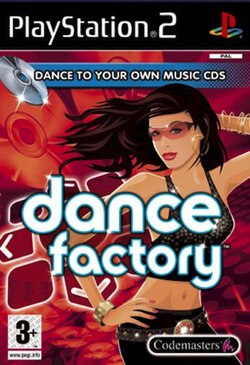
 Dance Factory on PS2
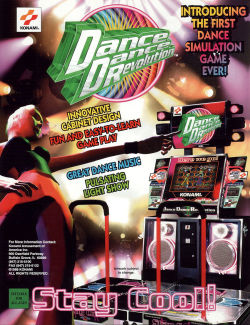
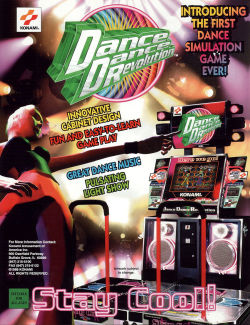
 Dance Dance Revolution on PlayStation
 Nodame Cantabile on PS2
 Pop'n Music 5 on PlayStation
 Thumper on Switch
 PixelJunk 4am on PS3










 Another SquareThought Site