

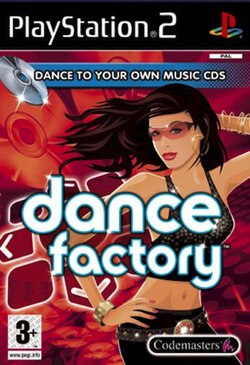

Dance Factory is the sort of video-game oddball that walks into a room wearing a sequined jacket and announces it will reinvent the cha-cha with your old mixtape. It was developed by Broadsword Interactive and published by Codemasters for the PlayStation 2 in 2006, and its claim to fame is a deceptively simple promise: feed it any music CD you own and it will, on the fly, turn that music into dance-pad arrows. There are foot-operated dance pads, optional EyeToy camera input, a handful of licensed songs bundled with the package, a creature-editing sidekick, and modes that range from party-friendly to calorie-obsessed. The concept is audacious: democratize rhythm games by letting the player be the DJ, choreographer and guinea pig all at once. This review is less interested in whether the arrow timing is one frame off and more in the game's true stars - the personalities and narrative beats the system creates. Treat the game like a tiny soap opera where CDs, the dance pad, the EyeToy and your custom creature are all characters with arcs. The machine transforms your music collection into protagonists (and antagonists) for a short, sweaty drama of rhythm and embarrassment. That might sound ridiculous, but in the context of Dance Factory it turns out to be kind of the point.
If Dance Factory were a small indie movie, the cast list would be surprisingly colorful and oddly moving. The Protagonist: The CD The CD starts shy and anonymous in its jewel case: a silent slab of sonic potential. The game's core mechanic literally forces it into the spotlight and asks it to perform. In Endurance mode you see a CD's journey laid out - either the five licensed songs the package includes or an entire disc from your collection. The conversion process is a quick little montage: four minutes of audio takes about a minute to become a danceable track. When the algorithm succeeds, the CD blooms into something you can stomp and spin to; when it fails, it becomes a stubborn diva that demands awkward shuffle-steps. The player's joy comes partly from discovering which albums turn into natural dancers and which turn into tragic one-hit-wonders. The Mentor: The Dance Pad Think of the dance pad as a gruff Sensei who neither cares for your feelings nor judges your playlist, but will absolutely call you out when you waltz like a confused penguin. The pad is ruthless, honest, and tactile - its judgments are immediate: hit the arrow, get a cheer; miss it, and you earn the ignominy of a "Miss" on screen. In Fitness mode the pad becomes the personal trainer that keeps a calorie counter and will display cheeky taunts like "Pork Out" or "Gettin' Flabby" for repeated mistakes. This mode forces the player to confront the consequences of their bad footwork while offering a gamified relationship between effort and self-image. The pad's arc is simple: from indifferent hardware to the player's strictest accountability partner. The Sidekick: The Creature Creature mode gives each CD (and the five included songs) a dancing creature avatar. This is where Dance Factory's script allows for genuine character development. The creature is born out of the music's personality - a heavy metal disc might spawn a spiky, brooding creature; an airy electronica disc could produce a floating, serene little blob. As you accumulate points through performance, you can buy clothing and accessories for the creature: heads, eyes, chests, backs, waists, wrists. Each cosmetic unlock is a small beat in the creature's story arc: humble avatar becomes confident performer. In two-player Creature Battle the arc shows up as spectacle and slightly absurd violence: combos trigger special attacks, and your creature goes from timid toe-tapper to battle-hardened runway star. The Confidant: EyeToy The EyeToy camera can be used as an input as well as a camera, and its role is that of the intrusive but well-meaning side character who insists on recording everything you do. It turns a solitary dance routine into an interactive visual feedback loop. The EyeToy's arc is more subtle - it nudges the player away from foot-only input into full-body performance, rewarding flamboyance and adding chaotic, social energy to multiplayer modes. Modes and Their Mini-Plots Endurance mode reads like an odyssey: the CD must survive five songs or a whole disc. Fitness mode is a morality tale where calories and distance-equivalents of exercise translate into game metrics and slightly mean motivational messages. Creature battles are trash-talk comedies where your decorated avatar's bling becomes the source of both pride and cheap attacks. EyeToy modes transform the experience into a slapstick showbiz skit where being dramatic and silly often wins more than being precise. Mechanics and Player Agency The game's narrative power comes from the player's ability to intervene. If the automatic conversion doesn't match your mental choreography, you can enter your own moves for any CD track and save them. That puts you in the director's chair: you can craft a bespoke routine and even share it with other players who own the same albums. This creates an implied community storyline of shared inside jokes: the same CD can have competing canonical dances depending on who in your friend group is the choreographer. There is a creative arc here: your first attempt is usually clumsy; with practice you refine the steps and can even teach them to others. Multiplayer and The Tournament Arc Dance Factory includes collaborative and competitive multiplayer. The battle modes are the most narratively satisfying: two players can go toe-to-toe in Creature Battle, and tournaments handle up to 16 players in rotation. These structures create temporary soap operas - rivalries form, underdog routines surprise, and the champion walks away with bragging rights. The multiplayer systems amplify the game's character-driven premise by making every player's CD-selection and choreography choices part of the shared story. Limitations and Dramatic Tension All stories need tension, and Dance Factory has it built-in through technical constraints and mixed execution. The conversion process, while clever, isn't perfect - not every song produces elegant combos, and the randomness is part of the fun for some players and a fatal flaw for purists. The game was widely praised by mainstream outlets for its innovation, with the Times calling it an "instant classic" and Game Informer giving it an 8/10, while some corners of the gaming press were harsher. Critics pointed out that the PS2's lack of persistent storage made the constant CD-swapping awkward and that the visuals weren't much to write home about. These issues function as antagonists in the story: they complicate the player's quest for seamless rhythm-game nirvana and force you to decide whether the novelty justifies the quirks.
Dance Factory's visual presentation is pragmatic rather than aspirational. The developer's focus is clearly on algorithms and user-generated choreography rather than glossy backgrounds and character models. Yahoo! Games put it succinctly: "poor graphics notwithstanding" - a diplomatic way of saying the game won't make your TV weep with wonder. The creature avatars are charming in a low-fi way, and customization gives them personality, but stage backgrounds and UI elements are functional rather than spectacular. This aesthetic choice actually reinforces the game's story-first emphasis: the visual design is a stage dressing that keeps the spotlight on your music and moves rather than on photorealistic textures. If you expect eye-melting spectacle from a mid-2000s console release, you'll be disappointed. The PS2's hardware limits and the developer's priorities mean that Dance Factory looks like a quirky party title rather than a showpiece. On the plus side, the minimal visuals keep the gameplay readable; arrow patterns are clear and the creature customization icons do their job without fuss. Consider the graphics a pragmatic production design that supports the rhythm drama rather than hogging it.
Dance Factory is less a polished franchise entry and more a charming experimental theatre piece disguised as a rhythm game. Its premise - convert any CD into a dance routine - is clever and genuinely liberating for anyone who has ever wished their music collection could be the star of the party. When the conversion works, the result is exhilarating: your favorite obscure song suddenly becomes an arena for combos and a device for social jokes. When it doesn't, you get comic failure - and sometimes that is just as much fun. The game's best moments come from the emergent narratives it creates. The CD's transformation, the dance pad's stern mentorship, the creature's glow-up, EyeToy's peppy interference and the player's own choreographic arc combine into a surprisingly emotional little ecosystem. Critics were split at release: glowing endorsements from mainstream press clashed with more skeptical voices in specialist outlets. That split is part of Dance Factory's identity - it's an idea-driven title that rewards a certain kind of player: someone with a diverse CD shelf, a willingness to experiment, and a social circle eager to mock and celebrate in equal measure. If you want immaculate visuals or a perfect, no-surprises DDR clone, this is not your game. If you want an inventive party machine that creates half-structured musicals from your own soundtrack and gives you the tools to rewrite the choreography, it's worth a spin. For its ambition, novelty and the handful of genuinely memorable moments it provides, Dance Factory earns a solid 7 out of 10. It may not change the world, but it will make your next get-together much weirder and a lot more fun, and sometimes that's precisely the story arc a game needs.
 Just Dance 2017 on Switch
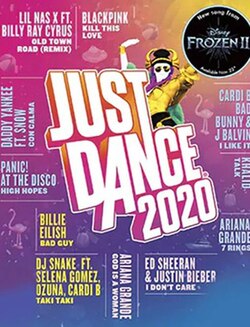
 Just Dance 2020 on PS4
 PixelJunk 4am on PS3
 Pop'n Music 5 on PlayStation
 Pop'n Music 6 on PlayStation
 Dancing Stage Fever on PS2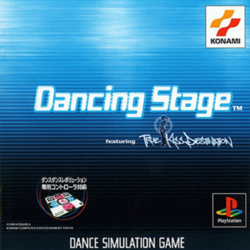












 Another SquareThought Site