

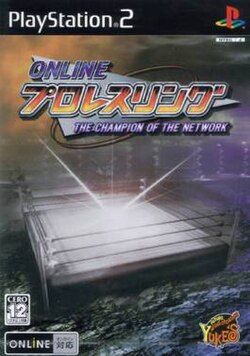

Online Pro Wrestling arrives like a leather-jacketed favorite uncle at a family reunion: familiar, slightly weird, and full of grievances about how things used to be better 'back in the day.' Built by Yuke's on the PlayStation 2 and positioned as an online twist on the WWE SmackDown! lineage, the game pivots the series toward a more traditional grappling system. That decision matters because this isn't just a set of moves and menus - it's a stage where characters are sculpted not by cutscenes but by meters, stats and the occasional internet rage quit. In the absence of a cinematic story mode, the game's drama is manufactured inside the ring by its mechanics, turning every match into a micro soap opera where grapplers rise, fall and occasionally tap out with dignity (or not).
If Online Pro Wrestling were a TV show, it would be an anthology where every episode stars a different archetype: the powerhouse who slams with the subtlety of a falling anvil, the high-flier who treats the turnbuckle like a trampoline, the submission artist whose primary language is leglocks, and the scrappy underdog who survives on guts and timing. Yuke's gives these archetypes a surprisingly literary treatment by handing them stat sheets and meters that function like plot devices. The new grappling system is the series' attempt at giving matches the pacing of a well-written match segment: slow build, escalating damage, and a final act where desperation moves either seal the victory or invite a last-second reversal. Body damage meters are the narrative barometers here. They don't simply reduce hit points; they tell a story about stamina, accumulated pain and strategic targeting. When you spend the first act neutralizing an opponent's limbs, the damage meters allow you to construct a three-act arc: setup (wear them down), complication (capitalize on the injured area), and payoff (hit the finisher or force a submission). The game rewards patience and planning the same way a good heel promo builds sympathy for a babyface's comeback. Underneath the body meters sit the character scales: strength, endurance and speed. These stats are less numbers than personalities. A high-strength grappler is blunt force trauma personified - their story is one of dominance and inevitability, the kind of wrestler who steamrolls opponents until the crowd either loves or fears them. Speedsters craft a different narrative, composed of fleeting moments and split-second reversals; their arc is frenetic and often precarious. Endurance is the unsung hero of long-form storytelling, enabling drawn-out matches where a competitor's resolve is tested. The interplay of these stats means that two identical-looking wrestlers can tell very different stories depending on their underlying attributes. Submission meters are where Online Pro Wrestling becomes maddeningly theatrical. Instead of an abstract 'press X to win' meter, the game stages a miniature duel every time a limb is trapped. The dual-meter system - one for the applier and one for the escapee - is a gradual tug-of-war that mimics a real submission exchange. This mechanic creates immediate micro-arcs: the submission specialist sets the scene, the target battles against increasing despair, and either someone finds salvation or the lights go out. There's psychological pacing to be found; dragging out a submission attempt when the opponent is close to tapping is a deliciously villainous flourish, and successfully fighting out creates instant audience empathy for the survivor. Because Online Pro Wrestling was built with online play in mind, the game frames its character arcs on a communal stage. Tournaments and tag matches force dynamic storytelling that's not predetermined by developers but improvised by human actors. A wrestler who wins three online tournaments in a row crafts the kind of momentum you'd expect from a serialized hero, building legitimacy match after match. Tag matches introduce relationships: partnerships, betrayals, and comic miscommunication. A tag ally who constantly misses tags becomes the clueless sidekick everyone loves to boo; a reliable partner is the steady hand in the protagonist's story. In short, the online format allows players themselves to write character beats through repeated interactions, rivalries and rematches. The game's single-player offerings are lean, so character development is emergent rather than authored. Players write arcs by choosing how to invest in a wrestler's stats, which body parts to target, and when to gamble on submissions versus trying for a high-risk finisher. The emergent narrative rewards players who understand pacing: keep your opponent guessing, switch strategies mid-match, and let a comeback look inevitable before you snatch victory. Conversely, predictable aggression or button-mashing reduces a match's narrative to a two-minute clip where nobody learns anything and character depth is substituted for spectacle. All of this has a cost, naturally. The traditional grappling system demands patience and a willingness to play chess in a game franchise that sometimes flirted with arcade chaos. For players who want instant gratification, the deliberate nature of these mechanics can feel like a slow-moving melodrama. For everyone else, especially the ones who appreciate how a good match tells a story without any spoken lines, Online Pro Wrestling is an oddly rewarding exercise in improvised dramaturgy.
Online Pro Wrestling's visuals are of a PS2-era pedigree: muscular polygons, expressive but occasionally stiff animations, and character models that read best at arm's length. Presentation is less about photorealism and more about clarity - every grapple, limb strike and submission is animated well enough to sell the action and to feed the game's primary storytelling tools: meters and timing. The camera typically plays the role of an obliging theatrical director, framing moments of high drama so that a submission struggle or a finisher looks appropriately cinematic. Character models aren't the reason you'll return - it's the way their movements and damage states visually narrate a match. Limbs falter, stances become labored, and the way an opponent slumps after a body blow supports the damage meters' story beats. The arenas are functional, with just enough spectacle to read as a stage without distracting from the ring. Crowd reactions are serviceable and provide the essential soundtrack of approval or disdain during pivotal moments. If you crave glossy, retina-scorching detail, this isn't the game that will make your art-director heart sing. But if you want a visual package that plays second fiddle to emergent character beats, Online Pro Wrestling's graphical approach is smartly economical: it gives you everything you need to manufacture believable arcs without getting in the way of the actual wrestling poetry.
Online Pro Wrestling is not a blockbuster narrative with cutscenes and authored rivalries; it's a sandbox for creating them. Yuke's traded a bit of instant arcade fun for a more measured grappling system that treats matches like mini-dramas. The body damage meters, individual stat scales and submission tug-of-wars are the game's real scriptwriters, turning each match into a short story about pain, resilience and hubris. If your ideal wrestling experience is improvisational theater where you, your friends and anonymous opponents on the internet compose rivalries one match at a time, this game is a delight. The patience it asks for may frustrate players used to faster-paced wrestling games, and the PS2 visuals won't win awards for realism, but the depth of emergent character arcs - the slow-burn heel turns, the ragged underdog comebacks, the satisfying submission climaxes - gives Online Pro Wrestling a charm that, like a veteran wrestler, improves with a little respect and a willingness to learn its rhythm. In short: a solid ring for storytellers, a competent package for wrestle-sports fans, and a quirky piece of PS2 online history that still understands how to make meters sing.
 Tony Hawk's Pro Skater HD on PS3
 NHL Hitz Pro on PS2
 Accolade Sports Collection on Xbox Series X/S
 Deca Sports DS on DS
 Alan Hansen's Sports Challenge on PS2
 EA Sports MMA on PS3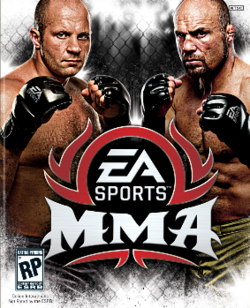
 AEW Fight Forever on Xbox Series X/S
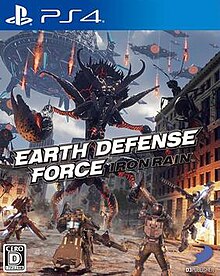
 Earth Defense Force: Iron Rain on PS4
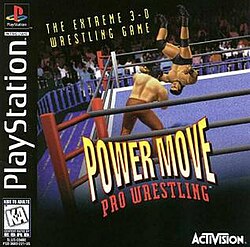
 Power Move Pro Wrestling on PlayStation
 Earth Defense Force: World Brothers on Switch
 Hermie Hopperhead: Scrap Panic on PlayStation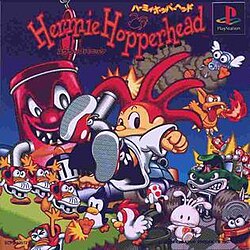












 Another SquareThought Site