

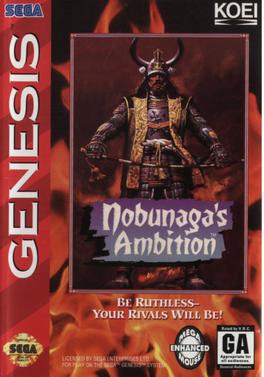

When a venerable PC strategy series founded in the BASIC era decides to strap on an Ethernet cable and plunge into the murky waters of console online play, the result is bound to be curious - perhaps heroic, perhaps awkward. Nobunaga no Yabou Online: Haten no Shou is that curious beast: a PlayStation 2 iteration of Koei's long-running Nobunaga's Ambition franchise, itself a grand strategy mainstay since 1983. The series had earned its stripes on PC with intricate economic, diplomatic and military simulations; that pedigree set high expectations for any console transplant. In 2003 Koei attempted to transplant the multi-layered unification-of-Japan gameplay into an online experience designed for PlayStation 2 owners, many of whom had known Nobunaga only as menu-driven war sims on cartridges or desktop boxes. This review approaches Haten no Shou as a 1990s-style serious strategy critique, tempered with the unavoidable observation that we're watching a venerable turn-based formula try to keep pace with the new millennium's appetite for persistent worlds. The question is simple: does the online reimagining preserve the strategic meat of the series, or does the aperture of multiplayer and the constraints of a console controller reduce the dish to something palatable only for the most patient?
Nobunaga's Ambition has always been a slow, careful meal - an economy of decisions rather than twitch reflexes - and Online largely preserves that appetite for long-term planning. The core ingredients are familiar. Players choose from multiple historical scenarios (such as mid-Sengoku starting points) and command one of the era's regional daimyo, balancing military needs with taxation, agriculture and peasant morale. Each strategic turn corresponds to a season, and activity revolves around allocating resources: raise troops, transfer soldiers between fiefs, move rice or gold, improve infrastructure such as flood control, expand towns, arrange marriages, sign non-aggression pacts, spy on rivals, and even sneakily steal peasants from competing lords. Battles play out on a smaller temporal scale - each battle turn representing a day - and victory conditions vary from forcing retreats to annihilating enemy command units or grinding an opponent's supply lines down to nothing. The single-player DNA of the series - roles with RPG-like statistics (health, ambition, luck, charm, IQ), an aging daimyo whose life arc affects play, and a map that rewards logistical foresight - remains intact. Where Online deviates is in its insistence on persistence and player interaction: rather than a purely deterministic AI-driven sandbox, you are placed in a living network of competing humans. In theory that should enrich diplomacy, create memorable betrayals, and force adaptive play as neighborly agreements fracture under the weight of ambition. In practice the conversion to an online PS2 game introduces friction. The original series' delight lies in deep menu systems and voluminous choices; using a DualShock to micromanage supply transfers and town administration is less graceful than a mouse-and-keyboard setup. Expect a learning curve that is not friendly to casuals - the game will happily punish inattentive rulers who hike taxes without courting the peasants' loyalty. Battles, long a highlight on PC with clean hex-based tactical maps, are preserved conceptually (a compact 5x10 hex set-up is one fond shorthand from the franchise) but lose some of their immediacy when human unpredictability reigns. Still, for those who relish long diplomatic stretches, for players who enjoy logging in to check the slow-motion shifting of power rather than explosive, hour-by-hour action, Online offers genuine tactical and strategic reward. Multiplayer systems attempt to mediate the chaos with mechanics inherited from the franchise: training armies boosts efficiency, merchants permit trade and borrowing, and you can cede administration of controlled fiefs to the computer when overwhelmed. The online element can make the title into a social strategy experiment: alliances, arranged marriages and non-aggression pacts gain real teeth when betrayed by real people. That social theatre is the game's secret currency. If you are the sort of player who loves long games where human psychology is as important as unit stats, Haten no Shou will be worth the patience. If you prefer immediate gratification or precise UI responsiveness, you will find the experience occasionally recalcitrant.
The Nobunaga series has historically presented its strategy through maps, menus and charming vignettes rather than polygonal spectacle. Early PC entries were lauded for tasteful touches - small animations that punctuated events, like rice being distributed to peasants or tax increases depicted with watery-eyed villagers - and for the clarity of their tactical hex maps. Console ports in the mid-90s reduced some of that polish into smaller screens and simplified visuals; the PS2 Online version follows the same trend of function over flash. On PlayStation 2, Haten no Shou's visual presentation is utilitarian. Map screens are readable, icons communicate status, and the seasonal turns are illustrated with brief scenes that are more evocative than technically astonishing. Battles retain the hex-based structure that makes tactical decisions legible, but they are not the PS2's showpiece; do not expect dramatic real-time battlefield cinematics. Where the game earns visual credit is in clarity: the affair of logistics and governance demands that the player be able to parse numbers and statuses at a glance, and Online succeeds here. Text boxes and menus are dense but organized, which is no small feat when porting a complex grand-strategy interface to a gamepad. Performance-wise the title is stable; there are no major framerate tantrums typical of poorly optimized early online console titles. The trade-off is conservative graphical ambition. The artwork and portraiture preserve a classical, historical tone, which suits the period and the gameplay. Sound design and musical motifs are unobtrusive: they set an atmosphere without attempting to drown out the mental work at the heart of the experience. In short, if you are buying this for visual fireworks, you will be disappointed. If you want a clean, legible presentation that serves the strategy, the graphics do their job admirably.
Nobunaga no Yabou Online: Haten no Shou is an odd but earnest experiment: a grand strategy institution attempting to adapt its patient, menu-heavy design to the communal theatre of online play on a console not known for its strategy virtues. The game's virtues are the ones that made the franchise a staple: strategic depth, a panoply of meaningful choices spanning economy, diplomacy and warfare, and a systems design that rewards long-term planning. The online twist introduces memorable human dynamics that can elevate routine administration into drama - betrayals, alliances, and the slow attrition of reputations are all possible in ways AI rarely replicates. Yet that same online conversion magnifies the series' clunkier aspects. The controller-based interface is serviceable but never elegant; the learning curve is steep; and players seeking instant, action-oriented thrills will find few comforts here. Console reviewers in the 1990s often complained that Koei's historical sims felt like PC programs shoehorned into living rooms, and some of that critique applies to Haten no Shou. Where it succeeds, however, it does so with the quietly ruthless logic of a shrewd daimyo: methodical, unforgiving, and ultimately satisfying for those prepared to see a campaign through to its end. For PlayStation 2 owners who are veterans of the series or who cherish slow-burn strategy with social stakes, this is a worthwhile detour into online grand strategy. For everyone else, approach with patience and a willingness to learn a language of menus and seasons. Final verdict: an ambitious, occasionally awkward translation of pedigree PC strategy to the online console era - recommended for the devoted, respectable and occasionally maddening to the rest. Score: 7 out of 10.
 Nobunaga no Yabou Online: Souha no Shou on PS2
 Nobunaga no Yabou Online on PS2
 Nobunaga's Ambition: Iron Triangle on PS2
 Planets Under Attack on PS3












 Another SquareThought Site