

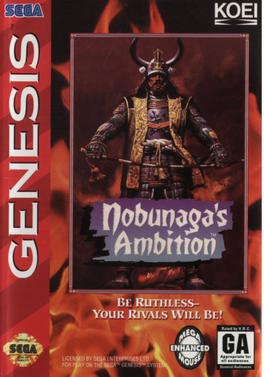

Nobunaga's Ambition is a franchise with pedigree: decades of grand strategy, province management, and tiny portraits of angst-ridden daimyos. Iron Triangle is the entry that tried to reinvent the formula for a generation of players who expected more immediate feedback from their strategy games. The core proposition is familiar - wage war, manage peasants, keep the economy humming, arrange marriages, spy on rivals - but Iron Triangle swaps the classic turn-based cadence for continuous, real-time map and battle systems rendered in 3D. On PS2, that feels like watching an old master attempt a modern painting: the intent is obvious and often brilliant, but executing it on mid-2000s console hardware forces a series of design compromises. This review digs into the technical scaffolding: UI, simulation fidelity, real-time conversion, AI behavior, and how the PS2 handles a saga originally conceived in an era of seasonal turns and hex maps.
To evaluate Iron Triangle on technical terms, you need to understand what it inherited and what it rewired. The Nobunaga lineage is a heavy simulation: multi-scenario campaigns, province and fief administration, economic levers such as taxes, flood control, cultivation, and logistics like rice transfers and recruitment. Earlier entries presented these systems as discrete seasonal turns; Iron Triangle attempts to fold them into a living model where the strategic map, the army movement, and the battles themselves flow in real-time. Mechanically, Iron Triangle maintains the franchise's toolbox: transfer soldiers between fiefs, increase or decrease taxes (which trades gold for peasant loyalty), divert rice and gold to buffer shortages, employ merchants to manipulate funds and resources, recruit and train troops including special units like ninja, arrange diplomacy or marriages, and use spies. The difference is temporal coupling. Instead of making a set of choices every season and watching them resolve at turn-end, choices are issued and must be monitored continuously. That alters risk calculus: a poorly timed tax hike produces immediate unrest effects rather than delayed penalties, and armies en route to a province can be intercepted because there is no neat 'end of turn' separation. On PS2 the UI is the translator between all these systems and the controller. Koei's long history with menu-driven interfaces helps, because the series has always used compact, dense command menus that encapsulate complex simulations. Translating those menus to a D-pad and face buttons is workable, but not elegant. The menu hierarchies are deep by design, and button navigation is efficient but unforgiving: selecting a wrong menu node is a single tap away from cascading micromanagement. A dedicated hotkey system or radial context menu would have been ideal for a real-time environment, but Iron Triangle mostly keeps the classic list-based approach, so expect to pause frequently to avoid tactical mistakes. Real-time map simulation creates both opportunities and problems. Pathfinding and unit movement have to be computed continuously, which on the PS2 means the engine needs to balance computational complexity with responsiveness. In practice this results in simplified movement models and a reliance on command queuing rather than fine-grained micro-control. For grand-strategy scale operations that is acceptable; for large battles it feels like the system leans toward macro-level commands: form up, advance, flank, hold position, rather than the jedi-level tactical nudges you might expect from a pure RTS. Victory conditions familiar to the series - forcing a retreat, destroying the enemy command unit, starving an opponent's supply, or simply outlasting an invasion - are preserved, but how you achieve them changes because timing and continuous supply flow matter in new ways. AI presents the next technical axis. The series has historically balanced strong economic and political AI with sometimes blind tactical behavior. In Iron Triangle the AI must manage both grand-strategy logistics and real-time battlefield tactics simultaneously. That dual burden shows: the AI frequently makes sound strategic choices - reallocating troops, adjusting taxes, arranging alliances - but battlefield decision-making can be uneven. Expect reasonably competent strategic positioning but predictable tactical habits in the field, particularly in how the AI commits its command units and reacts to supply pressure. From a design standpoint, this is unsurprising. Simultaneous multi-layered decision-making is heavier on CPU resources, and the PS2-era hardware forces trade-offs in sophistication. Multiplayer and multiplayer-like options are not the headline here, but the series' history includes hotseat and asynchronous options for earlier entries. On PS2 the experience is largely single-player focused. That makes the AI's quality and the depth of scripted scenarios the game's anchor; if you enjoy the long-form sandbox of empire-building, the conversion to real-time injects a pleasing urgency. If you preferred the contemplative planning loops of the old turn-based games, Iron Triangle's pacing will feel like being asked to juggle flaming scrolls while writing a budget report.
Graphically, Iron Triangle marks the first time in the series where the map shifts into 3D in a meaningful way. The move from static 2D province plates and hex-battle overlays to a rendered, rotatable terrain model is a signature change, and it works narratively: mountains, rivers, plains, and castles become visible obstacles in the landscape rather than abstract modifiers on a board. That said, the PS2 is not a modern GPU powerhouse, and the engine shows its optimization decisions. On the positive side, the 3D map communicates topography and routes at a glance. Camera controls let you zoom and pan to follow armies or drill into a castle siege. Unit models are intentionally modest: they're readable from an overhead vantage but lack high-detail meshes. Textures are functional rather than lush; the strength is in clarity and information density rather than photorealism. The UI overlays - supply lines, movement radii, and loyalty markers - are clear and well-integrated into the 3D map, which is crucial when you are constantly toggling between macro and micro concerns. Technical compromises are evident. There is noticeable Level of Detail stepping when you zoom; models and foliage pop in and out as the engine simplifies geometry to maintain frame pacing. During larger battles the PS2's limited memory and CPU throughput can lead to frame dips and input latency spikes, particularly if there are many simultaneous events: reinforcements arriving, vignettes triggered for peasant unrest, and multiple command units exchanging orders. Loading times are reasonable for the era but occasionally intrusive when switching from map to battle and back, because state needs to be serialized for both the strategic and tactical engines. A highlight borrowed from earlier series entries is the attention to small animations and vignettes for domestic actions - giving rice to peasants, tax collection, and the like. Those little touches give the simulation personality and are rendered with simple but effective sprite or model cut-ins that break the monotony of menus. For a strategy game, these aesthetic flourishes enhance readability and player feedback, and they translate decently to the PS2 screen despite the modest graphical fidelity.
Nobunaga's Ambition: Iron Triangle is a thoughtful experiment: graft a real-time 3D shell onto a long-running grand strategy simulation. Technically, it's an ambitious engineering exercise for the PS2 era. The real-time layer introduces urgency and a different skill set - continuous resource monitoring, responsive diplomacy, and timed tactical decisions - but also exposes the system to constraints of console input and hardware bandwidth. Strengths are obvious to any strategy enthusiast: a deep economic model, the full suite of diplomatic and domestic levers, and a 3D strategic map that conveys terrain in a way the old hex-views could not. Weaknesses stem from the porting and design trade-offs: menu-heavy UI that sits awkwardly in a real-time flow, occasional tactical predictability from the AI, and visual/engine concessions made to keep the experience smooth on PS2 hardware. If you are a fan of the series or of deep historical grand strategy and you want the novelty of seeing those systems run in continuous time on a console, Iron Triangle is well worth your time. If you prefer deliberate, turn-based thinking and chromosome-level control of army movements in battles, you may find Iron Triangle frustratingly fast and a bit rough around the edges. Either way, the game is an interesting technical milestone: the team tried to modernize a venerable formula, and while the result isn't perfect, it delivers a uniquely kinetic Nobunaga experience. Final verdict: a strong, if imperfect, bridge between old-school simulation depth and mid-2000s real-time presentation - 7.5 out of 10.
 Nobunaga no Yabou Online: Souha no Shou on PS2
 Nobunaga no Yabou Online on PS2
 Nobunaga no Yabou Online: Tappi no Shou on PS2
 Time Commando on PlayStation
 Time Crisis on PlayStation
 In Stars and Time on PS5












 Another SquareThought Site