

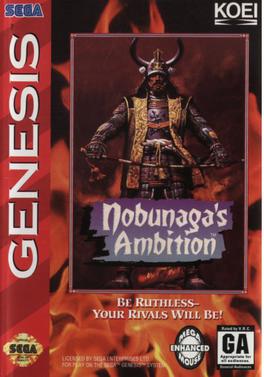

If you're the kind of person who thinks conquering a whole country should involve spreadsheets, long-term scheming, and the occasional backstabbing marriage, then Nobunaga no Yabou Online on the PS2 is a buffet of strategic cruelty with online frosting. Built on the venerable Nobunaga's Ambition grand-strategy lineage, the Online entry takes the series' famously complex domestic-and-military systems and drops them into a shared sandbox where other humans-equally petty, ambitious, and stubborn-can ruin your centuries-long plans in a single season. This isn't an MMO for people who want instant gratification or twitch skills. It's an incremental, brainy war of attrition where patience, planning, and the ability to read both the map and people are the real weapons. The game keeps the series' menu-driven interface, roles, and resource juggling; online, that means your diplomacy skills are as lethal as your battlefield tactics. Consider this your warning and your invitation: if you enjoy wrestling with economies, peasant rebellions, castle sieges, and human unpredictability, prepare to get comfortable for a very long campaign.
Nobunaga's Ambition started life as a turn-based grand-strategy sim, and the Online version wears that heritage like a suit of chainmail-heavy, deliberate, and full of small dents you earned yourself. Gameplay runs on two gears: macro management on the campaign map and micro decisions in tactical engagements. The campaign map advances in seasonal turns; battles (when they occur) use daily turns. Victory never feels dumbed-down: you can win by forcing retreats, annihilating an enemy commander, wearing down an invading army's supplies, or simply outlasting an opponent. The challenge in this game is not a single gauntlet but a dozen subtle gremlins you juggle every season. Resource allocation is the backbone: you decide how much rice versus gold to divert to military recruitment, flood control, town expansion, or bribing fickle peasants. Every choice has a trade-off. Raise taxes and you line your coffers-but watch peasant loyalty crater and rebellion risk spike. Cultivate fields to boost productivity, and peasants grumble; pour rice into the populace to boost morale, and watch your reserves melt away. There is a real economy here, and it punishes greedy generals and bad planners. Administrative competence matters as much as battlefield prowess. The game hands you an astonishing menu of actions: transfer soldiers between fiefs, move rice or gold, negotiate non-aggression pacts, arrange marriages (politics through family drama), use merchants to buy or borrow, recruit special units like ninja, train troops to increase combat efficiency, spy on rivals, or hand a fief temporarily to AI for administration. Each fief is a little kingdom with its own needs; managing them requires juggling short-term triage and long-term investment. If your planning horizon is 'next turn' rather than 'next year,' you will find yourself constantly patching holes instead of building an empire. Persona selection is deceptively crucial. Like an RPG glued to a strategy sim, your daimyo's statistics (health, ambition, luck, charm, IQ) change how the campaign unfolds. The title's reviewers (back in the PC heyday) warned against accepting a persona with low IQ or luck-because a dumb or unlucky daimyo will make your life rougher. Aging is baked into the time system; your chosen lord grows older, gets sick, and eventually dies. That ticking clock injects a brutal realism: succession planning is a skill in itself, and the timing of your ambitious campaigns must sometimes bend to the lifespan of your character. Battles, while simpler than some modern tactical sims, are satisfying and tactical. Historically the series used a 5x10 hex area for engagements, and terrain matters: hills, mountains, villages, rivers, plains, and castles influence deployment and movement. Siege logic and supply lines add depth-running an invading force until its supplies run out is a legitimate strategy. Training troops, choosing deployment routes, and exploiting terrain are the kind of tactical puzzles that reward foresight, not reflexes. Going online adds an extra axis of complexity: human players. The AI's predictability is replaced by coalitions, betrayals, and meta-level politics. Diplomacy becomes a real-time negotiation skill: making and breaking non-aggression pacts, arranging marriages with real people, trading resources, or coordinating multi-front assaults. You need social intelligence-reading tone, detecting bluffing, and timing offers-just as much as economic literacy. Teamwork and communication skills matter; the game is as much about convincing allies to show up on time as it is about troop compositions. Skill set required: - Strategic planning: Set decades-long goals and build infrastructure to support armies. Creating a sustainable economy before aggressive expansion is key. - Resource management: Balance rice, gold, and military units while avoiding peasant revolts. Micromanaging supply and town development is constant. - Diplomacy and negotiation: Forge temporary alliances, play rivals off each other, and be prepared for sudden betrayal. - Tactical sense: Use terrain, timing, and supply attrition in battle. Training and unit composition pay off. - Patience and adaptability: Events like daimyō aging, natural disasters (flood control is an action for a reason), and human opponents force plan revisions. - Risk assessment: Investing in town expansion increases tax revenue but lowers loyalty-calculate when the payoff is worth the riot. Difficulty comes from the sheer number of interacting systems. A single mistake-overextension, a poorly timed tax hike, or underestimating a neighbor-can ripple into multi-season catastrophe. Combined with the unpredictability of other players online, this makes the game less of a contest of reflexes and more of a test of attention span, memory, and the ability to learn from mistakes. For players who treat each season like a chess move, the reward is enormous; for the impatient, it will feel like watching paint dry on a siege tower. The learning curve is steep but fair. The game's menu-driven interface delivers every decision clearly (if a bit bureaucratic), and you gradually learn to read the numerical health of your fiefs the way others read a scoreboard. Documentation and the series' history suggest this was always intended for methodical players-those who enjoy plotting multi-step plans, reading a map for weak points, and slowly strangling rivals with logistics rather than flashy one-on-one combat.
Graphically, Nobunaga's Ambition Online is not trying to be an action blockbuster-it's a strategy suit, not athletic wear. The series earned praise in its older PC incarnations for clear, beautifully functional map art and tiny vignettes (the rice distribution scene is charmingly on-brand), and the Online adaptation keeps the focus on information clarity over eye candy. On the PS2, that translates to a menu-heavy interface, readable maps, and battle screens that prioritize tactical clarity: you can pick out hills, rivers, and castles at a glance, and that's more important than hi-res explosions. The PS2 generation brought some 3D polish to the franchise in other entries, and Online borrows the same design philosophy-administration screens that look neat and battles that clearly delineate terrain and units. If you want cinematic camera work or flashy particle effects, this isn't your game. But if you want an engine that visually communicates the tiny details that matter for strategy-supply lines, hex positioning, troop morale-then the graphics do their job admirably. Expect polite animations and efficient menus rather than jaw-dropping visuals. That said, by mid-2000s standards the presentation starts to feel dated quickly; personality comes in the form of historical flavor and small UI touches, not texture quality.
Nobunaga no Yabou Online on the PS2 is an odd but rewarding beast: part slow-burn grand-strategy, part social experiment. The biggest challenge it throws at you is not a particularly nasty boss or a twitchy combat system but the requirement to be a competent long-term planner, an economical accountant, a pragmatic diplomat, and an occasional battlefield tactician. If you enjoy deep systems that interact in messy, realistic ways and have the patience to learn the game's rhythms and the people you play with, you will find rich, tactical satisfaction. If you're an impatient player who prefers immediate payoff, flashy combat, or single-session fun, this title will test your attention span and your tolerance for administrative detail. But for strategists who relish the interplay between domestic policy and military might, the Online edition spices up the simulation by adding human chess pieces-neighbors who keep their promises only when it suits them, allies who need convincing, and rivals who will happily exploit your weakest province. Score-wise, I give it a 7/10: a strong, thoughtful war of attrition that rewards intellect and temperament more than reflexes. It's not the prettiest nor the most accessible MMO, but it is faithful to the series' strengths-complex systems, meaningful trade-offs, and the satisfying slow consolidation of power. Bring your spreadsheet, your patience, and your poker face; you'll need all three to unite Japan online.
 Nobunaga no Yabou Online: Tappi no Shou on PS2
 Nobunaga no Yabou Online: Souha no Shou on PS2
 Nobunaga's Ambition: Iron Triangle on PS2












 Another SquareThought Site