

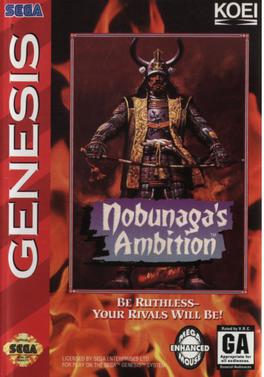

If you enjoy sprawling strategy that treats patience like a combat stat and diplomacy like a lethal weapon, Nobunaga no Yabou Online: Souha no Shou on PS2 will feel like being handed a tea ceremony schedule and a trebuchet at the same time. Born from Koei's venerable Nobunaga's Ambition line - the sort of series that makes spreadsheet fans misty-eyed - this online iteration takes the franchise's long-game, empire-simmering DNA and drops it into an MMORPG stew. The result is a game that asks you to be part economist, part general, part social engineer, and wholly committed to multi-season planning. This review leans hard on the challenge side: what you will need to learn, the skills that actually separate the new daimyo from the inevitable dead ones, and whether the PS2's aging pads and living-room couches can support the kind of concentration these games demand. The original series is famous for its depth - seasonal turns, resource juggling, and a dizzying list of actions from raising taxes to arranging marriages - and the online version borrows that toolkit to create an experience where your mistakes echo for years. If you like games that punish sloppy thinking with slow, elegant consequences, read on. If you expect instant gratification and flashy firefights, this might be a hard sell.
Nobunaga's core appeal has always been the crunchy middle-management of feudal Japan: build an economy, raise troops, keep peasants from burning down your castle because you hiked taxes, and then send armies to politely ask rival lords to hand over provinces. Souha no Shou, as a member of this family, wears that lineage proudly. The basic tempo is a metronome of seasons on the strategic map and days in the tactical battles - turns that represent time passing, daimyo aging, supplies dwindling, and plans either maturing or collapsing. Challenge #1: Long-term planning and patience This title rewards long arcs. Each season you take discrete actions for any fief you directly control, and those choices ripple forward. Increase taxes one season and you get gold now - but peasant loyalty drops, and loyalty matters: ignore it and island-sized rebellions become your new hobby. Flood control and cultivation trade off productivity and loyalty. Investing in infrastructure feeds armies three seasons from now but may starve your immediate war chest. You have to think at least several turns ahead. The skill required here is the ability to tolerate delayed gratification and to model outcomes in your head - a kind of strategic patience that will make most twitch-focused players twitch in frustration. Challenge #2: Resource triage and opportunity cost You're constantly making hard choices: transfer soldiers between fiefs, allocate rice and gold, hire merchants to broker deals, or recruit ninja because obviously you need someone sneaking around in the night. Every decision has a cost. A productive economy supports a large military, but armies cost upkeep and eat morale if underfed. Learning to prioritize - when to save, when to bleed resources for a decisive campaign, when to swap soldiers for rice - is the game's central loop. That skill set is essentially applied microeconomics: reading the ledger, predicting shortages, and moving resources ahead of impending crises. Challenge #3: Diplomacy, deception, and reading players The series historically includes diplomacy mechanics such as non-aggression pacts and arranged marriages; in an online context those take on new teeth. Alliances are not static checkboxes - human players are unpredictable and often hilariously cruel. The skill here is social: negotiation, trust calibration, and the ability to bluff without getting assassinated by political overreach. If you enjoy trying to read other humans and turn friendships into strategic advantages, you'll find this part deliciously demanding. Challenge #4: Tactical battles and supply management Battles in the series resolve on a hex-like battlefield where terrain (hills, mountains, rivers, plains, villages, castles) matters, and victory conditions vary: force a retreat, kill the enemy commander, outlast invaders, or starve the opposition's supplies. That means you can't win by brute force alone; supply lines and positioning are crucial. Combat is its own mini-game of tactical sense: flank, hold chokepoints, and deny the enemy access to logistics. Skills required include classic tactical thinking, an understanding of unit roles, and awareness of how strategic choices affect battlefield options. Challenge #5: Persona selection and RPG instincts The series borrows RPG elements via persona stats (health, ambition, luck, charm, IQ). Picking a daimyo with poor IQ is basically choosing to play with one hand tied behind your back because a 'stupid daimyo' makes bad decisions at inconvenience levels that escalate into national crises. Learn to value the right attributes for the role you want to play: charismatic leaders are better at diplomacy; high-ambition types can drive expansion but may be unstable. This requires meta-skill: matching playstyle to character strengths and not trying to make a paper-thin diplomat run a frontline offensive. Challenge #6: Complexity management and UI fluency Console versions of Nobunaga have often been praised for their accessible menu-driven interfaces, but 'accessible' in this series means 'deep' rather than 'simple'. Expect many screens and many knobs. The skill needed is the ability to parse multi-layered menus and translate abstract statistics into actionable choices quickly. In a multiplayer context, slowness is punished; idle turns while you hunt for the right menu friends will exploit you. The good news is the PS2-friendly control scheme was noted to be usable in past console ports, so learning the UI is mostly a matter of patience and practice. Challenge #7: Endurance and emotional management Maybe the most overlooked skill is emotional stamina. A long campaign will test your tolerance for setbacks, your willingness to adapt after a lost province, and your sense of humor when a rival backstabs you mid-marriage treaty. The game isn't mean for the sake of being mean - it's systemic. Recovering from a mistake is possible but time-consuming. Good players cultivate detachment: treat setbacks as tactical learning rather than personal insults. Putting all of this together, Souha no Shou forces you to be a multitasking general: think like an economist in the morning, a battlefield tactician in the afternoon, and a diplomat in the evening. The payoff is strategic depth that rewards mastery, but the learning curve is steep and not forgiving. If your skill set includes long-form planning, resource optimization, social negotiation, and the emotional cohesion to see a multi-year campaign through, this game will make you gleefully competent. If you want immediate rampage, look elsewhere.
Koei's historical reputation is that gameplay is king and graphics are the loyal serf - competent and functional, designed to communicate information rather than steal attention. Older entries in the franchise were praised for their clear maps and evocative little vignettes (tax increases make peasants cry; rice distributions have people gratefully scrambling for sheaves), and console ports tended to keep the interface tidy even if the visual dazzle was moderate. Expect the PS2 Online entry to follow that tradition: readable maps, clear unit icons, and battles where terrain is visually distinct enough to inform your tactical choices. If you're hoping for high-octane cinematic visuals, you will be disappointed. This game is about clarity over flash. The reward is that the visuals rarely lie: when the map tiles show marsh and river, you can trust your eyes and plan accordingly. The UI design philosophy leans toward menu depth and legibility - which is exactly what you need when you're juggling taxes, troop transfers, diplomacy, and espionage on a single evening. In short, the graphics serve the strategy; they don't distract from it.
Nobunaga no Yabou Online: Souha no Shou on PS2 is a demanding strategy MMO that asks a lot and gives a lot in return. It's not a pick-up-and-slay affair; it's a multi-season commitment where smart planning, resource triage, diplomatic savvy, tactical sense, and emotional endurance are the tools of survival. The PS2 package brings the series' hallmark complexity into a multiplayer setting, where human unpredictability raises the stakes and rewards those who can think several turns - and several conversations - ahead. Score-wise, the game earns a respectable 7.5/10: richly rewarding for players who want deep strategic play and social maneuvering, but too slow and punishing for those who prefer faster payoffs. If you love games that feel like long-form chess with villages to run and alliances to broker, this will be a glorious grind. If your thumbs twitch for instant explosions and instant loot, this is politely not your cup of matcha. Either way, for the patient and strategic, Nobunaga's online world is an arena where wisdom, not just horsepower, wins the day.
 Nobunaga no Yabou Online: Tappi no Shou on PS2
 Nobunaga no Yabou Online on PS2
 Nobunaga's Ambition: Iron Triangle on PS2
 Planets Under Attack on PS3












 Another SquareThought Site