

 Aug 2025
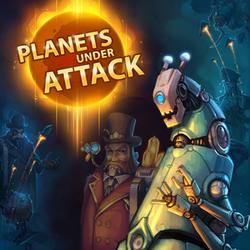

There is a particular cadence to video game reviews of the 1990s: measured, slightly pompous, and fond of metaphors involving hex maps and CRT glow. Planets Under Attack arrives several console generations late for that tone, but it wears that old-school seriousness well. Developed by Targem Games and shepherded onto the PlayStation 3 by Topware Interactive, the title is a tidy strategy affair that borrows its core DNA from the pared-down, frantic planet-conquest formula popularized by smaller PC hits. If you come expecting epic 4X depth or sprawling empire management, you will be disappointed. If you are content with crisp, bite-sized skirmishes and a campaign of escalating challenges, it delivers exactly what it promises. The game positions itself as a strategy-adventure hybrid. The premise is simple: you command a space fleet and must conquer solar systems, capture or defend planets, and complete mission-specific objectives before the opposition - or the clock - intervenes. The design philosophy favors clarity and immediacy. Levels are short, objectives explicit, and the interface insists you get on with it. In practice this makes Planets Under Attack an excellent fit for living-room pick-up-and-play sessions, especially when compared to the era's marathon strategy epics. It is a game that thinks in snapshots rather than sagas, and it mostly survives the approach with dignity. For readers who recall the old magazine pages where screenshots were annotated with tiny arrows and stern warnings about save-scumming, this title will feel familiar. It is a modern small-scale strategy game that still respects the player's time and patience. There are moments of genuine tactical satisfaction, and the multiplayer options - while not revolutionary - add a welcome second act to the single-player offering. Yet the game also stumbles into repetitiveness, a flaw that older reviewers would flag with a precise, slightly disappointed eyebrow raise.
Planets Under Attack compresses complex ideas into a deceptively simple shell. Each mission places you on a map that is essentially a network of planets. Your task is to expand your influence by sending fleets from one world to another, capturing neutral planets, and wresting control from the enemy. The core interaction is minimalistic: select a planet, send ships, and watch the numbers tick. Beneath that simplicity, however, the designers have layered several elements to keep the proceedings interesting. Mission variety is the game's first line of defense against monotony. Some levels are time-sensitive contests where you must seize a system before an alien hatches; others ask you to hold a captured world against waves of attackers. Rotating asteroid belts and shifting star constellations are not mere cosmetic flourishes: they alter the geometry of a map and force you to adapt your routes and timing. These tweaks, modest as they are, can turn a routine capture into a moment that requires genuine tactical thought. The campaign doles out three difficulty tiers for each mission, and higher settings unlock additional objectives and modifiers that encourage replay. A technology tree adds an extra strategic layer. Between missions you can spend earned resources to unlock upgrades that affect planetary defenses, ship performance, and assorted boosts. This isn't the deep research tree of a space 4X, but the choices are meaningful: do you bolster planetary shields to create immovable forward bases, or improve ship speed and offensive power to keep the initiative? The right combination of upgrades often determines whether a mission is a graceful victory or a frustrating replay. Multiplayer and skirmish modes broaden the scope. Live online battles feature multiple competitive types: Team Multiplayer, Elimination, Capture, King of the Hill, and Domination. Players can choose between two factions, each with its own feel, and contests support different team constellations. For console players who prefer quick, strategic bouts over sprawling campaigns, these modes provide longevity. Unlockable ranks, avatars, and rewards add a veneer of progression, though they do not fundamentally change the core gameplay loop. The game's controls are intentionally straightforward, which translates well to a DualShock controller. There is little of the menu diving that plagues many strategy ports on consoles; most actions are accomplished with a couple of button presses and clear cursor movement. That accessibility is a blessing and a curse. While newcomers will appreciate the lack of complexity, veteran strategists may find the decisions shallow after hours of play. Repetition becomes the chief criticism: despite the mission twists, many maps resolve in similar patterns, and objectives can feel like permutations of the same puzzle. The single-player campaign is competent and occasionally clever. It asks you to think quickly, use technologies wisely, and value positioning. The campaign structure rewards adaptation and experimentation, and the best moments are those where map features force you to rethink what you assumed about your fleet's capabilities. In multiplayer, human opponents provide the unpredictability the AI cannot always mimic, turning otherwise routine strategies into nail-biters. Ultimately, Planets Under Attack is a well-constructed snack of strategy-satisfying, portable, and fair, but not the feast that grander titles promise.
Graphically, Planets Under Attack is a study in functional aesthetic. The game does not pretend to be a next-gen space epic; rather, it opts for clean visuals that prioritize readability. Planets are distinct, orbital paths are clear, and the UI emphasizes information over flair. Colors are used to good effect-the glow of a captured world contrasts plainly with neutral or enemy territory-so strategic intent is never obscured by visual noise. On the PlayStation 3, the rendering is competent if unspectacular. Backgrounds have an occasional painterly quality, and animations for fleet movement are smooth, but there is no lingering jaw-drop factor. Effects such as planet capture and fleet clashes are concise and serviceable: they communicate the necessary feedback without overstaying their welcome. In an era where developers chase photorealism and cinematic spectacle, Planets Under Attack is refreshingly minimal. The visual priorities are clarity and pace; as a result, the screen rarely feels cluttered even when multiple battles occur simultaneously. The HUD and menu presentation reflect the game's overall design ethos. Icons are legible, and the technology tree is straightforward to navigate with a controller. There are no unnecessary flourishes, and the camera remains fixed on the map in a way that favors tactical awareness. If you are seeking artwork to admire in a gallery, this is not the title to deliver it. If you want a visual framework that helps you make decisions quickly, the graphics perform admirably.
Planets Under Attack is the kind of game that would have been at home in a late 1990s strategy column: succinct, focused, and occasionally unforgiving. Targem Games has produced a title that values immediacy and accessibility while offering enough tactical depth to keep short-term strategists engaged. The campaign provides tidy challenges, the technology tree offers meaningful, if limited, choices, and the multiplayer modes extend the game's life beyond the single-player offerings. Repetition is the most persistent complaint. Despite level modifiers and mission variety, the core loop can calcify into a pattern where familiarity breeds predictability. For players who crave long campaigns and complex diplomacy, this will feel too light. For those who prefer quick strategic bouts, a clean presentation, and console-friendly controls, it will hit the spot. The French press saw fit to award the game a middling yet fair score, noting both its intuitiveness and its tendency toward repetition; a translated verdict would land roughly where this review does: competent and enjoyable in short bursts, but not a classic. If you own a PS3 and want a reasonable strategy diversion that respects your living-room time and your patience, Planets Under Attack is worth a rent or a modest purchase. It is not a revolutionary title, but it is a tidy reminder that strategy games do not always need to be monolithic to be satisfying. Consider it a compact tactical snack for evenings when you want your planets conquered before the news bulletin interrupts your concentration.
 Attack on Titan on PS4
 Attack on Titan 2: Final Battle on Switch
 Nobunaga no Yabou Online: Haten no Shou on PS2
 Nobunaga's Ambition: Iron Triangle on PS2
 Culdcept Expansion on PlayStation
 Blazerush on Switch
 Armageddon Riders on PS3
 Battle vs. Chess on PS3










 Another SquareThought Site