

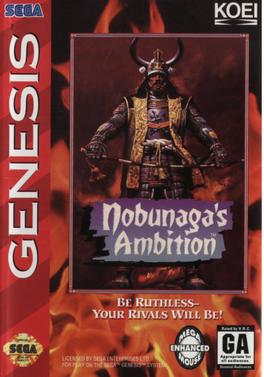

Nobunaga no Yabou Online: Tappi no Shou is the series' attempt to turn centuries of feudal politicking into something you can argue about with strangers over a dial-up connection. The original Nobunaga's Ambition started life in 1983 as a dignified, slow-burn grand strategy game where you allocated rice and occasionally watched peasants weep when taxes went up. By 2003, Koei decided that what everyone wanted was not another turn-based solitaire but an online sandbox where people could stab each other in the back from the comfort of their own living rooms. If you like the idea of unifying Japan while someone named 'DarkSamurai69' steals your best general and then demands tribute, this is the place to be. PlayStation 2 was not the obvious home for sprawling strategy sims - it preferred explosions, platforming, and protagonists who wear three belts for no reason - but Koei bent the console to its will. Tappi no Shou wears its pedigree plainly: it borrows the series' emphasis on economics, diplomacy, and the interlocking systems that make generals relevant only if you can feed them. The result is part MMO - persistent world, real humans, alliances - and part Koei textbook: rice, soldiers, flood control, and a stubborn insistence that paperwork is a combat mechanic.
The backbone of the experience is pleasantly familiar to anyone who's ever stood in front of a hex map and whispered 'supply lines' like it's a love spell. The single-player Nobunaga games let you choose scenarios - 'Battle for the East', 'Road Towards Unification' and so on - and Tappi no Shou translates that scaffolding into a living, breathing online world. You still worry about seasons, peasant loyalty, and whether raising taxes is worth the eventual torching of your own market. The difference is that other players now care about your decisions and will happily remind you why diplomacy matters by burning your granary. At its most enjoyable, Tappi no Shou combines the micro and the macro. On the macro side you manage provinces, balance rice and gold, invest in flood control and town expansion, and decide whether your domain will be famous for rice or famous for being a training ground for incompetent ninjas. Micro-level choices - dispatching merchants, recruiting soldiers or ninja, allocating generals to fiefs, training a particular unit until it resembles competence - still matter because the economy is not a calculator you can ignore. The game retains the elaborate command list from the franchise: transfer soldiers between fiefs, move rice, increase taxes (watch the peasants cry), arrange marriages, make non-aggression pacts, spy on rivals, even pass a turn if you enjoy ignoring responsibility. Where the series always flirted with role-playing elements - persona stats like health, ambition, luck, charm and IQ - the online version leans into persistence. Characters age, reputations travel across servers, and alliances remembered last week's grievance. There is an odd satisfaction to seeing a formerly useless daimyo you nurtured into usefulness, then watching someone else try to buy him. Combat shifts from the textbook 5x10 hexes of old to encounters influenced by player coordination. Battles are less about scripted AI and more about how well your buddies can follow orders and not charge a castle like it's a group cosplay of 'Run Towards Arrows.' Because it's an MMO, social play replaces some of the solitary planning that made the original titles so contemplative. You form clans, negotiate for provinces in chat windows that still smell faintly of IRC, and stage sieges that require at least three people who know what they are doing and one person who thinks 'strategy' means flanking with fireworks. Player politics can be more entertaining than the game's scripted scenarios: alliances are fragile, non-aggression pacts are often suggestions rather than contracts, and marriages between houses are as likely to be diplomatic tools as they are attempts to role-play a soap opera. There's a learning curve of the sort that functions as both rite of passage and effective deterrent. Menus are thorough (some would say exhaustive), and if you like clicking through lists of economic modifiers while music that sounds like a tasteful incense advert plays in the background, you will be happy. For those who do not, the interface can feel like a spreadsheet's stern, emotionless cousin. That said, when the systems click - taxes, rice supply, troop morale, castle defenses - the payoff is pure strategic pleasure. Conquest is not a single heroic moment but a carefully prepared plan, executed over seasons, with occasional backstabs and unpredictable weather. Online chaos merely adds another variable to obsess over. If there is a mechanical Achilles' heel, it is the tension between grand strategy's patience and an MMO's impatience. Waiting for another player to log in so you can enact a diplomatic ceremony can sap momentum; likewise, players who can play more often will snowball power, making the game occasionally feel less like a level playing field and more like 'How Much Free Time Do You Have?' Simulator. Koei mitigates this with systems that allow AI control of your fiefs in your absence, but handing your domain to the computer is the strategical equivalent of hiring a stand-in for a family dinner and hoping they don't set the house on fire.
Graphically, Tappi no Shou sits politely in the middle of the PS2 era: competent without trying to be the thing you show off at parties. The series historically received praise for its maps and vignettes - small touches like peasants weeping or a lord distributing rice were once singled out as charming - and the online game preserves that clarity. Provinces are readable, terrain is distinct (hill, mountain, river, plain, castle), and the UI prioritizes information over eye candy. This is good because strategy games live and die by clarity: you need to know whether that hex is a river or a very lazy suggestion that you turn left. Battle visuals are functional 3D, with units represented well enough to tell a cavalry charge from a group that is definitely not cavalry. The cinematic pretensions are minimal, which will delight the pragmatist and disappoint the person whose personal motto is 'more particle effects.' Cutscenes are short, serviceable, and occasionally endearing - still, expect utility rather than spectacle. The camera behaves, the menus are legible, and the map does its one job: show you where everything is and make you feel both small and dangerously important. Performance is generally stable. The PS2 era's online functionality had its limitations, and that shows in occasional lag or a matchmaking system that sometimes feels like it's powered by pigeon post. However, considering the era and the platform, the visual and technical compromises are understandable. The game errs on the side of readable rather than flashy, which fits its identity as a thinking person's war game rather than a fireworks display.
Nobunaga no Yabou Online: Tappi no Shou is not trying to be your instant dopamine hit. It is a long, slow, rewarding stew of strategy seasoned with online human unpredictability. If you loved the series for its interlocking economic and military systems, you will find much to admire: the persistence of characters, the social maneuvers of human rivals, and the slow unraveling of another player's carefully tended fief are all strategically delicious. If you came expecting reflex-based thrills and flashy boss fights, you will probably leave bewildered and slightly hungry. The game's greatest charm is its insistence that politics and logistics are themselves combat. Winning a province feels like winning an argument that you prepared for months earlier by bribing merchants and calming your peasants with intermittent rice giveaways. The online layer amplifies this: diplomacy, betrayal, and the occasional glorious siege make for stories you will tell people who will nod politely and then ask if the game has microtransactions. The score of 7.0 reflects a balance. Tappi no Shou turns the venerable Nobunaga formulas into an online social strategy where the slow burn is part of the appeal, and where real people can make the game wildly entertaining or maddeningly unfair. It is recommended for fans of the series, patient strategists, and anyone who thinks managing irrigation systems is a legitimate weekend activity. For everyone else, the PS2-era interface and MMO patience requirements might be too much to recommend without reservations. You will either find a lifelong obsession - or a very elaborate way to procrastinate studying for exams. Both outcomes are acceptable.
 Nobunaga no Yabou Online: Souha no Shou on PS2
 Nobunaga no Yabou Online on PS2
 Nobunaga's Ambition: Iron Triangle on PS2
 Planets Under Attack on PS3












 Another SquareThought Site