



Imagine a game that squeezes a Shakespearean tragedy into an evening you can pause to answer texts: that is Othello on PS2. It bills itself as a digital take on the classic Reversi-style contest, but the twist is the Bard himself appears to have had a say in the rulebook. Instead of only flipping black and white tiles, you're flipping allegiances, motives and people's sense of reality. If you've ever wanted to be simultaneously a chess player, a poker shark, and a theater critic, this one is for you. The trailer sells it as a 'board game with a soul', which is accurate in the way it borrows the plot's dramatic engine: jealousy, rumor, and a handkerchief-sized MacGuffin that somehow decides fates. Play solo and the AI will lean on psychological hooks inspired by the play's characters; go multiplayer and you get full-on, human-powered Iagos who will swear they love you while quietly pocketing your victory. This review focusses on challenge, and the specific skills this oddly theatrical strategy game expects you to bring to the table - because whether you win or get tragically smothered, it will be your brain that gets worked hardest.
At its core Othello is deceptively simple: there's a grid that reminds you of Reversi, there are pieces to flip, and control of territory matters. But the PS2 version layers on a role-driven narrative that turns each tile-flip into a psychological move. You pick a role (Othello, Iago, Cassio, Desdemona, Emilia, Roderigo) and each role comes with asymmetric abilities and objectives. Othello is about long-term control and charisma buffs; Iago gets subterfuge moves and player-targeted misinformation; Cassio is the tactical skirmisher who needs his rank back; Desdemona plays support with the ability to sway neutral tiles; Emilia is the information broker; Roderigo is the expendable wildcard who can buy advantages with risk. Learning to play is learning how to stack these abilities together. Match flow is split into two main phases: Venice (setup and social engineering) and Cyprus (the battlefield where the board mechanics accelerate). Venice plays like a slow-burn strategy phase where speeches, alliances, and staged incidents happen. Here the game tests your persuasion mechanics: timed-press minigames, rhetorical choices, and a stamina meter for 'eloquence'. Mistime a speech and it comes out as a fumbling monologue; hit the rhythm and you earn influence tokens. The Cyprus phase is where the board grid comes alive - turns are faster, the AI's 'jealousy meter' ticks faster, and the handkerchief event starts chaining - a lost prop can cascade into a tactical collapse if you haven't planned contingencies. The handkerchief is the game's signature mechanic and the single best example of how the game turns literary symbolism into tangible gameplay. It acts as an item card that grants major trust bonuses to whoever holds it. The problem is the game seeds opportunity for thief-play: an opponent can stage a distraction (drunken brawl mini-game, classic) and snag the handkerchief, then plant it in another player's zone to trigger suspicion. Managing that item requires spatial awareness on the grid, timing in dialogue phases, and the social skill to sow doubt subtly rather than slapping accusations and hoping for the best. Deception is not just an option, it's a skill tree. The game encourages players to level up 'subterfuge', 'reading', and 'oratory'. Subterfuge unlocks passive effects like planting 'evidence' on tiles, setting traps that flip twice as many pieces when triggered, or passing anonymous notes that skew the AI's perception. 'Reading' is the active counter-skill: it lets you spend perception points to peek at a player's recent moves, see their last two dialogue choices, or reveal a hidden status. Oratory amplifies your public moves - well-timed speeches give you bonus influence that can swing neutral tiles. The negotiation between noise (loud, obvious play) and craft (quiet, surgical moves) becomes the central tension. If you prefer logic puzzles, there's a full 'board mastery' mode that strips the narrative and leaves you with pure tile-control challenges. These stages are brutal in their escalation. Later puzzles require anticipating double-turn flips, setting up chains of forced reactions, and preserving key tiles (the squares on the board that, if lost, tilt the board irreversibly). They ask the same spatial reasoning Reversi vets love: pattern recognition, move forecasting, and sacrifice calculation. The narrative mode layers human unpredictability on top of that, making the same puzzle feel like a psychological test. AI difficulty deserves a paragraph of its own. The base AI is decent: it simulates characters' personalities from the play - Iago AI focuses on subtle long-term sabotage, Othello AI aims for decisive control, Cassio AI gambles for immediate tactical wins. Ramp up the difficulty and the AI starts to mimic human misdirection: feinting moves, baiting tile sacrifices, and timing social attacks when your influence meters are low. The highest difficulty settings don't play 'perfect chess'; they play 'perfect drama', setting up sequences that are hard to spot unless you track motives and keep mental notes of each actor's past behavior. That's the part that will make you sweat: you're not always punished for the wrong tactical choice but for the wrong social read. Skills required and what the game teaches you: pattern recognition (because board control still matters), memory and note-taking (keep track of who has lied and when), timing (dialogue rhythms and brawl minigames require precise button presses), risk management (spending influence for a quick gain vs saving it for endgame), and cold psychology - knowing when to call someone out and when to let suspicion stew. It's rare for a strategy game to reward theatrical timing and deceit the way this one does. For players who think 'multiplayer' equals 'spam the same move', Othello will punish that tin-eared strategy hard. For players who enjoy the slow roar of a plan coming together, it's deeply satisfying.
The aesthetic leans into theatricality: stages look like painted sets more than photoreal scenes. Venice is lit with warm oil-lamp tones, while Cyprus is a harsher, wind-battered palette. Character models are stylized - not hyper-real - which actually works in the game's favour because it keeps the focus on expressions and costume rather than uncanny details. Facial animation is decent for the era: eyebrow twitches, tight smiles, and widening eyes play into the psychology mechanics (if an NPC's eyes flutter oddly after a conversation, that can be a programmed hint they are lying). The game's presentation borrows wildly from Othello's performance history. Costumes nod to the 19th and 20th century traditions - dramatic turbans, period coats, and those theatrical silhouettes that stage directors have obsessively reworked over centuries. Cutscenes are intercut with shadowy cinematography reminiscent of Orson Welles and moody stage lighting nodding to Olivier: the camera loves close-ups on hands (always important when a handkerchief is in the frame). UI choices are tasteful in a baroque way, with parchment-backed menus and a little chorus that hums when you finalize a move - tacky to some, charming to others. Performance on a PS2 is stable but not dazzling. Frame rates hold up in normal play, but hectic multiplayer matches can show pop-in on background set decorations. Sound design is where the game really sells the drama: a simple musical sting when trust breaks, muffled drums during brawls, and a cleverly deployed 'green-eyed monster' motif that plays when jealousy mechanics activate. It's understated showmanship: the graphics are the stage, the sound cues are the prompter, and your brain is the audience that gradually gets convinced of betrayal.
Othello on PS2 is a niche love letter to strategy players who secretly enjoy being emotionally manipulative in the safest possible setting. It asks for a rare skill mix: strong spatial thinking plus an appetite for social chess. It's not casual; the learning curve punishes sloppy plays and naive accusations. But when a con you've set for three acts snaps shut and the board tilts in your favour, the rush is theatrical and pure. It's not perfect. There are pacing issues, and if you want slick visuals or an online meta full of ranked ladder grinders, this isn't your trophy case. What it does brilliantly is force you to think like a dramatist: plant seeds, time reveals, and watch ordinary decisions become tragedies or triumphs. Recommended for players who like cunning multiplayer, tense single-player AI drama, and strategy that smells faintly of old velvet curtains. Score: 7.5/10 - enough to earn a standing ovation for ambition and challenge, but not quite a place in the repertory hall of classics.
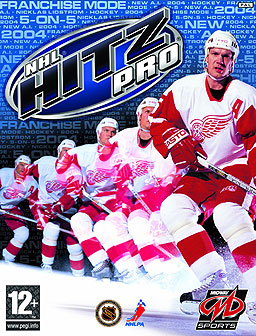
 NHL Hitz Pro on PS2
 Poupée Girl DS 2: Elegant Mint Style on DS
 Poupée Girl DS 2: Sweet Pink Style on DS












 Another SquareThought Site