

 Apr 2013
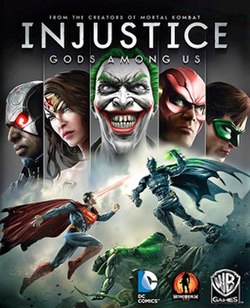

Injustice: Gods Among Us arrives on the PlayStation 3 like a thunderclap in a very expensive comic-book store. NetherRealm Studios, the outfit that resurrected Mortal Kombat for a new generation, turned their attention to the DC Universe and produced a fighting game that wears its license like a custom-tailored cape: ostentatious, occasionally impractical, but undeniably impressive. Released in April 2013, Injustice is not an attempt to graft Superman onto a Mortal Kombat skeleton so much as it is an effort to build a superhero brawler that borrows the marrow of NetherRealm's previous work while insisting - repeatedly and with great cinematic gusto - that it is something of its own. For players weaned on arcade cabinets and Saturday morning cartoons, this feels like a title that remembers why spectacle mattered in the first place.
NetherRealm has never been shy about mechanics and Injustice is a dense, confident collection of ideas that slot together with the snap of a utility belt. The game operates in 2.5D: characters and backgrounds are rendered in three dimensions, but combat remains confined to a two-dimensional plane. This is where the game's attitude becomes clear - it wants the visual polish of a modern engine and the clarity of classic fighting-ground rules. Matches are fought in a single round with each fighter possessing two life bars, so every exchange counts; the match structure rewards momentum and discourages the patient, round-by-round conservatism some fighters prefer. It is closer in flow to Killer Instinct than to Street Fighter, and that sense of relentless forward motion is deliberate. Controls are deceptively simple on the surface: light, medium and heavy attacks, plus a dedicated trait button unique to each character. The trait system is, in practice, the game's mascot. Superman's trait is a short, monstrous power boost; Batman's summons a swarm of bats and gadgets; Green Lantern's will tug at your opponent from across the stage. These traits are more than flash - they change the flow of a fight and encourage different tactics depending on which cape you've chosen. In parallel, the super meter builds as you strike, block, or get struck, and it can be spent for damage-enhancing options, defensive counters, or the dramatic clash system. The clash is Injustice's gamble - a mid-match wager mechanic that is triggered only after a player loses their first life bar. Two players secretly bet portions of their super meter, the higher wager triumphs, and a short cinematic unfolds to show the victor's flourish. It is an odd, theatrical flourish that can break a combo and re-open a match. Purists will grumble; showmen will cheer. The important thing is that it's interactive, risky, and not purely decorative. Stage design brings the DC universe into the ring with gusto. Each arena is split into multiple areas connected by jaw-dropping transition animations triggered when you launch an opponent into a corner. The Batcave, Metropolis, Themyscira and the Fortress of Solitude are not mere backdrops; they're battlegrounds with objects to manipulate. Players are classified into two broad archetypes: power characters and gadget characters. A power character such as Superman treats a car like a mallet, picking it up and slamming it down. A gadget character such as Batman will plant a bomb on that same car and detonate it. Stage interactions can be toggled off for competitive integrity, but the designers deserve praise for creating arenas that reward creativity and situational awareness. Single-player content is surprisingly lavish. Story Mode - billed by NetherRealm as "Story Mode 3.0" - is cinematic and lengthy, swapping protagonists often to keep the narrative moving and to provide mechanical variety. The plot itself is an irresistible train wreck for DC fans: a parallel universe where Superman, wrecked by personal tragedy, establishes a totalitarian One Earth Regime and Batman leads a resistance. It's melodramatic, often preposterous, and it leans into comic-book logic with relish. Minigames are peppered through the campaign and can affect upcoming fights, a rare but welcome touch that breaks up the button-mashing with something approaching consequence. S.T.A.R. Labs is the other single-player jewel: 240 character-specific challenges with varying objectives that both teach and test. For players who want to learn the roster's subtleties or who enjoy the quiet tyranny of unlockable rewards, S.T.A.R. Labs is a bar none mode. Training, Versus, Battle Mode and online offerings round out the package. Online is built on lessons learned from Mortal Kombat (which is to say, NetherRealm fixed some but not all of what ailed their previous netcode). Modes like King of the Hill and Survivor provide communal fun, though reviewers at the time rightly warned that online stability could be temperamental on some connections. Downloadable content expanded the roster quickly after launch: Lobo, Batgirl, Scorpion (a guest from Mortal Kombat), General Zod, Martian Manhunter, Zatanna and a few others arrived in short order, and the Ultimate Edition later bundled these additions. NetherRealm's decision to push compatibility packs to non-DLC owners was clever - it kept matchmaking fair while still monetizing new characters. The overall gameplay package is deep, occasionally messy, and built to reward both casual button mashers and dedicated students of the frame data.
Underneath the capes and the bright, flashing super moves is Unreal Engine 3, modified and pushed by NetherRealm's KoreTech team. Character models are generally excellent, with a 'character material' system and improved lighting that bring out textures and reflections in a satisfying way. In-action animations - pulling a car from a smashed diner or transitioning a fight to a new stage - are frequently spectacular and deliver the kind of sheer visual theater that sells this game to the non-fighting-game crowd. The cutscenes, however, are a mixed bag. The in-engine cinematics that stitch the story together sometimes stumble: low-detail backgrounds, bland textures on distant buildings and inconsistent facial animation can reduce dramatic impact. It is a strange discrepancy: up close, the fighters have weight and presence; at a distance, the world occasionally looks like a not-quite-finished diorama. Load times were also a noted complaint at release, with reviewers and players alike bemoaning frequent and lengthy waits between matches and modes. For a console generation that prided itself on immediacy, those pauses felt dated. That said, the ambience - from Metropolis's ruined skyline to Themyscira's sunlit colonnades - is often striking. The soundtrack and audio design lean into the heroic operatics with sweeping cues and muscular stingers that ensure every super move lands like the final chord of a movie trailer. On the technical side, multi-threaded rendering and the ability to push substantially more on-screen objects than NetherRealm's prior titles is evident; Injustice has the polish of a modern fighter while wearing some of its rough edges like battle scars rather than flaws.
To assess Injustice: Gods Among Us in 1990s review parlance - that is to say, with a pocketful of conviction and a newspaper-sized opinion - this is a triumph of design ambition with a few compromise notes. NetherRealm took the risk of grafting superhero spectacle onto a competitive fighting core and, more often than not, the marriage works. The story mode demonstrates that a fighting game can be cinematic without being hollow, S.T.A.R. Labs offers gratifying breadth for solo players, and the core systems - traits, stage transitions, and the clash mechanic - give the roster mechanical identity that simple special movesheets rarely accomplish. Where Injustice falters is in polish and consistency: sometimes the visuals don't match the ambition, load times puncture the momentum, and online stability can be uneven depending on the day and the ISP. Those are not fatal sins; they are the sort of sins you grumble about while still plugging quarters into a cabinet because the core game is fun. For anyone who remembers the arcade era and still enjoys a well-crafted throwdown - or for the fourteen-year-old inside every comic-book reader - Injustice is a parable of what can happen when a developer respects both a license and the fundamentals of the fighting genre. It is not perfect, but it is bold, loud, and hard to put down. If you own a PS3 and a soft spot for capes, the 8.5 given here is a recommendation with a cape pinned to it: dramatic, a little ostentatious, and thoroughly deserving of the spotlight.
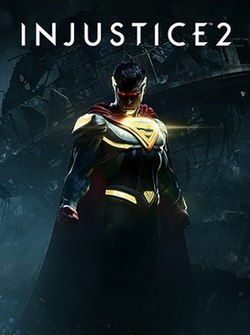 Injustice: Gods Among Us Ultimate Edition on PS4
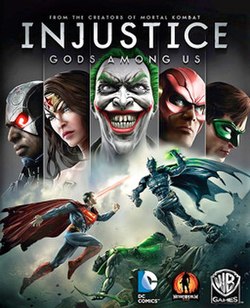 The Wolf Among Us 2 on PS5
 ACA Neo Geo: Art of Fighting 2 on Xbox One
 ACA Neo Geo: The King of Fighters '98 on Xbox One
 Art of Fighting Anthology on PS2
 ACA Neo Geo: Art of Fighting on Xbox One
 Mortal Kombat 11 Ultimate on Xbox Series X/S
 Mortal Kombat 11 on PS4
 Mortal Kombat X on PS4










 Another SquareThought Site