

 Aug 2025
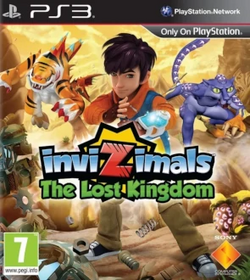

Invizimals: The Lost Kingdom arrived on the PlayStation 3 as a curious console-side detour for a franchise that originally made its name on portable devices with augmented-reality trinkets and monster-catching capers. Developed by Novarama with Magenta Software and published by Sony Computer Entertainment, it launched in Europe on 30 October 2013 (and later in North America in September 2014) as a spin-off released alongside Invizimals: The Alliance. On paper the idea was simple: expand the Invizimals brand into a traditional platformer and give console players a chunk of the IP to chew on. In execution, Lost Kingdom behaves like a prototype that was invited to the party before all the furniture was assembled. This review takes a forensic, detail-oriented look at how the game's systems, engine choices, and technical compromises hold up on the seven-year-old architecture of the PS3, and why the title sits roughly in the middle of the Metacritic scoreboard with a 50% aggregate.
The first thing to inspect when treating a platformer like a mechanical organism is its input-to-response fidelity. Controls in Lost Kingdom are serviceable but unremarkable - button mapping is conventional and responsive at a baseline level, but the sense of immediacy you'd expect from a polished platformer is muffled. The game's character locomotion leans toward conservative acceleration and deceleration curves: you press left and your avatar begins to move as if remembering a previous life as a sloth; you press jump and there's a brief hesitation as the animation system commits. That combination dilutes precision platforming, making jump timing feel less like a test of player skill and more like a negotiation with the animation state machine. Collision detection is another area where the game's implementation betrays its budget. Bounding volumes on complex geometry sometimes mismatch visual models, creating moments where ledges that look grab-able slip through your fingers, or where invisible vertical planes gently bounce your character away without clear cause. These are classic symptoms of primitive collider simplification or mismatched capsule sizes, a common cost-saving measure to reduce CPU overhead but one that penalizes tight platforming. Hitboxes for enemy attacks also oscillate in reliability, occasionally registering hits when a clear animation contact is absent - which points to either overly generous hitbox padding or frame-sampling inconsistencies in the physics callback. The level design oscillates between competent and throwaway. There are genuinely enjoyable sequences where rhythm and timing combine with traversal gadgets to create moments reminiscent of solid 3D platformers. However, too often these are interrupted by fetch-and-escort detours or corridors that exist as scaffolding for basic combat rather than crafted platforming challenges. Enemy AI is rudimentary and predictable: patrol, spot player, charge or fire a pre-decided attack, then return to patrol. This is fine when the game wants to be comfortable, but it never leans into emergent behavior that could push encounters into memorable territory. Additionally, since combat is intertwined with platforming, the mixture suffers when neither system achieves the tightness you'd expect. Encounters become less about player skill and more about repetition. Pacing and progression systems show signs of a quick porting job. Rewards and currencies are implemented, but the sense of meaningful progression is low. Unlocks happen, but the upgrades rarely change the mechanical core - they feel incremental rather than transformative. There's a multiplayer mode, which on paper expands the title's scope, but in practice its implementation feels bolted-on. Networking polish - match stability, synchronization of physics states, and latency compensation - isn't prioritized, resulting in multiplayer skirmishes that can feel laggy or desynced, especially if peers are geographically distant. For a multiplayer addendum that aims to broaden the game's lifespan, better netcode engineering would have made a bigger impact than additional cosmetic items. Camera behavior is worth a dedicated note because it interfaces directly with platforming precision. The camera attempts to auto-track the player and frame dramatic moments, but it occasionally over-corrects, leading to rapid pans that disorient during jumps or tight corridors. A more robust implementation would allow the camera to anticipate player velocity and provide temporary damping during critical maneuvers. Without that, the camera becomes a character in its own right - one with commitment issues. From a systems engineering perspective, the game shows a willingness to trade visual fidelity for consistent CPU usage, which explains several of the compromises observed in collision and AI. The PS3's Cell/RSX split requires careful task balancing; Lost Kingdom opts for simpler physics ticks and narrow AI decision trees, preserving frame budget at the expense of mechanical crispness. That trade was understandable for some titles, but here it leaves the core platforming sensation middling rather than memorable.
Art direction and graphics are where Lost Kingdom performs a split personality: the concept art and creature design borrow the franchise's cartoony charm, but the runtime assets land with inconsistent quality. On the PS3's GPU pipeline, texture resolution and mipmap choices are conservative; character textures are often low-resolution up close, and materials lack complex shader work like normal mapping or specular micro-detail that contemporary titles used to sell form and weight. Lighting is functional and favors a baked approach with limited dynamic shadowing. That reduces GPU complexity but flattens scenes that would benefit from richer depth cues. Draw distance and level-of-detail (LOD) transitions are handled aggressively, which helps steady the frame rate but introduces noticeable pop-in. You can watch distant geometry snap into higher LODs as you approach, and foliage or small props will flicker between detail tiers in a way that breaks immersion. These choices are likely deliberate to keep fill-rate and overdraw in check on the RSX chip, but they come at the cost of visual continuity. Animations show a mixture of strengths and weaknesses. Key poses for main character actions are clear, and the motion capture (if used) or hand-keyed work captures personality during idle states and signature moves. However, transitions between animation clips are sometimes abrupt because the blending windows are narrow or because the animation tree lacks sufficient transitional nodes. This manifests as micro-stutters when going from run-to-jump to landing states, where you can see the engine snapping between animation clips rather than smoothing them with additive blending. Facial expressions are sparse and mostly absent in close-ups, which is acceptable for a stylized platformer but contributes to a sense of unfinished polish. Performance characteristics on hardware are pragmatic: the game targets a stable experience but doesn't quite hit the mark consistently. Frame pacing hiccups occur in areas with dense effects or many active entities; these stutters suggest CPU-side spikes where physics, AI, or scripting hooks execute heavy logic on the same frame. A better multithreading approach or more aggressive budget splitting for ticked systems would have helped. Audio design is competent but modest. Sound effects deliver necessary feedback, and musical cues fit the tone, but there's no standout mix or sonic moment that elevates the presentation. Loading times are reasonable for the PS3 era, though some scene transitions attempt streaming and momentarily reveal pop-in as higher-detail assets are loaded in the background.
Invizimals: The Lost Kingdom is a textbook example of a licensed spin-off that aims to broaden a brand's reach but stumbles on engineering and design polish. Its foundations - accessible controls, a friendly art direction, and a recognizable IP - are present, but the technical compromises on collision fidelity, animation blending, camera management, and graphical LOD undercut the gameplay loop. Multiplayer is present but undercooked, and AI and progression systems rarely challenge the player or provide compelling variability. If you approach Lost Kingdom as a casual, nostalgia-tinged diversion and your expectations are tempered, it delivers short bursts of fun. If you want a tight, mechanically disciplined platformer that will stand shoulder-to-shoulder with genre exemplars, this is not it. The 50% Metacritic average feels appropriate: the game is competent in spots, flawed in ways that matter, and ultimately middling. From a technical perspective the title is interesting as a study in the trade-offs that mid-budget console projects make on constrained hardware, but as a finished product it leaves too many visible seams. Score: 5/10 - a respectable attempt that needed more iteration, deeper optimization, and tighter system integration to be truly memorable.
 Antiquia Lost on PS4
 Lost: Via Domus on PS3
 The Wacky History of Platform Games
 PlayStation Home on PS3
 Obscure: The Aftermath on PS2
 Cocoto Platform Jumper on PS2










 Another SquareThought Site