

 Oct 2009
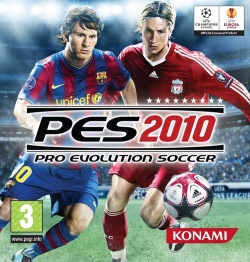

PES 2010 arrives like that one teammate who actually practices free kicks: confidently, a little smug, and immediately challenging you to up your game. Developed and published by Konami, this entry (branded as World Soccer: Winning Eleven 2010 in parts of Asia) tries to pull the series away from button-mash nostalgia and toward a more conscientious, skill-first simulation. On PS3 the game pushes 360-degree control, smarter AI under the Teamvision 2.0 banner, and reworked animations. If you want pretty numbers and flash goals without effort, you'll be tempted by rivals; if you want a game that demands you learn the craft of footballing with a controller, PES 2010 has its hand out and it's wearing a coaching glove.
PES 2010 is a game that keeps score not just in goals, but in patience, spatial awareness and timing. Its core philosophy is stubborn: football isn't a flurry of spectacle moments, it's a litany of small decisions executed reliably. That's good news if you enjoy the grind of getting better; it's awkward news if your primary tactic is "spam sprint, hope for the best." At the mechanical level the headline is 360-degree control on PS3 (via the analog sticks and even the DualShock D-Pad). This feels like going from a biro to a fountain pen: you can feather touches around defenders, tilt your runs into the useful half-millimetre and curve dribbles rather than performing cartoonish zig-zags. The skill ceiling rises because every touch can be nuanced - timed semi-soft nudges push the ball into pockets of space, and slight stick adjustments let you body-fake without committing to a sprint. Learning to modulate that input rewards you immediately: defenders overcommit less, and through-balls stop being lottery tickets and become planned passes. Dribbling and individual skills were reworked for this release, and they're not just window dressing. The animations give you readable cues about what a player can do next, so reading the animation becomes a skill in itself. Watch for shoulder drops, gaze direction and stride changes - these are your inflight indicators that permit feints or trigger a pass. The game doesn't shout the inputs at you; it nudges you toward seeing patterns. Once you internalise those patterns, the match flow smooths out and sudden goals feel earned rather than cheaty. Konami's Teamvision 2.0 is an AI evolution and it's the primary reason matches can feel like a chess game with legs. Opposing squads shift shape, chase different lines and adapt to your frequency of passes and width of play. It's not that the AI simply becomes unfairly precise; it reads your tendencies. If you favor the wings, expect double-teams and cutback traps. If you hoard possession through narrow passing, AI midfielders start to shadow more aggressively. This creates a loop where you either adapt tactically or watch the game slip away. The result is a challenge that's strategic as well as mechanical: you need the right moves and the right plan. Speaking of strategy: PES 2010 introduced more granular tactical controls - pass frequency, width of play and other strategic toggles - and those actually matter. Set your team to play narrow with short passes and you'll strangle wide defenders but run into congested final thirds; choose wide, long passing and you'll punish slow center-backs but invite crosses and set-piece scrambles. Adjusting strategy mid-game is part of the skillset: good players watch the match, read the AI's reaction and tweak accordingly. It's the sort of meta-skill that separates 'I scored once' players from 'I win consistently' players. Goalkeepers are more versatile than in previous iterations, and this shifts how you approach goalmouth situations. Challenging for headers, painting the corner on a shot, or committing a defender to a back-post run all carry different risks because the keeper might anticipate or flail. On the attacking side, shooting is less about mashing and more about placement plus timing; penalties and free-kicks are given better control over placement and accuracy, so the skill of scoring them is less roulette, more practiced precision. There's satisfaction in drilling the bottom-right corner consistently - the kind of satisfaction that used to be reserved for guilt-free online wins. Now it's earned. Referees have been reworked to make more balanced calls, which changes how physical you can be. This forces you to learn to jockey and intercept rather than rely on fouls to stop counterattacks. It's a subtle but meaningful shift: you begin to value position and anticipation more than brute tackles. Additionally, crowd atmosphere reacts dynamically to the on-pitch action; momentum swings feel psychological as much as mechanical. That intangible pressure - the roar when you miss a sitter or the hush as a tense penalty is stepped up to - feeds into the mental game. Composure becomes a skill. If you like career modes, Master League's managerial depth has been enhanced. This isn't just about stick skill; it's roster management, transfer savvy and long-term planning. The extended managerial lifespan nudges players to think beyond a single game: invest in youth, tweak tactics to suit aging stars, manage finances and ride the form curve. It's a gentle introduction to the managerial meta that rewards strategic thinking and planning. Online play and downloadable content were promised to be enhanced by a dedicated online team, and while the early online scene could be as merciless as an away crowd, it's the best environment to test the high-skill systems. Human opponents exploit nuances that the CPU will eventually learn, and that's the crucible where your 360-degree control, animation-reading and tactical adjustments get hardened. Expect a steep curve, and expect to lose a lot at first. The game demands practise, not patchwork tricks. The challenge in PES 2010 is cumulative: mastering a single mechanic doesn't make you unstoppable. Success requires combining close control, vision for passes, timing of runs, set-piece accuracy and in-match tactical shifts. For players used to instant gratification, this may feel punishing; for players who enjoy the arc of improvement, PES 2010 feels like a rewarding apprenticeship.
PES 2010 went the extra mile on visuals for its time: improved player models, fluid animations and live player expressions make the pitch feel like a stage where moods change with each touch. Dribbling and shot animations were reworked, not just to be prettier but to be more informative - the movement language helps you anticipate actions and counters, which ties directly into gameplay skill. Match-day atmosphere is also cranked up; crowds react spontaneously to swings in play and that adds a layer of immersion often underappreciated until you feel your own pulse rise during a comeback attempt. It's worth noting that the PS3 version benefits from the 360-degree control and shows the most polished animation set in the family, which makes the extra visual polish meaningful rather than decorative. Licensed competitions like the UEFA Champions League bring realistic presentation flourishes - graphics, branding and context that reward you for caring about the story of a season. The visuals aren't revolutionary compared to the generation's best, but they're functional: they give feedback, read cues and make the tactical details legible. In a game about skills and small decisions, that visual clarity is essential.
If PES 2010 were a teacher, it would be the coach who makes you run laps until you stop making dumb mistakes. It's not the flashiest franchise entry, nor the easiest: it asks you to learn, adapt and respect the fundamentals. The payoff is genuine - a system where good decision-making and refined mechanical control compound into satisfying football. Teamvision 2.0, 360-degree control, improved goalkeepers and tactical options combine to make matches feel tactical and earned. For the patient player who enjoys incremental improvement and tactical fiddling, PES 2010 on PS3 is a rewarding challenge. For someone who wants quick highlight reels with minimal effort, the game will feel stubborn and occasionally unforgiving. Score-wise it sits comfortably in the 'very good' bracket (the PS3 version averaged roughly a 78/100 on aggregators), and that's fair: it isn't perfect, but it's a smart, demanding football sim that respects skill. Dust off the controller, practice those placements and learn to read animations - PES 2010 will turn you into a better player, or at least give you a lot of funny failure montages along the way.
 NHL Hitz Pro on PS2
 Pro Evolution Soccer 2008 on DS
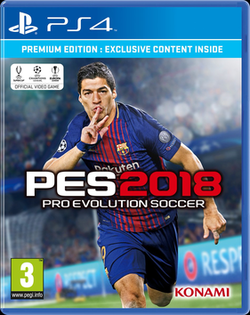
 Pro Evolution Soccer 2018 on PS4
 Accolade Sports Collection on Xbox Series X/S
 Deca Sports DS on DS
 Alan Hansen's Sports Challenge on PS2
 EA Sports MMA on PS3
 Metal Gear Solid: Integral on PlayStation
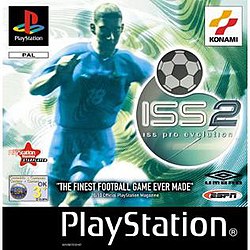
 ISS Pro Evolution 2 on PlayStation
 Pro Evolution Soccer 2 on PlayStation
 Metal Gear Solid 3: Snake Eater on PS2
 Dance Dance Revolution Best Hits on PlayStation










 Another SquareThought Site