

 Aug 2025
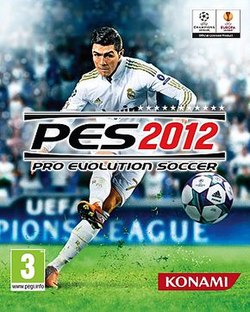

If you remember football games as either arcade chaos or a statistics spreadsheet with shin guards, PES 2012 sits stubbornly in the middle, like a coach who still believes in two-touch football and yelling at players for being dramatic. Konami pulled a deliberate tune-up rather than a revolution: PES 2012 is less about flashing new modes and more about polishing the greasy little mechanics that actually decide matches. On the PS3 this means improved animations, tighter speed and physics, smarter referees, and the addition of a weapon that will either make you look like a soccer Mozart or like a toddler flinging pasta - Teammate Control. For anyone who treats a controller like an extension of their lower half, PES 2012 is a charmingly stubborn instructor: it rewards skill, punishes shortcuts, and makes you earn tidy passes and clean finishes the way real coaches make you run laps.
PES 2012's biggest claim to fame in terms of player-facing features is Teammate Control, and if you like the idea of being a puppeteer with a tactical degree, this is where the game shines. Teammate Control gives you direct influence over the movement of an off-ball teammate during open play and set pieces - you can position runners, drag markers, and call for the ball with more precision than before. There are manual and assisted options, which is essentially the game handing you training wheels for your tactical schizophrenia. On assisted settings it's forgiving and feels like you're nudging the AI in the right direction. Switch to manual and suddenly you're responsible for choreography: timing the run, judging the defender's reaction, and slotting the through ball with millimetre precision. The learning curve here is real, but the payoff is delicious when a perfectly-timed run slices the defence and the net bulges like it owes you money. The AI improvements are subtle but central to the challenge. Opponents don't just swarm mindlessly; defenders read the game more thoughtfully, make positional choices, and are less susceptible to the old "catch-up" bug where they would magically outrun attackers regardless of pace. This means raw speed alone is a less reliable tactic than it used to be. If you relied purely on turbo-wiry players to bully the pitch, PES 2012 forces you to diversify: timing, feints, and a clever combination of passing and dribbling become essential. Defending is also more cerebral. Don't expect to spam the tackle button and win everything - jockeying, containment, cutting passing lanes, and anticipating through balls are skills that separate keyboard-wielding philosophers from the button-mashing masses. Refereeing got a facelift that actually matters to gameplay. The advantage rule is properly implemented and referees will pull back play for bookings after the ball goes out. That might sound like bureaucratic polish, but it changes how you press and how you commit in the box. You must be smarter about contact and timing; reckless challenges are punished more consistently. Goalkeepers received work too: new animations and generally more reliable performances mean you can't just lob the ball from 30 yards and expect a cinematic own-goal to bail you out. On the flip side, improved goalkeepers also reward creative finishing - quick low shots, dinked curlers, and placement are all more convincing outcomes when the keeper has believable movement. Physics and speed adjustments are where PES 2012 can feel like a two-faced coin. On one hand, animation polish makes dribbling and first touches smoother, rewards skillful controller work, and adds weight to ball progression. On the other hand, some critics and players felt the ball lost a little of its heavy, visceral feel - there are moments when it skitters in ways that feel less grounded. That quirk becomes a piece of the challenge: you must learn the ball's temperament on different surfaces and in different situations. Crosses, slide tackles, and volleys demand practice because timing windows are narrower. It's the kind of game mechanic that turns casual Saturday-afternoon sessions into finger-straining training montages. Tactically, PES 2012 nudges you to think like a coach. The Football Life suite integrates Master League and Become a Legend, with Club Boss for players who want to run the club's business side. For the skill-focused player, Master League is a laboratory: squad rotation, player development, and formation experimentation affect performance on the pitch. If you want a challenge beyond just scoring goals, managing player fitness, handling transfers, and coaxing youngsters into stars gives the game a strategic layer. The removal of some online fan-favourites in certain versions (2v2 Ranked Matches on Xbox 360 for instance) doesn't affect PS3 single-player tactics, but it's a reminder that some communal challenges depend on the online ecosystem - an ecosystem that, sadly, Konami shuttered in January 2013 for PES 2012 online services. If you're playing it today, your head-to-head communal testing ground is limited to local multiplayer or private sessions. Playing PES 2012 successfully requires a mixture of mechanical and mental skills. Mechanical skills include first touch control, timed passing, direction changes (stamina-aware dribbling), and set-piece execution. Mental skills are just as vital: spatial awareness to exploit the Teammate Control system; anticipation to intercept and counter; patience to build attacks rather than force low-percentage plays; and tactical flexibility to switch formations or instruct wingers to cut inside. It's not a game that forgives laziness. If you want to skate by, FIFA-style arcade bursts might sometimes feel faster to execute, but PES rewards the player who invests time into mastering its subtleties. Practice is not optional; it's the entry fee. The overall difficulty is nuanced: on easier assist levels PES 2012 lets you feel brilliant without learning too much, but bump it up and the game will punish sloppy finishing, poor positioning, and tactical ignorance. Matches become chess-like skirmishes rather than flukey highlight reels, and that is precisely why the game becomes strangely addictive for players who appreciate earned victory.
Visually PES 2012 on PS3 isn't trying to start an arms race in photorealism, but it pushes animations and player motion into a convincingly natural zone for its time. Players have more fluid runs, improved body language, and goalkeepers sport new, more believable save sequences. The stadium roster is generous - 30 stadiums with 17 licensed - and variety in stadium atmospheres matters when you're trying to read crosswind and crowd pressure like a professional matchday brain. Lighting and crowd rendering are solid enough that matches feel alive without stealing focus from gameplay. Where graphics intersect with challenge is in the physics and animation fidelity: a cleaner first touch animation means you can execute tighter one-twos, but it also means defenders have less leeway to bail you out when you mishandle the ball. Animations actually influence decision-making; will you attempt the cheeky outside-of-the-boot pass or play it safe to the midfielder depending on how your striker controls the ball? There are odd moments where the physics feel a bit slippery or where animation priorities produce slightly floaty balls, and critics pointed this out at release as a weird lack of weight. For players serious about mastering PES 2012, that quirk simply becomes another variable to compensate for - like learning how a vintage car handles quirks while racing it. All told, graphics serve the gameplay rather than overshadow it. The visual cues are clear, player animations inform action windows, and stadiums create context. The aesthetic choices aid the skill-based focus: when you learn the animation tells, you start anticipating runs, tackling windows, and keeper reactions like a seasoned coach in a bar arguing with strangers.
PES 2012 on PS3 is not the flashy comeback that silences every 'it was better in my day' fan, but it is a meticulous exercise in gameplay refinement. If you want easy entertainment, this isn't always the fastest route to instant gratification - PES 2012 is pick-and-grind, not button-mash-and-boast. For players who crave a challenge that rewards study, timing, and tactical nuance, it's a delight. Teammate Control alone gives you a new vocabulary for creating chances, and the upgraded AI means that success comes from out-thinking opponents rather than out-cheating them. The game's personality is a stubborn coach with a dry sense of humour: it'll yell at you for mistakes and then be the first to slap you on the back when a well-worked goal lands. There are compromises: a few physics niggles, the eventual shutdown of online services, and the fact the game doesn't always hold your hand through its learning curve. Still, the PS3 version sits comfortably among reviewers' favourites of its time, and for a player willing to invest the hours, PES 2012 offers one of the most satisfying skill-driven football experiences of its era. Think of it as soccer's equivalent of learning to play a real instrument: it takes practice, it can be brutally humbling, and when you finally hit the right notes, the applause is worth every sweat-soaked controller session.
 NHL Hitz Pro on PS2
 Pro Evolution Soccer 2008 on DS
 Pro Evolution Soccer 2018 on PS4
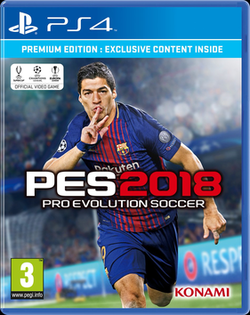 Accolade Sports Collection on Xbox Series X/S
 Deca Sports DS on DS
 Alan Hansen's Sports Challenge on PS2
 EA Sports MMA on PS3
 Metal Gear Solid: Integral on PlayStation
 ISS Pro Evolution 2 on PlayStation
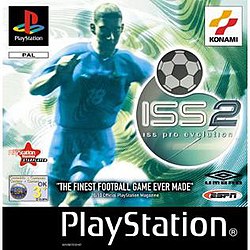 Pro Evolution Soccer 2 on PlayStation
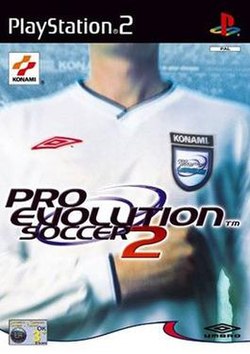 Metal Gear Solid 3: Snake Eater on PS2
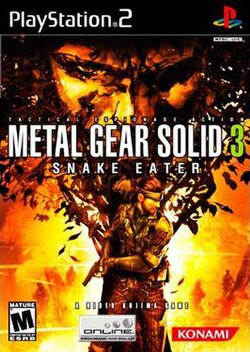 Dance Dance Revolution Best Hits on PlayStation










 Another SquareThought Site