

 Aug 2025
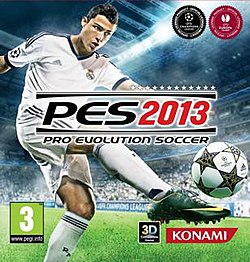

Pro Evolution Soccer 2013 is the version of a football sim that looks you in the eye, nods slowly, and says: "You want realism? Do the work." Konami's return-to-form entry - fronted on the European PS3 cover by Cristiano Ronaldo and shepherded by producer Kei Masuda - doesn't pander with flashy menus or arcade excess. Instead it hands you a pitch, a roster (including the full Brazilian Serie A and Champions League/Europa League licenses), and the quiet expectation that you'll learn how to turn 11 digital athletes into poetry under pressure. On PS3 the game landed in late September 2012 and scored respectably with critics (Metacritic: 82/100 for the PS3 version), and that appreciation largely comes from how it treats challenge: not as a barrier to fun, but as the substance of it. If you're the sort of player who wants goals to mean something and not just be button-mashing fireworks, PES 2013 is the class where you either learn to pass, time, and think - or you flunk spectacularly.
PES 2013's soul is in the tiny, difficult-to-describe moments that separate a good virtual footballer from someone who just thinks they are one. The gameplay is constructed around control, timing and decision-making. It rewards clean first touches, measured passing and positional awareness - and it punishes overconfidence with ruthless, realistic consequences. The learning curve is real and merciless. Early matches feel like trying to conduct an orchestra while being chased by a stampede. You can score flickery, lucky goals at lower difficulty, but the game makes it clear that repeatable success requires mastering a handful of core skills: - First touch and ball control: The engine emphasizes how a player's first interaction with the ball determines the next action. Poor first touches turn promising attacks into panicked scrambles. Good touches create passing lanes and shooting angles. Spending time in training or the demo can transform those clumsy possessions into calm, effective build-ups. - Passing and tempo management: PES 2013 nudges you away from the "flurry of long balls" mentality. Accurate short passes and changing tempo - accelerating then slowing, using your midfield to pull defenders out of position - are the bread and butter. Through balls are satisfying but require reading both teammate runs and defender reactions. Without that anticipation, you're just gifting the opposition counterattacks. - Defensive discipline and timing: Defending isn't just a matter of mashing tackle buttons. The AI and physics reward positioning and timing. Reading the play, jockeying to shepherd attackers into unfavorable positions, and deciding when to contain versus commit are critical. Mistimed slides leave you exposed; patient jockeying often bakes out the attacker's options. - Tactical awareness and set plays: The tactical menu matters. Player instructions, formation tweaks and substitution timing aren't decorative; they meaningfully change how your team reacts to the opposition. Free kicks and corners in PES 2013 require technique - mastering the curl, power and placement takes practice, and set-piece success frequently turns the tide in close matches. - Ball physics and player individuality: The game treats players as individuals with different touches and movement profiles. Fast players are useful, but acceleration, balance and first touch affect how they perform in tight spaces. That makes scouting your opponent's lineup and exploiting mismatches a genuine tactical concern. Where PES 2013 excels as a challenge is that it blends moment-to-moment skill with higher-level thinking. You aren't just learning to execute a dribble; you're learning when to dribble, when to pass, and how to construct attacks that open up stubborn defenses. The single-player and multiplayer modes both reward that mastery: offline you'll teach yourself patience, online you'll be rewarded for consistent fundamentals rather than flashy, gimmicky plays. Multiplayer matches elevate the challenge further. Human opponents exploit weaknesses mercilessly, punishing habits that the CPU might forgive. If you over-rely on one trick - say, a cut-in shot with your winger - real players will start countering it. That dynamic pushes you to diversify your skillset: sharpen passing, mix long and short plays, and sharpen your pressing tactics. The arcade crowd might chafe at the lack of mindless spectacle, but for players who enjoy a real challenge, PES 2013 offers a deep, sometimes unforgiving playground. It rewards patience, practice and a willingness to be humbled. The good news is the game is approachable: you don't need to be a pro to make progress, but you do need to embrace the slow burn of skill acquisition. By the time you score consistently against decent AI or human opponents, the goals feel earned rather than accidental - and that feeling is irresistible. If there's a flaw in the challenge design, it's that the steepness can alienate casual players who expect a lighter fare. The menu systems and tactical options are not always the most intuitive for newcomers, and the game's emphasis on subtlety means instant gratification is rare. But if you stick with it, PES 2013 rewards you with matches that feel like chess played at 100 mph: deep, tactical, and occasionally brutally beautiful.
On the PS3, PES 2013 looks sharp for its era. Player models are detailed enough to give stars personality; the animation work - especially first touches, shoulder-to-shoulder battles and goalkeeper saves - sells the idea that these are athletes operating under real-world constraints. Stadiums take on atmosphere thanks to lighting and crowd work that, while not photorealistic by modern standards, still sell the scale of an important match. The UEFA competitions and added Brazilian league content add authenticity: seeing familiar kits, crowd chants and competition branding increases immersion. The visual fidelity matters to the challenge: clearer animations and responsive camera work make it easier to read defenders' weight shifts and judge passing lanes. PES 2013 doesn't distract with glossy UI tricks; the visuals serve gameplay. There are occasional clipping or animation hiccups - nothing catastrophic - but overall the graphics support the game's goal of realism rather than arcade sparkle.
If you want to win without thinking, PES 2013 is not your friend. If you want to get better, to sweat, to be punished for sloppy touches and rewarded for craft, it is a brilliant tutor. The PS3 version earned an 82/100 on Metacritic for good reason: it re-established Konami's commitment to simulation-style football, offering depth and nuance that reward players who study the game like a craft. The biggest challenge is patience - learning to read plays, mastering first touch and passing, and building tactical instincts - but those who put in the hours will find matches that feel meaningful. PES 2013 can be abrasive to newcomers who expect immediate thrills, but for anyone willing to learn, it's one of those rare sports games where improvement feels real and visible. Think of it as enrolling in football school: some teachers are strict, but the diploma - a perfectly timed through ball that splits a defense - never looked better. In short, bring your patience, sharpen your fundamentals, and enjoy the satisfaction of earning every goal.
 NHL Hitz Pro on PS2
 Pro Evolution Soccer 2008 on DS
 Pro Evolution Soccer 2018 on PS4
 Accolade Sports Collection on Xbox Series X/S
 Deca Sports DS on DS
 Alan Hansen's Sports Challenge on PS2
 EA Sports MMA on PS3
 Metal Gear Solid: Integral on PlayStation
 ISS Pro Evolution 2 on PlayStation
 Pro Evolution Soccer 2 on PlayStation
 Metal Gear Solid 3: Snake Eater on PS2
 Dance Dance Revolution Best Hits on PlayStation










 Another SquareThought Site