

 Aug 2025


Pinball Hall of Fame: The Williams Collection on PS3 is FarSight Studios' love letter to the noisy, neon-lit, mechanically charismatic era of coin-operated pinball. It gathers a roster of Williams machines spanning decades - from solid-state classics like PIN*BOT, Taxi and Whirlwind to DMD-era standouts such as Medieval Madness and Tales of the Arabian Nights - and stuffs them into a single polished digital cabinet. The PS3 version arrived in North America on September 22, 2009 and positioned itself as the definitive way (at the time) to practice dangerous flipper habits without incurring actual coin losses or the risk of being lectured by an arcade owner. Critics generally liked it; the PS3 release sits comfortably above many of the other platform ports in aggregate scores, and for good reason: this is a technical recreation that cares about the physics and the tiny details that separate "video game pinball" from "pinball."
If you want to talk about what matters in a virtual pinball game, start with the ball. FarSight Studios treats the ball not like a sprite that politely follows rules, but like a tiny spherical tyrant governed by mass, momentum, restitution and collision precision. On PS3 the simulation feels weighty: shots have believable travel, nudges translate into predictable but exploitable momentum changes, and the way the ball interacts with bumpers, slings and flippers mirrors the marginal differences between tables. That makes skill meaningful - there's a clear gap between a lucky bounce and a deliberate lane-shot - which is the core technical triumph here. The physics engine tracks contact points and velocities with enough resolution that tilt mechanics, post-impact spin and the sometimes-annoying life of the ball in a saucer are faithfully represented. Controls on PS3 are straightforward and ergonomically sensible. The digital mapping puts flippers on the shoulder buttons and face buttons in a way that avoids input ambiguity; left and right triggers provide the expected quick-tap responsiveness while the face buttons give an alternative for players coming from other consoles. Button-to-action latency is kept low enough that timing shots and executing trap shots feels tight - an essential requirement for high-level play. The game exposes useful options: you can disable tilt detection for a pure "practice" mode or keep it enabled to respect the real-world penalty for excessive nudging. There is also Mirror Mode, which flips tables left-to-right while maintaining intuitive control mapping (left trigger still operates the left on-screen flipper). Side-specific features such as Lane Change move logically in Mirror Mode rather than simply breaking the table's input semantics. Credits and progression mechanics take an arcade-flavored approach without being obstructive. All machines are accessible from the start, but some are banked behind credits. You begin with 20 credits and earn more through specials and by completing goals on each table; if you prefer to skip the economy you can buy locked machines for 100 credits and play them in free-play. The presence of goals and unlocks means the game isn't only about chasing high scores: FarSight layers in mission objectives that require you to learn table flow and shot priorities. Completing the five goals on a machine unlocks it permanently, which cleverly incentivizes learning the ruleset for each table - exactly what a technically-minded player wants. The rule emulation is generally faithful. Dot-matrix display (DMD) tables like Medieval Madness and Tales of the Arabian Nights render their text and animations in ways that capture the original's information density. These displays are not merely decorative: they provide critical state information for modes, multiball, and ramps, and the game reproduces those cues with accurate timing so the player's decision-making loop remains intact. Modes, jackpots and the requisite combination shots behave in ways that mimic the original rule sets, allowing the experienced pinballer to transfer knowledge from physical tables to the virtual environment. Multiplayer is present, but it's the asynchronous, take-turns style you expect from traditional pinball compilations rather than simultaneous play. That keeps the technical burden low - the game doesn't have to reconcile multiple balls simultaneously on one playfield - and it keeps the focus on score optimization rather than party-style mechanics. Overall, the gameplay philosophy errs on the side of simulation rather than arcade abstraction: this is a package designed for people who care about ramp timing, saucer saves and the precise feel of a 3/8-inch steel ball colliding with the flank of a flipper.
The PS3 build gets the visual upgrade it deserves compared to earlier handheld and Wii iterations. Playfields are rendered at higher resolution with more accurate textures on decals and plastics; artwork is crisp when you lean the camera in, and the cabinet heads and surrounding playfield trim show realistic wear and gloss that helps sell the illusion. Lighting is used judiciously: localized bloom around lamps and backlit inserts gives playfields a glow that nudges the presentation from merely serviceable to evocative. Reflections and specular highlights on the ball and chrome are present without being heavy-handed, which preserves readability - a critical factor when a well-lit playfield is easier to parse at high speeds. Frame rate and animation smoothness are technically important for pinball because missed frames can equal missed input windows. On PS3 the game runs smoothly in single-table play; animation of mechanical toys, motion of pop bumpers and the DMD updates stay consistent enough that timing reads correctly. The emulation of DMDs is competent: the low-resolution dot patterns are reproduced faithfully and text/graphics transitions maintain the original timing, preserving cues for multiball and mode progressions. One area where the presentation keeps you honest is camera behavior: the game uses dynamic camera pulls to highlight dramatic moments (multiball, major jackpots), but these transitions are quick and don't interfere with gameplay. If anything, the camera enhances spectacle without stealing the player's situational awareness. A small technical nitpick: the surrounding cabinet and room geometry are mostly static and function as backdrop rather than interactive scenery. That's fine for a pinball sim focused on table fidelity, but players expecting an immersive 3D arcade environment may feel the peripheral visuals are underused. Likewise, while the soundtrack provides energetic filler (and the title includes tracks by Chris Kline and others), the audio mix is primarily functional rather than theatrical - the real charm still comes from the simulated mechanical clicks, chimes and digitized calls from the DMD tables, which are reproduced with respect for timing and mix clarity.
Pinball Hall of Fame: The Williams Collection on PS3 is a technically conscientious recreation of classic Williams tables that succeeds by prioritizing fidelity. Where many licensed or themed pinball games treat the ball like a digital prop, FarSight's engine gives the ball physicality and preserves the rewarding skill loop that real pinball players chase. Controls are responsive, the physics have believable weight, the DMD and rule emulation are faithful, and the graphical polish on PS3 helps sell the nostalgia without blurring critical visual information. It's not without limitations: offerings are finite compared to later, larger libraries, the surroundings are static and the multiplayer adheres to the conservative turn-based format. But those are stylistic or content-level quibbles rather than technical failures. For anyone who wants to practice shot sequences, learn a table's rules without schlepping a trailer-load of steel to a bar, or simply enjoy a focused, authentic digital pinball experience, this PS3 collection is an excellent pick. The score of 8.5 reflects a polished technical implementation and genuine affection for its source material - a digital arcade cabinet that doesn't cheat the player out of the weird, delightful physics that make pinball pinball.
 Capcom Fighting Collection 2 on Switch
 Capcom Fighting Collection on PS4
 Psikyo Shooting Collection on PS5
 The Pinball Arcade on PS3
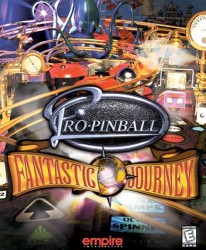
 Pro Pinball: Fantastic Journey on PlayStation
 Pinball Fx on Xbox Series X/S










 Another SquareThought Site