

 Aug 2025
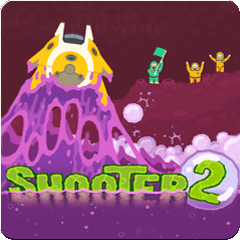

PixelJunk Shooter 2 arrives on the PlayStation Store carrying two things in its cargo hold: the modest pedigree of its indie roots and the unapologetic confidence of a studio that learned its lessons and then sharpened them. Developed by Q-Games, this follow-up to the original PixelJunk Shooter finds the series treading the narrow ledge between puzzler and shooter, favoring clever environmental interplay over the straight-ahead chaos of your average blast-fest. Released in early March 2011, Shooter 2 is no mere expansion. It is a sequel in the old-school sense, an extra chapter that refines mechanics, expands level scope, and-crucially-adds multiplayer without trading the single-player's tense, methodical feel. This is not a bombastic blockbuster built to sell consoles and tie-in toys. It is instead a compact, tight design fiendishly obsessed with how fluids behave, how rock fractures, and how a small spacecraft behaves when the world around it suddenly turns into molten metal. Reviewers at the time greeted it warmly; on the aggregator front it holds a respectable score and a chorus of positive notices. What follows is an assessment from the viewpoint of a reviewer schooled in the 1990s print trenches: observant, occasionally wry, and determined to separate novelty from lasting quality. If you remember the decade when covers were glossy and opinions were long, you will find Shooter 2 refreshingly focused.
At its heart, PixelJunk Shooter 2 is about navigation, conservation, and orchestrating the environment to your advantage. You pilot a small ship with a twin-stick control scheme that feels instantaneous and obedient, a requirement when the game demands split-second decisions inside shifting liquid-filled caverns. The core novelty, carried over and expanded from the first game, is the way Shooter 2 treats fluids as active game systems. Water floods caverns and pushes your vessel; lava scalds and erodes; and mixtures produce behaviors that are both predictable and surprising. The result is a constant stream of emergent puzzles: where to flood, where to drain, how to corral a blob of magma so a delicate tunnel remains intact long enough for rescue. Levels are presented as subterranean caverns sliced across the screen, with each chamber offering a micro-problem. You might be asked to clear debris by blasting rock while simultaneously preventing water from drowning a trapped scientist, or to toggle pressure vents so that an oil slick can be burned off safely. These are not rote fetch quests. Each rescue is a mini-mission with rules that change mid-play; one moment you are mapping currents, the next you are executing precision strafing runs to carve a path without disturbing a volatile liquid column. The designers understand that the joy comes from learning the rules and then bending them within tight constraints. Shooter 2 extends its predecessor by introducing larger interconnected arenas and more complex state changes. It leans harder into set-piece encounters that demand forethought rather than reflexes alone. Where the original sometimes felt like a sequence of individual rooms, the sequel rewards mapping and memory: returning to earlier sectors with newly acquired knowledge or toggled systems. That gives the game a pleasing sense of momentum and discovery. Multiplayer drops a cooperative layer over the single-player rules. The two-player mode is not mere add-on; it alters the pacing and opens new tactics. Two pilots can coordinate to hold valves, create counterflows, and perform rescues that would be perilous solo. It is perhaps the most persuasive argument for replay, since the same puzzles feel different when shared. There are occasions where multiplayer dilutes the claustrophobic tension that makes solo runs so satisfying, but the feature is implemented with a clear respect for what made the series interesting in the first place. Difficulty is the most contentious aspect. Shooter 2 can be unforgiving; one misjudged burst or an overlooked pressure equalization can cascade into a failed rescue. Some reviewers of the day called this harsh, others praised its test-of-skill nature. As a player accustomed to the 1990s expectation that games should demand practice and patience, I find the balance generally fair. The checkpoints are reasonable, the controls are tight, and the game's language is consistent: when it punishes, it does so because the player misunderstood the physical rules. That is less artificial friction and more the result of a clever simulation revealing its consequences.
Graphically, PixelJunk Shooter 2 opts for a stylized aesthetic rather than photorealism. The visual identity is crisp and economical, a palette of saturated colors and luminous particles that communicates state at a glance. Liquids glow and refract in ways that clearly signal danger or opportunity. Lava radiates heat with a convincing shimmer; water carries debris and reflects light; and the contrast between solid rock and mutable liquid is always legible, which matters when a split-second decision depends on reading the environment correctly. The developers traded detailed texture work for clarity and motion. Part of the charm is how the game looks like an arcade cabinet translated into vector-era neon; it is both modern enough to be pleasing on the PS3 and deliberately minimal so that gameplay never fights the visuals. Particle effects are used sparingly but to great effect: explosions feel punchy, rescue beacons flare with urgency, and flowing columns of fluid leave memorable trails. The interface is restrained, too, showing only necessary information so that the screen never feels cluttered. Performance is typically stable. There are no distracting frame drops to interrupt the careful choreography of fluid and ship. The game also benefits from camera decisions that keep action framed in a way that supports planning. If there is a visual criticism to make, it is that the aesthetic occasionally leans too far into abstraction for players who prefer ornate environments; Shooter 2 rewards pattern recognition over scenic grandeur, and those who expect lavish backdrops may be surprised. That said, for a game whose key mechanic is the believable behavior of substances, the visual language is more than adequate and frequently elegant.
PixelJunk Shooter 2 is a sequel that understands what its predecessor did well and then builds outwards with discipline. Q-Games did not pursue feature bloat; instead, they expanded the core systems, deepened level architecture, and introduced cooperative play in a way that complements rather than contradicts the single-player engine. The result is a compact, intelligent game that often feels like a finely tuned pocket arcade experience rather than a sprawling modern epic. There are concessions. The difficulty curve can be steep for newcomers, and those who prefer sprawling narratives or high-octane spectacle may find Shooter 2 modest. But for players who appreciate design that rewards observation, experimentation, and a steady hand, this is one of the smarter downloadable experiences of the early PS3 era. Critics of the time tended to agree, awarding it favourable scores across the board, and those sentiments hold up because the game's pleasures are structural rather than trendy. If you are buying for nostalgia, think of it as a modern take on late 20th-century game discipline: focused, demanding, and clever. If you are buying for a quick thrill, understand that the thrill here is intellectual and measured, not explosive in the blockbuster sense. Either way, PixelJunk Shooter 2 is a polished follow-up that refuses to apologize for asking the player to learn how a world works. That is something you do not see every day, and for that alone it deserves a place on the shelf of anyone who prefers their shooters with a side of physics and a dash of cunning.
 PixelJunk Monsters on PS3
 PixelJunk SideScroller on PS3
 Plants vs. Zombies: Garden Warfare on PS3
 Alien Shooter on PS3
 PixelJunk Racers 2nd Lap on PS3
 PixelJunk 4am on PS3










 Another SquareThought Site