

 Aug 2025
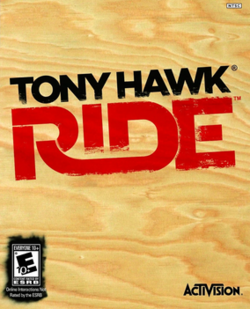

Tony Hawk: Ride was pitched like a revolution: ditch the controller, mount a skateboard-shaped peripheral, and finally prove to your parents that playing video games is basically a sport. On paper it sounds gorgeous - motion-sensing balance board, lean-to-turn inputs, ollies by kicking the tail - the kind of bold hardware gambit that can turn a tired franchise into something weirdly brilliant. In reality, Ride is more like a well-meaning but out-of-shape stunt double. There is a kernel of genuine challenge and skill here; learning to use the peripheral requires actual physical coordination. The problem is the execution. The board and sensors promised realism but delivered a fiddly, imprecise translation of human motion to game motion, and the software wasn't quite ready to interpret your best attempts at skate poetry. As a PS3 exclusive (well, not exactly exclusive in every region, but Robomodo's PS3 build is the one we're focusing on), Ride asks you to learn a new input language. If you enjoy the idea of developing a physical skill - leaning, timing, and balancing - there's something compelling in that. If you expect to pick it up and shred like Tony after an afternoon, you will experience levels of frustration normally reserved for assembling flat-pack furniture without the diagram. This review zeroes in on the challenge aspects and the skills the game actually requires: what you need to master, how the game punishes mistakes, and whether any of that pain is worth it.
The central challenge in Tony Hawk: Ride is literal balance. The peripheral is a skateboard-shaped board with infrared sensors that detect motion: lean to turn, shift weight to grind, kick back on the tail to ollie, and lean into airs to spin. You are not merely pressing buttons; you are negotiating body position and timing. That sounds wonderful if you like the idea of developing muscle memory and proprioception as a way to play. In practice, the board asks for a surprising number of small, exact movements - and the system's tolerance for slop is low and inconsistent. Fundamentally, Ride asks three types of skill from players. First, there is bodily balance and weight control. Successful runs require you to distribute weight between nose and tail, subtly shifting your center of gravity when approaching grinds, ramps, or gates. A lazy lean will either understeer you into a rail or overcommit and launch you somewhere physics forgot. Second, there's timing and rhythm. Ollies and spins depend on a crisp 'kickback' motion and a coordinated lean mid-air. The game uses time-limited trick sessions and linkable combos, so timing is not just aesthetic - it directly affects your score. Third, situational awareness and course memorization: slalom and speed runs punish hesitation. Know when to cut an inside line or when to hit a bank for extra air, because the peripheral gives you no forgiveness for indecision. The career structure is centered on Road Trip mode and a set of disciplines: speed runs, slalom, trick sessions, and multi-challenge tests. Speed runs are straightforward tests of routing and weight-shift efficiency: the faster you read the line and commit to a lean, the better. Slalom puts the emphasis on precise, consistent turns; you learn quickly that small, repeated inputs beat dramatic, theatrical waggles. Trick sessions are where Ride tries to reward skill with high scores for linked tricks, but this is also where hardware quirks become most obvious. The game expects you to string tricks by performing the right weight shift then a clean kick and mid-air posture. When it registers properly the feeling is oddly satisfying, like getting the timing on a jump in real skateboarding. When it fails - and it sometimes does - tricks drop out of your combo with no visual cue as to why, leaving you to wonder whether you were at fault or the sensors just ghosted you. Challenge sessions present five related mini-goals in a row, leaning heavy on adaptability. You must switch rapidly between skills - speed, precision, manual control, and trick linking - and that is the genuine backbone of Ride's intended difficulty. The Pro Challenge pits you against named skaters and adds a bit of swagger: match a trick sequence, nail a particularly nasty grind line, or beat a pro's time. These segments require clean inputs and course knowledge. Learning them rewards repetition: this is a game where muscle memory matters. Repeated practice shrinks reaction times and increases trust in the board, but that process is interrupted by calibration problems and patchy detection. Calibration and setup are part of the challenge too, in a way that doesn't feel like fun. The board is 'sturdy', as many critics admitted, but getting it to read exactly how you want is fiddly. Calibration can be temperamental. You will spend time tuning placement, marking a non-slip area on your floor, and convincing your PS3's camera area (no camera, but just general sensor environment) to behave. The learning curve isn't optional; you'll either spend an evening making the board part of your body or you'll angrily remap expectations back to a DualShock controller. When the physical feedback loop works, the game rewards you with a distinct sensation of progress: better lines, tighter combos, and faster speed run times. When it misreads you, the sense of control collapses and the challenge becomes punitive rather than skill-based. The game's error model is unforgiving. Small mistakes, like a half-hearted ollie or an imprecise lean into a grind, often punish you more harshly than a similarly mistimed button press in a traditional Tony Hawk title. That's logical in a simulation sense - real skateboarding punishes you - but in video games we usually ask for predictable consequences. Ride's inconsistency means you'll sometimes be punished for human wobble and sometimes for what appears to be a sensor hiccup. Expect plenty of 'did I do that?' moments, followed by a choice: try again and grind your way to competence, or storm off and question modern innovation. Multiplayer exists, but the meat of the game is single-player skill growth. If you love the idea of competing for fastest speed runs or line efficiency with a friend and don't mind swapping a peripheral around, it adds a social layer. For solo players, the real reward is the odd moment of flow where your body and the game's interpretation of it align. Those moments are rare, but when they happen Ride feels like a small achievement: a high score that isn't just number padding but a physical accomplishment you did with your weight and timing. In short, the challenge aspect is real and interesting: Ride demands balance, timing, mental mapping of lines, and resilience in the face of a finicky input device. Where it fails is in how reliably the hardware and software translate that skill into consistent in-game outcomes. That inconsistency turns what should be an intricate dance into a temperamental partner who occasionally steps on your toes with zero remorse.
Visually, the PS3 version tries to look like a modern Tony Hawk game of the era: detailed urban levels, recognizable pro skater models, and a soundtrack loaded with punk and alt tracks intended to make you feel like you're in a montage. The environments are competent but never showy; textures and draw distances are fine for the time but lack the polish that could distract from the core hardware problems. Animations do a decent job when the trick actually registers - the skater model will pop and rotate in ways that imply momentum - but the disconnect between on-board motion and on-screen action sometimes makes those animations feel like an actor reading lines while someone else is controlling the camera. Some reviewers noted that the only consistent praise the package earned was for the peripheral's physical build quality. The board itself looks and feels substantial, the sort of thing you could base a lamp on if you were into avant-garde interior design. Meanwhile, the game's aesthetics don't hide design compromises. There are moments where crowd, city, and level details are charming, but the visual package doesn't mask the deeper problem: a mismatch between input fidelity and on-screen feedback. The player is often left watching lovely graphics while mentally grumbling at why their five-star combo turned into a sad little trick count. Finally, audio and soundtrack choices are competent and serve the tone. They do their job of ramping adrenaline during speed runs and setting a mood during trick sessions, but even a killer track playlist struggles to smooth over the game's mechanical annoyances.
Tony Hawk: Ride is a fascinating failure in the way that makes you respect the ambition even as you curse the result. The game demands real skills - balance, precise weight shifts, rhythm for trick linking, and memorization of lines - and when it all lines up, there is a palpable satisfaction in having earned a run. That feeling is the high the designers were chasing: translating real skateboarding inputs into meaningful video game outcomes. Unfortunately, Ride rarely achieves consistent translation. Calibration issues, sensor inconsistency, and a software layer that sometimes seems rushed mean the challenge often feels arbitrary. Critics called this out at release, and Metacritic's PS3 score of 44/100 reflects the general view: the peripheral concept was brave, the hardware sturdy, but the gameplay execution left too many players frustrated. If you are a curious gamer who enjoys physical peripherals, have patience, and want the novelty of learning a new motor skill, you might get real enjoyment out of the Road Trip lifecycle, slalom precision tests, and Pro Challenges. If you want tight, predictable skateboarding gameplay with responsive controls and low frustration, this is not the Tony Hawk entry to choose. As a historical footnote, Ride's experiment spawned a sequel, Tony Hawk: Shred, which tried to iterate on the board idea. That doesn't change Ride's reality in 2009: ambitious, occasionally rewarding, and too often hamstrung by an imperfect marriage of hardware and software. Score it as an interesting attempt with a steep, sometimes unfair learning curve: a 4.4 out of 10 for PS3 sums up a title that taught players a lot about balance - both on the board and between innovation and polish.
 Ride 5 on Xbox Series X/S
 Ride on PS3
 Accolade Sports Collection on Xbox Series X/S
 Deca Sports DS on DS
 Alan Hansen's Sports Challenge on PS2
 EA Sports MMA on PS3










 Another SquareThought Site