

 Aug 2025
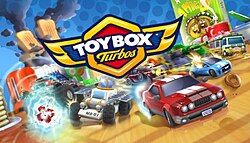

Toybox Turbos is Codemasters' bite-sized love letter to tabletop racing nostalgia: imagine Micro Machines with a modern polish, a dash of weapons-based chaos and the reassuring whirr of a developer who has spent most of its life tuning wheels and suspension. On PS3 the game landed as a compact, budget-priced racer that critics generally liked (Metacritic: PS3 78/100), and the build feels like something designed to be picked up, spat back out and then picked up again when a friend arrives with nachos and a competitive streak. My focus here is not on whether the game makes you feel seven again, but on the technical scaffolding that underpins that feeling: handling and physics, track layouts and pacing, systems design for multiplayer, and how the PS3 build behaves compared to other platforms.
At the heart of Toybox Turbos is a handling model that reviewers described as "appropriately chunky" - and that description nails the technical intent. The physics prioritize tactile, predictable responses over hyper-realistic simulation. When you brush a table edge, hit an obstacle or bounce off a cereal box ramp, the car reacts with a controlled rebound rather than an unpredictable tumble. That "bounce" is a deliberate parameter in the collision response: restitution values are high enough to make impacts feel bouncy but are balanced by traction coefficients that keep the vehicle from sliding into nonsense. The result is a forgiving arcade feel where mistakes cost time but not complete humiliation. It's a system designed with accessibility and multiplayer skirmishes in mind. Vehicle differentiation is implemented primarily through numerical balancing rather than radically distinct mechanical models. The 35 vehicles available are a roster of little archetypes - fast/low-grip sprinters, heavier high-grip cruisers, and middle-of-the-road commuters - with their identity expressed through top speed, acceleration curves, mass and cornering grip. From a systems perspective that's economical: it allows a wide roster without the overhead of bespoke physics for each vehicle. The trade-off is that tactical depth from vehicle selection is limited: Eurogamer's observation that the decision to favour speed over handling has little tactical merit is a predictable outcome when tracks and race types don't demand nuanced tradeoffs. Tracks are where the game's systems show both competence and conservatism. Eighteen circuits are squeezed into toy environments - breakfast tables, workshops and garden paths implied by the scale - and they are crafted for short, arcade-friendly loops rather than long, technical races. Track geometry favors branching lanes, spectacle props and chokepoints where weapons and bumps can trigger momentum swings. From a level-design perspective, this supports chaotic multiplayer but reduces strategic depth for solo players. If you analyze lap structure, the mission designers rely on localized hazards and tight corridors to create excitement rather than variable elevation or complex racing lines. That means choosing to tune a car's handling over its top speed rarely pays dividends beyond personal preference; tracks generally reward quick reactions and opportunistic aggression. Weapons and power-ups are a core mechanical layer. The implementation is straightforward: pick-up zones spawn ephemeral modifiers (speed boosts, missiles, etc.), and their effects are realised with short-duration state changes to the vehicle. Damage is not modeled as a continuous degradation of vehicle performance; instead, weapons trigger instant modifiers such as impulse forces (a push that knocks a vehicle off-course) or temporary speed debuffs. This decision keeps the codebase simple and ensures predictability during multiplayer sessions. It also aligns with the game's design goal: fun and readable outcomes over simulated damage complexity. Multiplayer is where the architecture must work hardest, and Codemasters offers both local and online modes. Local multiplayer is the classic selling point: the engine handles multiple camera splits or shared-screen composition and keeps the physics deterministic enough that collisions and interactions feel consistent. For online multiplayer, the PS3 build was received more warmly than the PC build, which suggests the network code and matchmaking were optimized for console constraints. Predictive client-side corrections and simple reconciliation for collisions (where the authoritative state is occasionally corrected by the server and clients smoothly interpolate) seem to be in effect. This is a common approach for arcade racers and it reduces jitter while preserving the fast, chaotic feel. The net effect is immediate multiplayer fun, as GamesRadar noted, while single-player content remains comparatively thin. Single-player is technically competent but modest. The campaign systems - if you can call them that - are essentially a sequence of events and challenges stitched together without extensive meta-systems (no deep progression or layered vehicle upgrade trees). That keeps the single-player code lean and lowers QA surface area but also limits replayability. From a content-density perspective, 18 circuits and 35 vehicles offer breadth, but without a complex progression loop the motivation to grind is mostly social: beat your buddy, not the game. Performance tuning and AI behavior are aligned with that goal: AI drivers follow predictable racing lines with scripted aggression spikes to simulate human-style errors rather than attempt to be perfect time-attack opponents. That's fine for pick-up-and-play but predictable for a solo completionist.
Visually, Toybox Turbos leans into scale and readability rather than photorealism. The palette, texturing and prop selection are all optimized to sell the toybox aesthetic: overscaled everyday objects (cereal boxes, mugs, batteries) serve as level furniture, creating an immediate sense of place without expensive assets. This approach is efficient: by designing environments with fewer unique 3D models but higher-frequency tiling and purposeful reuse, Codemasters can deliver charming visuals without a bloated asset pipeline. On PS3 the build quality and platform-specific tuning show through in consistent presentation. The UI is crisp, iconography for power-ups is instantly readable and camera framing emphasizes the right amount of world so players can react to obstacles. The game's art and lighting are baked in a way that favors contrast and silhouette clarity, which is a practical design choice for a game where split-second visibility of ramps and opponents matters. Composer Mark Knight provides a soundtrack and audio cues that support the action; sound design here is more functional than atmospheric, which again aligns with the fast-paced arcade focus. Technical performance across platforms was mixed: the PS3 version collected "generally favorable" reviews while the PC version received more middling scores (Metacritic: PS3 78, PC 69). The disparity suggests that Codemasters invested time tuning the console build to the platform's CPU/GPU characteristics and memory profile. Console optimizations (static batching, texture streaming parameters tailored to the PS3's memory constraints and simpler shader permutations) would explain a smoother experience on PS3 versus a potentially more variable experience across PC hardware. Frame-rate consistency and input latency are mission-critical in an arcade racer; the better reception of the PS3 build suggests those elements were handled acceptably on that platform. If you are the kind of player who measures a game by whether your joystick twitch results in an on-screen correction within a single frame window, PS3 is the safer bet here.
Toybox Turbos is a compact, technically tidy arcade racer that knows exactly what it is: a multiplayer-focused, nostalgia-flavored package built for quick sessions and social beatdowns. Its physics are tuned toward fun readability rather than simulation accuracy, which is the right call for the design brief. The vehicle roster is broad and economical in implementation, and the track design favors short, chaotic loops - excellent for local and online skirmishes but less compelling as a long-term single-player investment. From a technical standpoint the PS3 build benefits from platform-specific optimizations that make gameplay feel snappy and stable, which is probably why critics preferred the console version. The network model appears to lean on client-side prediction with occasional authoritative reconciliation, a conservative but effective choice for arcade racing. The art pipeline prioritizes clarity and reuse over raw graphical fidelity, making the game look coherent without asking for expensive resources. If you're buying Toybox Turbos for the sofa-competitive experience - the kind where snacks fall on controllers and friendships are tested - it delivers and does so with a clean, reliable technical backbone. If you're chasing tactical depth, deep single-player progression or a sim-grade physics sandbox, the title will feel intentionally shallow. For what it sets out to do, and given the PS3 execution, a score of 7.8/10 feels fair: competent engineering, playful presentation and multiplayer-first design that mostly hits its mark, even if it stops short of being the kind of game you'll study frame-by-frame on a rainy Sunday.
 Disney Infinity: Marvel Super Heroes on PS4
 Deadly Premonition 2: A Blessing in Disguise on Switch
 Roary the Racing Car on DS
 Team Sonic Racing on Switch
 Garfield Kart: Furious Racing on Switch
 Ben 10: Galactic Racing on PS3
 F1 2021 on Xbox Series X/S
 F1 2017 on PS4
 Dirt Rally 2.0 on PS4
 Colin McRae Rally 2.0 on PlayStation
 F1 2021 on PS4










 Another SquareThought Site