

 Aug 2025
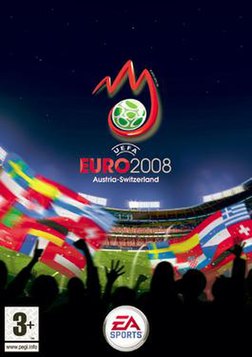

UEFA Euro 2008 on PS3 arrives wearing the official tournament badge and a soundtrack of commentary courtesy of Clive Tyldesley and Andy Townsend - the kind of familiar voice-over that makes your mis-kick feel like a tragicomedy instead of a crime. Built by EA Canada (with HB Studios handling other ports), it's essentially a festival of national pride and controller-throwing opportunities. The PS3 build was the version reviewers tended to like most (Metacritic around 79/100), and that's no coincidence: this edition is where the game's sharper AI, slicker presentation, and tighter handling make the challenge feel fair, if unforgiving. If you want a quick arcade kickabout, there are friendlier options; if you want a game that will pester you into actually improving your footballing thumb-sorcery, Euro 2008 is pretty relentless in a good way.
Let's get to the meat: the challenge. Euro 2008 asks you to earn everything with timing, spatial awareness, and slightly panicked decision-making in the final third. It's less about mashing the shoot button and more about reading the play, timing your through-ball to the millisecond, and switching to the right defender before the opposition's striker ghosts into your penalty box. The PS3 version gives you the most responsive controls in the family; the hardware and EA Canada's polish mean the lag between thought and in-game leg movement is short enough that you can actually plan combos instead of relying on luck. Passing and possession are the foundational skills. Assisted passing will sneak you through casual matches, but to survive higher difficulties you have to master weight and direction. One-touch play is rewarded: crisp layoffs, first-time finishes and angled passes that split defences feel glorious when executed, and painfully obvious when missed. The challenge here is twofold - mechanical and cognitive. Mechanically you must control the power meter and stick direction precisely; cognitively you must anticipate defenders' shifts and exploit gaps before they close. The best players are the ones who look two actions ahead, not just 'where is the ball now'. Defending is where many players get humbled. The AI likes to test your patience with timed runs and layered attacking patterns that force you to choose between committing to a tackle or holding your shape. Manual player switching becomes a necessity rather than an optional flex: accepting that the nearest defender isn't always the best choice and flicking to the covering midfielder can mean the difference between a calm clearance and a frantic scramble for a corner. Slide tackles are a last resort - low-percentage, high-dramatic - while jockeying and shadowing force you to think like a coach rather than a gladiator. Set pieces deserve their own paragraph because they're tiny puzzle games inside a match. Corners, free kicks and penalties are where muscle memory and nerves play arm-wrestle. The shot and delivery meters have a sweet spot; hit it and you'll plant the ball into tidy areas for attackers to finish, miss it and you'll copywriter a highlight reel for the opposition. Penalties are a psychological duel. The keeper AI will read your run-up sometimes; your job is to mix up placement and power so your mind games don't become predictable. Tactics and formation fiddling are surprisingly weighty. Euro 2008 forces you to think about player roles: who presses, who holds, and who's the roaming creative user. On higher difficulties the default aggressive press gets wrecked by teams who can switch to speedy counter-attacks, so patience with a low block and quick rhythm changes through your midfield becomes essential. The challenge is the meta-game: picking the right strategy for a match (and then sticking to it for long enough to make the opponent uncomfortable). The in-match tactical tweaks are subtle but potent - switching mentality from balanced to attacking can open a match up, but also leave you exposed; using that toggle is a test of discipline. Goalkeeping and shot-stopping are a lesson in reading the shooter. The keeper AI in PS3 feels less like a random number generator and more like a competent, occasionally heroic presence. That said, when you're on attack you still have responsibility: placement beats power a lot of the time. Low-driven finesse shots and properly-weighted chips punish keepers and defenders that overcommit. Expect to learn the nuances of shot types: curl, driven, lob - each has its timing window and sweet spot. The game's small frustrations are also part of its challenge loop. The AI will sometimes make opportunistic decisions that look unfair, especially in the final minute; the trick is learning the patterns. Once you understand the typical ways the CPU builds pressure, sudden beats become opportunities instead of catastrophes. Multiplayer ramps the tension even higher. When a human opponent adapts to your favourite moves, the real test begins: can you unlearn your habits quickly enough to stay one step ahead? That's where the game morphs from a contest of reflexes into a chess match full of feints. Skill acquisition in Euro 2008 is a slow burn. There's no single trick that unlocks domination, but an accumulation of small competencies: mastering through-balls, switching defense, set-piece math, and the discipline to rotate players and manage stamina. The PS3 version rewards practice because the controls are tight enough to let you execute at a high level; it doesn't pad mistakes. That makes every goal earned feel like an achievement rather than a fluke. If you enjoy getting better in little slices - shaving off seconds on pass timing, learning when to lob versus ground pass - the game becomes addictively satisfying. Finally, the presentation layer - the stadiums, the anthems, and that commentary - adds to the pressure. Hearing Clive and Andy narrate your descent into madness as you chase an equaliser is the kind of audio therapy that pushes you to improve. There's also a weird little controversy in the game's history (an anthem mistake), which is a reminder that authenticity matters to fans; the PS3 version generally nails the tournament atmosphere, and that immersion increases the stakes of every match. If you're the sort of player who goes for results and then wonders why your nine-year-old cousin keeps beating you, Euro 2008 on PS3 will force you to adapt. It doesn't hand you wins. It teaches you to earn them.
On PS3, Euro 2008 benefits from the generation jump: player models are sharper, stadium lighting is livelier, and animations are smoother compared to the PS2 and PSP builds. The camera framing during cutscenes and replays heightens drama; it's the kind of cosmetic polish that makes a late winner feel cinematic instead of pixelated. Crowd and atmosphere are competent rather than revolutionary - flags and crowd noise create energy but won't make you re-evaluate your life choices. The visual clarity also serves gameplay: it's easier to read player runs, judge distances for through-balls, and spot the faint curve on a winger's cross. That's crucial when the game's challenge depends on split-second decisions. Occasional clipping and repetitive animations rear their heads, but they're rare enough not to break the flow. In short, the PS3 visuals are functional and flattering, helping the challenge feel visceral without turning into eye candy for its own sake.
UEFA Euro 2008 on the PS3 is less a pick-up-and-kick and more a rigorous coaching session disguised as weekend football. It rewards patience, tactical flexibility, and a tiny bit of technical dexterity with the controller. The challenge curve is honest: mistakes are punished, good decisions are rewarded, and improvement is gradual but obvious. With respectable critical reception (most outlets landing around the 7-8/10 mark for the PS3 build) and solid presentation, it's a strong pick if you like sports games that make you earn bragging rights rather than give them away. If you want a forgiving arcade romp, look elsewhere. If you like your football with consequences, late-game heart-attack moments, and the satisfaction of learning to read the game, Euro 2008 still holds up on PS3 as a competence-refining, occasionally cruel, and ultimately rewarding footie sim. Scorewise? I'm giving it an 8/10: good polish, fair challenge, and a soundtrack of commentary that will narrate your triumphs and your very public tumbles with equal relish.
 PES 2008: Pro Evolution Soccer on PS3
 Pro Evolution Soccer 2019 on PS4
 Accolade Sports Collection on Xbox Series X/S
 Deca Sports DS on DS
 Alan Hansen's Sports Challenge on PS2
 EA Sports MMA on PS3










 Another SquareThought Site