

 Aug 2025
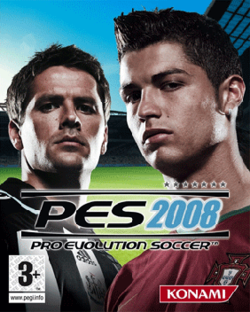

Pro Evolution Soccer 2008 arrives on the PlayStation 3 as something of a heralded, if cautious, opening gambit for Konami's long-running football franchise on Sony's new hardware. The series, renowned throughout the previous decade for its cerebral ball physics and purist approach to the beautiful game, makes its next-generation debut with many expectations riding on its shoulders. This iteration bears the curious chronological moniker "2008" rather than a version number - a marketing wrinkle born of the annual sports-war with Electronic Arts - but the substance beneath that cover is what interests the veteran observer. Konami has long traded glossy presentation for tactile possession and shrewd tactical depth; PES 2008 attempts to marry those virtues to the PlayStation 3's muscle. The arrival is not uniformly triumphant. Critical consensus, as gathered contemporaneously, suggests that the PS3 release lands in the respectable but imperfect category: reviewers placed the PS3 build in the mid-seventies on aggregate (Metacritic approximately 74/100), lagging behind the series' excellent PlayStation 2 outing but still offering a compelling football simulator for players who prize on-pitch authenticity. Sales figures for the franchise in 2007 are a reminder that Konami still mattered; PES 2008 sold over 6.3 million copies worldwide across all formats, and the series remained a viable foil to its rival. What follows is a sober assessment of the PS3 edition: its gameplay, its presentational ambitions, and the compromises that mark an early-generation release.
At the core of PES 2008 is the series' well-established preoccupation with control fidelity and a playing model that rewards positional intelligence over frantic button-mashing. The PS3 version preserves that philosophy. Passing feels nuanced, movement is weighted with a convincing sense of momentum, and the collision model largely avoids the ludicrous elasticity that afflicted many contemporaries. Konami's DNA - the slow-burn build-up, the incisive through-ball, the patient wings-to-centre strategy - remains intact. These are the qualities that will please purists: the football on offer is less arcade spectacle and more strategic dialectic between two teams trying to out-think one another. AI behaviour in PES 2008 is thoughtfully calibrated. Teammates make sensible runs, defenders react to space, and oppositional pressure can force errors in realistic fashion. The Master League remains the series' reliable career ladder on formats that support it, and the franchise's editing suite continues to be a quiet strength for those willing to tinker with unlicensed teams and likenesses. That said, the PS3 release - in contrast with the PS2 build - occasionally betrays a mechanical stiffness in animation blending, particularly in transitions between walk, jog and sprint. These moments are not catastrophic, but they interrupt the illusion more often than one would prefer. Konami embellished the franchise with new tactical options and a slightly deeper passing model. The result is a more tactical attacking game, though some of the finer control modifiers introduced feel under-explained in the in-game documentation. Online play was more prominent as a promise across platforms, but the Wii version's marketing boasted a superior online implementation; on PS3 the online experience feels competent rather than exemplary. Those who seek uninterrupted, high-level online competition will find UEFA-style match-ups serviceable, but matchmaking and peripheral features are not the best-in-class offerings that some users expected from the new console generation. The team and league licences are a mixed bag. Konami secured full licences for several major European competitions - La Liga Santander, Ligue 1, Serie A and the Eredivisie - which lends the game a veneer of authenticity where it counts: correct team names, kits and player pools. The Premier League, curiously, is only partially licensed on certain formats; many British clubs remain generically named, driving a cottage industry of community edits and patches for owners who prize realism. Notably, the game includes an editable generic league of 18 teams that owners could use to reconstruct the missing Bundesliga or to craft a more faithful representation of domestic competitions. This pragmatic concession will soothe the more industrious manager types, but casual players may be puzzled by the patchwork licensing. Commentary and presentation received attention as well. The English commentary team for international releases was refreshed; Jon Champion and Mark Lawrenson took over duties from the long-standing pair of Peter Brackley and Trevor Brooking. The change is noticeable: Champion's voice carries the gravitas of a seasoned broadcaster, yet the scriptwriting sometimes lapses into repetitive phrases. Presentation packages on the PS3 are unashamedly modern for their time: television-style overlays, player close-ups and slower replays add spectacle, though they occasionally expose the underlying animation limitations when the camera lingers.
Graphically, PES 2008 on the PlayStation 3 treads a middle ground. Konami made a valiant attempt to upgrade player models, stadium lighting and crowd rendering for the new hardware, and in snapshots the game looks handsome. Faces of marquee players such as Cristiano Ronaldo - prominently used on the game's marketing and covers - receive special attention, and the result is recognisably more detailed than the previous generation. Lighting models produce convincing twilight matches and the pitch surface reacts believably to the overhead conditions. Closer inspection brings caveats. Where the PS2 edition glided with the benefit of a well-honed engine, the PS3 version occasionally reveals the missteps of an engine in transition. Animation blending sometimes produces awkward footplanting; cloth and hair are rendered without the subtlety found in the most accomplished contemporary titles; and stadium crowds, while voluminous, lack the nuanced behavioural diversity of higher-budget spectacle sims. The camera work and broadcast presentation help disguise these shortcomings, but they remain visible when the action is frozen or replayed at length. The palate of sound and music is serviceable; the ball's thud, the referee's whistle and ambient crowd noise contribute to atmosphere, but the soundtrack and crowd chorus do not break new ground. In short, PES 2008 on PS3 looks and sounds like a next-generation upgrade from a distance, but with the occasional blemish that reminds the player it is still the work of a studio learning a new architecture rather than a textbook demonstration of what the console could achieve.
Pro Evolution Soccer 2008 on PlayStation 3 is an instructive early entry for a storied franchise stepping onto novel hardware. It retains the series' most important virtues: a considered passing game, tactical depth, and a gratifyingly realistic sense of weight and possession. For aficionados of simulation-minded football, it will supply hours of rewarding matches and managerial input. The game's shortcomings are equally instructive: the PS3 edition exhibits sporadic animation roughness, a presentation layer that sometimes highlights those rough edges, and a licensing patchwork that will frustrate perfectionists. When the smoke of marketing subsides, the essence of PES 2008 is clear. This is not a revolution; it is a patient evolution. For readers who came of age in the 1990s and remember the era when football sims were judged by feel as much as by spectacle, PES 2008 offers familiar pleasures on a new stage. It is a game for those who will forgive a few technical stumbles in exchange for a faithful recreation of football's tactical pleasures. The aggregate critical consensus places it comfortably in the "good" category for PS3 - a 7.4 out of 10, in numerical terms - and that is a defensible verdict: not the crowning achievement some hoped for, but a worthy and promising first step that keeps the franchise competitive as the console generation matures.
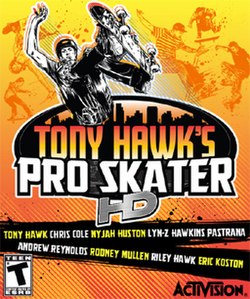 NHL Hitz Pro on PS2
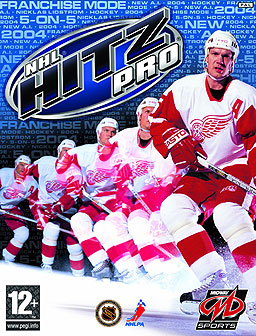 Pro Evolution Soccer 2008 on DS
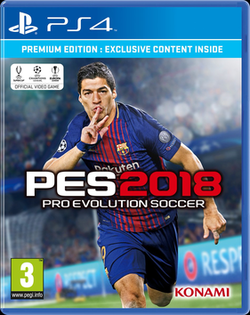
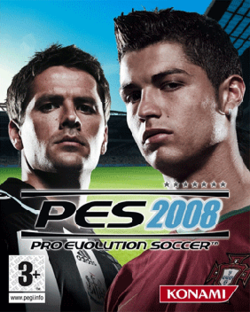 Pro Evolution Soccer 2018 on PS4
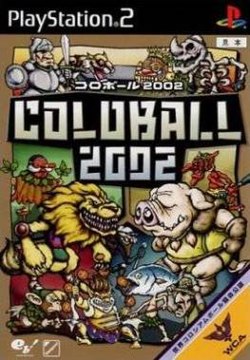
 Coloball 2002 on PS2
 Press Your Luck on PS3
 Game Dev Story on PS4
 Mom Hid My Game! on Switch
 Metal Gear Solid: Integral on PlayStation
 ISS Pro Evolution 2 on PlayStation
 Pro Evolution Soccer 2 on PlayStation
 Metal Gear Solid 3: Snake Eater on PS2
 Dance Dance Revolution Best Hits on PlayStation










 Another SquareThought Site