

 Aug 2025
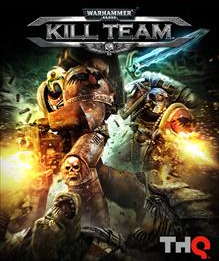

Warhammer 40,000: Kill Team lands like a chunk of bolter-fuelled arcade meat: top-down, twin-stick, and unapologetically in your face. It casts you as a tiny squad of Space Marines trying to stop an ork invasion before the ship becomes a barbecue for green-skinned maniacs, and later introduces pterodactyl-wannabe bugs called Tyranids. On PS3 the game is a single-player or same-screen co-op romp with four distinct classes: Sternguard Veteran and Techmarine, who like bullets and keeping distance, and Vanguard Veteran and Librarian, who enjoy getting up close and personal. The reviews called it fun, short, and occasionally annoying, and the Metacritic score for PS3 sits in the mid 60s. For anyone picking this up now, the question is not whether it looks like Warhammer, but whether it will actually test the skills that matter in a shooter where survival is often glued to split-second decisions and coordination with a human buddy sitting on the same couch.
Kill Team is, at heart, an arcade shooter that asks a few blunt questions of the player: can you aim, can you move without getting murdered, and can you pick the right role for the situation. The twin-stick control is the baseline skill: one stick moves, the other points the gun or the swing. That sounds obvious, but in a game that funnels dozens of orks and later Tyranids into cramped corridors and open hangars, micro-accuracy and the ability to trace a strafing enemy become the difference between looking like a legend and respawning at the last checkpoint in a sour mood. Class choice matters for the challenges the game throws at you. Sternguard Veteran and Techmarine are the go-to for ranged encounters. Their gameplay rewards precision, cooldown management and target prioritization. If you enjoy kiting enemies, focusing down priority targets and making the best use of limited ammo or weapon cooldowns, those classes will feel satisfying. Vanguard Veteran and Librarian flip the script: they demand close-quarters instincts. Melee timings, knowing when to commit to a charge and when to backpedal for a second wind, and learning enemy attack windows are essential. Switching between playstyles is not just cosmetic; the missions bend to both gunfights and brawls, and the best players will adapt their approach to each map. One of the game's more interesting challenge vectors is how it stages enemy waves and variety. Orks are the initial blunt instruments: lots of bodies, a taste for simple charges, and an emphasis on crowd control. The later appearance of Tyranids forces a change of tempo; they can be faster, weirder, and demand more situational awareness. Learning enemy tells, which enemies you can interrupt, and which ones you must avoid until they are isolated becomes a core skill. The maps reward awareness as well. Top-down perspective offers a good view, but level geometry and chokepoints can make movement feel claustrophobic. Good players use corners, elevation, and cover to manage enemy flow; worse players discover that checkpoint placement is merciless and learn the hard way that dying twice in the same cramped passage is a morale-killer. Cooperative play on the same screen is where Kill Team is happiest. Multiple players allow for tactical specialization: one teammate holds choke points with heavy fire, the other dives in for melee cleanups. The game clearly benefits from local coordination. Reviews noted that Kill Team was not designed as a single-player experience, and that shows in difficulty spikes and enemy swarms that feel easier to manage with another human mind next to you. The lack of online multiplayer is a sore spot in 2011 and remains one today; the challenge is therefore social only if you have a couch buddy. If you do, the learning curve becomes a shared, sometimes hilarious, series of trial-and-error lessons in positioning, friendly-fire avoidance, and who gets the last health pickup. A few challenge-related annoyances do temper the fun. Many critics pointed out cheap deaths and poor checkpoint placement. That means the game sometimes punishes minor mistakes with long backtracks, which can make developments in skill feel unrewarding. The tutorialization also interrupts pacing, teaching you what you need to know but sometimes at the cost of momentum. Finally, the runtime is short and the loop can feel repetitive; if your personal metric for challenge is a long, grinding climb, Kill Team is more of a sprint. If your metric is sharp, well-executed encounters that require learning and adaptation, this will keep you on your toes in bursts. Overall, the skillset the game demands is compact and pure: twin-stick mastery, excellent aim under pressure, adaptive class play, spatial awareness for map flow, and cooperative communication when playing with another person. If you like shooters that reward quick reactions and coordination and you have a teammate to high-five nearby, the game provides a tight, if occasionally mean-spirited, challenge.
The visuals are serviceable and do a decent job of selling the grim, industrial Warhammer universe in a top-down format. Reviews praised the environment as compelling, and that translates into atmospheric levels that manage to feel suitably grimy and explosive despite the smaller scale. This is not a PS3 showpiece for texture porn and fidelity, but it doesn't need to be: the art direction reads well from above, enemy designs are distinct enough to identify quickly in the chaos, and explosions have enough oomph to make you feel like your bolter actually matters. Because the camera is fixed in a top-down perspective, the graphical strengths are more about clarity than spectacle. Maps make the geometry readable, which is crucial when your survival depends on ducking into a side corridor or using a doorway as a funnel. The presentation occasionally smooths over with arcade simplicity rather than realism, and the result is a clean visual package that supports the gameplay rather than overshadowing it. If you are expecting cinematic Warhammer battles in third-person glory, this isn't that. If you want readable visual feedback for a frantic twin-stick fight, Kill Team mostly delivers.
Kill Team is a compact, often violent arcade shooter that tests a very particular set of skills: twin-stick accuracy, map and enemy awareness, class-appropriate timing, and in the best cases, couch-coordinated teamwork. It excels in punchy combat and distinct class identities, and it can be a ton of chaotic fun with a friend sitting next to you. The downsides are significant for solo players: cheap deaths, cranky checkpoint placement, a short runtime, repetitive loops and no online multiplayer to rescue lonely sessions. That mix leads to the middling but honest reception it received on PS3, and explains the 6.5 out of 10 score here. Buy it if you want a short, skill-based blast of Warhammer twin-stick action and you have a co-op partner; skip or rent it if you are looking for a long solo campaign or a forgiving, modern online experience.
 Hollow Knight: Silksong on Xbox Series X/S
 Delta Force: Black Hawk Down: Team Sabre on PS2
 Transformers: Beast Wars Transmetals on PlayStation
 Never Stop Sneakin' on Switch
 Combat Elite: WWII Paratroopers on PS2










 Another SquareThought Site