

 Sep 2025
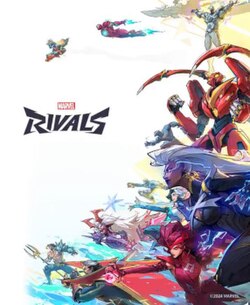

Marvel Rivals is the kind of multiplayer experiment that reads like someone handed an Unreal Engine 5 dev kit to a room full of comic book enthusiasts and said, "Make the battlefield smell like ozone and deadlines." Released across modern platforms in December 2024 and arriving on PlayStation 4 on September 12, 2025, Rivals attempts to merge large-scale, 6v6 hero-shooter combat with the trademark spectacle of the Marvel roster. On paper it's a tidy checklist: Unreal Engine 5 under the hood, 40+ characters across three roles (Vanguard, Duelist, Strategist), cross-play, destructible environments, and a free-to-play model that avoids pay-to-win traps. In practice, the PS4 port is a balancing act between ambition and the realities of older hardware - a compromise that mostly succeeds at delivering the core gameplay loop, but occasionally trips over network and graphical fidelity trade-offs.
At its core, Marvel Rivals is a systems-first hero shooter. Matches are 6v6 encounters where each character is described by a role archetype (Vanguard tanks, Duelist damage dealers, Strategist supports) and a toolkit of active/passive abilities plus an ultimate that charges via combat engagement. The game avoids role queues, which is a deliberate design choice: teams are freeform and are encouraged to find synergies via "Team-ups" - conditional pairings that unlock extra mechanics (for example, Hulk + Wolverine enabling a Fastball Special). From a design standpoint, that makes hero composition a combinatorial playground: balance patches become the primary tool for meta control rather than hard role constraints. The mode suite emphasizes objective pressure over pure fragging. Convoy and Convergence graft escort and point-capture mechanics into a two-phase rhythm where capturing shifts the map state (escort starts moving autonomously, or the match transitions into a convoy push). Domination describes a rotation of small maps where control generates points; Conquest replaces respawn-centric scoring with pickup-based objectives tied to kills; Doom Match is the free-for-all chaos mode for players who prefer their mayhem unmoderated. Technically, these modes stress different subsystems: objective synchronization across clients, hit registration consistency during high-velocity plays, and state rollback for escort momentum when multiple players contest the payload. Netcode and cross-play are critical here. Marvel Rivals launched as a cross-play title and maintains a competitive esports infrastructure with open qualifiers and invitational events, so stability is non-negotiable. The developers built the game on UE5 and pushed server-authoritative match servers to handle ability interactions, ultimate charge logic, and destructible geometry states. On PS4, that architecture manifests as stable matchmaking and parity in available heroes, since NetEase committed to a non-pay-to-win hero unlock model. However, older hardware risks higher input latency and less headroom for client-side prediction. The game compensates with design choices: many abilities have short cooldowns and telegraphed wind-ups, which reduces the frequency of unresolvable latency paradoxes. When ability brawls do overlap, the server does most of the reconciliation work, making kills feel consistent even if the visual fidelity lags behind. Character math in Rivals is surprisingly deep. Each hero has cooldown-based skills and passives tuned around the comic identity of the character - Magneto's field, Doctor Strange's space manipulation, and so on. The ultimate meter builds from combat engagement rather than a time-gated passive, which incentivizes active participation and mitigates stall-heavy metas. Balance-wise, the team has been iterative: seasonal updates and balance patches are a recurring theme, and the esports support indicates an ongoing telemetry loop for tuning. The lack of strict role queue, while liberating, can exacerbate matchmaking fairness - a team composition with multiple Vanguards can be unwieldy, and the "vote to surrender" feature was introduced as a pragmatic fix for truly unwinnable matches, though that has social side-effects. Progression and monetization are engineered to avoid gameplay paywalls. Cosmetics, battle passes, and a dual-currency system (Chrono Tokens earned in-game, Lattice as premium currency) drive revenue without gating heroes. From a technical perspective this simplifies matchmaking: every player has access to the full hero pool, avoiding the matchmaking complexity of gated rosters. The server infrastructure instead focuses on scalable concurrency - Rivals hit hundreds of thousands of concurrent Steam players and tens of millions of accounts early on - and that scale requirement influenced engineering decisions like session orchestration, regional server placement for latency, and cross-platform matchmaking pools.
Visually, Marvel Rivals is a study in compromise and taste. Built on Unreal Engine 5, the title blends Eastern and Western art sensibilities with a stylized, slightly cel-shaded sheen that prioritizes readability in crowded firefights. On PS5 and high-end PCs the game uses more of UE5's bells and whistles; on PS4, volumetrics, particle counts, and shadow cascades are dialed back to maintain consistent behavior. The destructible environments are a standout technical feature: cover can be eroded mid-engagement, which forces players to make micro-decisions about positioning. Handling destructible state across the network is non-trivial - the client predicts minor debris physics while servers authoritatively manage major structural changes, preventing divergent world states in competitive matches. Performance on PS4 is the trade-off story. The engine's scalability options let NetEase retain gameplay parity (characters, abilities, hitboxes), but the aesthetic concessions are visible - shader complexity, texture streaming, and some post-processing are reduced to keep frame pacing steady. Art direction helps here: character silhouettes and ability telegraphs are bold and readable, which is more important to a hero shooter than photorealism. The audio pipeline deserves a nod too; the option to select English, Japanese, or Mandarin VO at launch shows attention to locality, and clean mix decisions help players parse ability cues even when the screen becomes a comic-book train wreck.
Marvel Rivals on PS4 is an ambitious, well-stitched hero shooter that prioritizes fair competitive systems and a broad hero roster over pushing last-gen graphical limits. Its technical architecture - UE5-based clients, server-authoritative systems for abilities and destructibles, cross-play match pools, and a non-pay-to-win economy - results in a consistent competitive experience that scales to esports. The PS4 build is where engineering pragmatism is most visible: graphical downgrades and tighter CPU budgets are obvious if you poke them, but they rarely undermine the core gameplay loop. If you care most about solid matchmaking, balanced hero design, and spectacle that resolves predictably in the server log, Rivals will reward you. If you're chasing buttery high-fidelity presentation and the latest graphical flourishes, PS4 is the wrong platform for that particular fetish. Score summary: 7.5/10 - a technically competent and competitively minded hero shooter that earns points for design choices that emphasize parity and stability, even if some visual and performance compromises on PS4 hold it back from greatness. Bring your friends, learn a Team-up, and remember: the game wants your skill, not your wallet.
 Marvel's Avengers on PS4
 Ultimate Marvel vs. Capcom 3 on PS3
 PixelJunk Shooter 2 on PS3
 Hero Must Die. Again on Switch
 DJ Hero on PS2










 Another SquareThought Site