

 Oct 2025
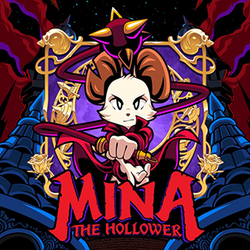

Mina the Hollower puts a tiny, whip-wielding inventor at the center of a delightfully moody gothic mystery. Yacht Club Games' latest sends Mina Lorena Navarro to Tenebrous Isle to investigate why her Spark Generators - the very things that brought light, heat and presumably slightly tastier toast to the island - have gone dark. On paper it's a straightforward hook: inventor arrives, patron stands in the background like a worried benefactor, betrayal rears its leathery head in a bat named Thorne. In practice Mina's story is both a loving love-letter to handheld-era Zelda/Castlevania vibes and a compact character study about duty, invention, and the cost of progress. The game's personality rests squarely on Mina's shoulders (and on her whip), and it uses its mechanics, setting and music to tell a tight, character-driven tale.
Mina's mechanics are deceptively simple and narratively rich. Her main weapon, the Nightstar whip, hits in four directions and evokes the classic rhythm of action-adventure combat - rapid, positional, and insistently tactile. Combat pacing is anchored by Mina's signature Hollowing ability: she burrows underground for a short, invulnerable dash that lets her cover gaps, dodge telegraphed attacks and reposition for a counter. On the surface that's a neat traversal/defense trick; read it as a character beat and it becomes Mina's emotional shorthand. Hollowing isn't just a dodge mechanic, it's the literal act of going beneath the surface - a gameplay embodiment of Mina's tendency to dig into problems rather than smash them. She's an inventor who burrows; she approaches darkness with tools and curiosity, not just brute force. The sidearm system (hatchets and daggers, one at a time) and equippable trinkets make Mina's build choices an exercise in personality projection. Do you favor a nimble, dagger-equipped tinkerer who zips under enemies and pops out to land critical strikes, or a hatchet-wielding experimenter who trades speed for satisfying melee heft? Trinkets confer permanent boosts that nudge how Mina grows as both a fighter and a problem solver. These are small decisions on paper, but when paired with story beats they start to feel like the micro-decisions that shape Mina's development. If you kit her out for exploration, she becomes a detective; kit her for combat and she becomes a reluctant hero who's still more comfortable in a lab coat than a battlefield. The antagonists are less mechanically expressive but narratively potent. Thorne, the bat-turned-traitor, is positioned as Mina's principal foil: once the head of Baron Lionel's guard, now a destroyer of sparks and a leader of shock troopers. Thorne's arc is the darker mirror to Mina's: where she burrows to understand, Thorne rips up what's already been built. Their clash is framed as ideological as much as personal. Baron Lionel, the patron philanthropist, functions like a second protagonist in terms of stakes - his investment transforms the isle, and his relationship with Mina complicates the mission. Mina's loyalty to Lionel's vision of progress and her horror at the fallout of that progress drive much of the narrative friction. The world design supports these arcs. Tenebrous Isle is 1700s gothic horror flavored, populated by anthropomorphic animals who make the plot feel both whimsical and uncanny. Areas like Nox's Bayou (a poisonous swamp hosting a generator) act as environmental echoes of the themes: toxic byproducts of industry, places literally poisoned by the search for light. The game's isometric 3/4 perspective and Zelda/Castlevania inspirations shape encounters in ways that nudge the player toward curiosity and careful planning rather than button-mashing. Hollowing is unusual enough that it reshapes conventional boss fights and platform puzzles; enemies telegraph patterns differently when you can vanish below the floor for a moment and reappear behind them. Narratively, Mina's arc is compact and deliberately chiseled. She's presented as a genius inventor - confident, curious, morally invested - and the game gives her room to make difficult choices. Her relationship with Lionel is affectionate and practical; he's the benefactor whose vision enabled her work, but the plot forces her to confront what that vision catalyzed. Thorne, as the betrayer, doesn't get a long soliloquy but serves as the converging point for Mina's internal and external conflicts. Mina's growth is less about learning a new skill tree and more about shifting the way she thinks about invention's purpose: is progress an end in itself, or a means to a humane end? The game trusts the player to read that arc through interaction, not expository monologue. Pre-release impressions praised the demo's ambition and charm, calling Mina a gorgeous homage to classic handhelds. Those comments feel apt because Mina's design philosophy matches its narrative one: modest technical trappings, but meticulous craft and heart.
Visually, Mina the Hollower is a wink at Game Boy Color nostalgia with serious gothic taste. The developers intentionally limited themselves to Game Boy technical constraints - no 3D assets, four colors per tile - while letting the game live in a widescreen resolution. That compromise is brilliant: the world reads like a carefully restored relic with modern polish. The palette choices and pixel language make Tenebrous Isle feel like a storybook that's been singed at the edges. Gothic horror is suggested through silhouettes, brooding backgrounds and well-framed environmental details rather than photorealism, which suits the melancholic, slightly whimsical tone. This visual restraint enhances the characters' readable silhouettes. Mina's whip animations and Hollowing transitions are crisp, which is important because so much of the game's emotional punctuation happens in small motions - a pause before she dives underground, a hesitant step toward a ruined spark generator. Thorne's design as a bat antagonist plays into classic gothic motifs: he feels both aristocratic and predatory, a fitting face for betrayal that's given visual weight without needing excessive frame-by-frame animation. Sound design and music are another big win. Jake Kaufman's compositions, bolstered by two guest tracks from Yuzo Koshiro, layer 8-bit nostalgia with modern rhythmic clarity. The soundtrack punctuates Mina's investigation and heightens the emotional beats - when you're poking through a poisoned swamp or confronting a shock trooper ambush, the score clarifies the mood and stakes. Audio cues are effective in combat, too: whip strikes, enemy tells and the clink of Mina's tools make the world feel tactile despite its pixelly skin.
Mina the Hollower is a confident little game with a lot to say about invention, loyalty, and the ethics of illumination. It's not an epic with pages of branching dialogue; it's a tight, character-forward action-adventure that uses its mechanics and aesthetic to tell a focused story. Mina herself is a terrific protagonist: clever, morally curious and expressed through gameplay as much as cut scenes. Thorne and Baron Lionel function as clean ideological counterpoints that let the game ask meaningful questions without bogging the player down in heavy-handed exposition. On PS4, players should expect a lovingly crafted retro aesthetic, precise combat that rewards thinking and repositioning, and a narrative that lands because the game trusts the player to connect the dots. The delayed release is frustrating, but the meticulous design decisions suggest Yacht Club Games is polishing more than just visuals; they're polishing the feeling of Mina's world. This is not just nostalgia with a new coat of paint - it's an earnest, sometimes spooky fable about what happens when the lights go out and a tiny inventor decides to dig. Recommended for players who want a smart, moody adventure with a protagonist whose growth feels earned rather than shouted. Score: 8/10.
 Dracula 2: The Last Sanctuary on PlayStation
 Dracula: Resurrection on PlayStation
 Action Man: Operation Extreme on PlayStation
 Adventure Time: Finn & Jake Investigations on PS4
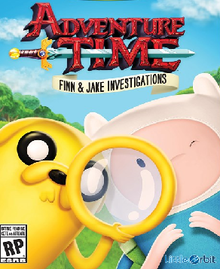 Alba: A Wildlife Adventure on Switch
 Adventure Time: Finn & Jake Investigations on PS3










 Another SquareThought Site