

 Aug 2025


Project Highrise: Architect's Edition greets you like a spreadsheet with personality disorders - calm on the surface, quietly judging every poorly placed restroom. If you enjoy building things that don't immediately explode, this game is a warm hug for your inner micro-manager. On PS4 the package brings the whole skyscraper-sim experience from PC to the couch, which means you can now micromanage elevators and tenant moods while pretending you're just scrolling through Netflix. The game is a modern spin on the venerable SimTower concept: you build a vertical city, slot in offices, apartments, shops and restaurants, then keep everything humming with utilities and services so your tenants don't stage a mass exodus. Don't go in expecting flashy heroics; this is less about epic set-pieces and more about slow, delicious competence. Project Highrise is one of those games that hands you a gently escalating puzzle - each floor adds complexity, and that complexity rewards good habits: planning, pattern recognition, prioritization, and infectious optimism about zoning laws.
At its core Project Highrise is a systems puzzle wrapped in a building sim. The map is a flat 2D vertical slice where every tile matters. You place rooms and suites, route utilities like power and water, and add services - security, cleaning, maintenance, concierge - to keep occupants happier than a barista with an espresso machine that actually works. The Architect's Edition consolidates the base game and DLC into one console-friendly package, so you get a wider toolkit: more tenant types, more decorative and functional pieces, and scenarios that test your ability to juggle priorities. Challenge is the game's seasoning. Early on the difficulty curve is friendly: you learn the basics of room types, lease income, and how elevators are actually the nervous system of your tower. Then the game begins to layer in constraints and goals. Tenants demand adjacency rules (some shops want foot traffic next to an entrance, some executives demand parking and prestige), and special contracts ask that you fulfil very particular conditions. Miss one objective and your rating dips; nail it and you watch monthly income climb like a slow-motion montage. Spatial reasoning is punished and rewarded in equal measure. A single badly placed column of structural space can deny a potential suite and reduce your revenue per square meter. You will spend long, satisfying minutes rearranging layouts to squeeze an extra office in, then staring at the economy tab as if it might whisper secrets. Elevators deserve a special mention: they are tiny, cruel puzzles. Elevator placement, number of shafts, and the balance between express and local lifts change how people move through your building, which in turn affects shop revenue and tenant stress. Mismanage lifts and you'll choke foot traffic - suddenly your ground floor pizza joint isn't making money and the hungry tenant next door is stamping their feet. Money management here is less about flashy investments and more about careful trade-offs. Do you spend on fancy facades that boost prestige (and attract higher-paying tenants) or on an extra utility line that prevents outages? The game's pacing encourages slow escalation: build steadily, keep cash in reserve for emergency maintenance or to complete a time-sensitive contract. This creates a constant background buzz of risk assessment. There are moments of crisis - utilities failing, a tenant leaving unexpectedly, or a contract demanding immediate upgrades - and those moments feel like real tests of your ability to triage. Multitasking and prioritization become skills you actually level up. On harder scenarios, you'll find yourself switching focus constantly: negotiating tenant complaints, replacing broken equipment, adjusting rent, and managing the elevator queue. The UI on PS4 does a competent job of letting you perform these actions with a controller, but it does ask more of your brain than your thumbs. You're effectively conducting a tiny orchestra of interlocking systems. The reward is a satisfying feedback loop: stabilize one problem and several metrics improve, giving you that delightful domino effect of competence. Pattern recognition and systems thinking are your best friends. Watch how footfall patterns change when you add a café - suddenly nearby shops prosper. Realize that apartments on certain floors demand different amenities than office tenants. The game loves to teach through subtle consequences rather than heavy-handed tutorials. Rock, Paper, Shotgun and IGN praised that clarity of information: despite the deep underlying complexity, the game usually tells you what's wrong if you read the indicators. Interpret those icons like an archaeologist deciphering ancient emotional hieroglyphs. The game also invites experimentation. There are no single "right" builds; rather, there are efficient and aesthetic approaches that suit your playstyle. Want to cram a hyper-dense commercial tower and watch your bottom line explode? Go for it. Prefer a slower, luxury-focused skyscraper with penthouse suites and concierge lines? That's valid too. Each approach trains different skills: optimization and greed for the former, long-term planning and careful brand-building for the latter. If you're the kind of player who enjoys being gently punished and rewarded, Project Highrise becomes an addictive loop of hypotheses and outcomes. It's not stress-free: the repetition can feel like doing taxes, but taxes that you get to decorate with potted plants. The DLC content (included in the Architect's Edition) expands the toolbox and the scenarios, adding new mechanics that increase the strategic space and keep the learning curve interesting rather than stale. One area to be aware of on PS4 is the control translation. The original was built for mouse precision, and while the console UI is serviceable, it can slow down fiddly layout work. Expect occasional controller-aiming gymnastics when trying to place small decorative items or manage detailed floor-by-floor tweaks. This isn't a dealbreaker, but it subtly ramps up the challenge: not only are you solving systems puzzles, you're doing it with a less surgical input device.
Graphically Project Highrise is minimalist with a utilitarian 2D aesthetic. The art prioritizes clarity and readability over eye-searing spectacle - every office, shop, and corridor is instantly legible, which is exactly what you want when you're juggling dozens of tenants. The visual language is clean; icons and meters communicate essential information quickly, and the animations (elevator doors, diners, tiny office workers) are charming in a 'pixel diorama of adult responsibilities' kind of way. Critics noted that larger skyscrapers can become visually monotonous. That's fair: the palette and room sprites don't scream for artistic variety, so once you've stacked a couple dozen floors the whole tower can start to feel like a very well-organized beige sandwich. If you care about camera flair and graphical drama, this isn't the game for you. If you care about readable interfaces and being able to instantly know why a tenant is angry, the art direction is a small mercy. On PS4 the frame rate is stable and the UI scales well to a TV. The console port keeps the visuals crisp and the small animations retain their personality. Architectural Edition's added content brings in more decorative pieces and functional items, which helps mitigate the monotony if you enjoy fiddling with aesthetics. Overall it's a case of substance over style: clear, competent visuals that back up the game's systems-first design.
Project Highrise: Architect's Edition on PS4 is a deeply satisfying challenge for people who get a little thrill from efficiently routing plumbing and making elevators behave. If you like management sims where every decision ripples through multiple systems, this game rewards patience, systems thinking, and a talent for prioritizing the small fires that threaten your monthly income statement. It's accessible enough that newcomers can build a respectable tower quickly, but rich enough that veteran players will keep finding new optimizations and scenarios. The game's biggest limits are aesthetic monotony and the occasional awkwardness of console controls for a mouse-first interface. Those caveats aside, Architect's Edition bundles enough content to keep you busy and learning. I recommend it to any player who enjoys logical puzzles, resource juggling, and the quiet joy of a well-balanced building. Score: 7.4/10 - solid, smart, and mildly addictive, like a city planner who drinks black coffee and names elevators for the pets of their tenants.
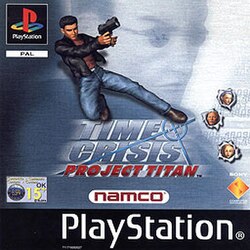
 Time Crisis: Project Titan on PlayStation
 Project Cars on PS4
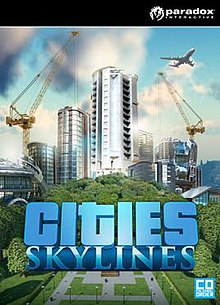
 Cities: Skylines Remastered on Xbox Series X/S
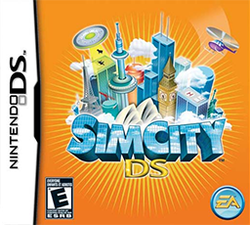
 SimCity DS on DS
 Dawn of Discovery on DS
 SimCity Creator on DS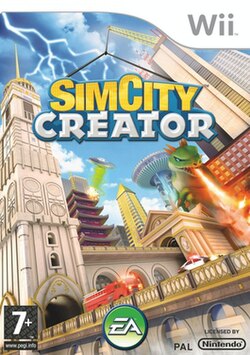










 Another SquareThought Site