

 Aug 2025
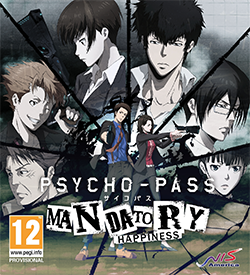

Psycho-Pass: Mandatory Happiness is a licensed visual novel from 5pb., set inside the bleak, tech-obsessed world of the Psycho-Pass anime. It places you in a time-slice that runs parallel to the anime's first dozen episodes and hands you the keys to two brand-new protagonists - inspector Nadeshiko Kugatachi and enforcer Takuma Tsurugi - to poke around the familiar dystopia. If you care about narrative depth more than twitch accuracy, this is the genre's bread and butter. What I'm interested in here, though, is less the philosophical meat of 'can forced happiness be ethical?' and more the scaffolding: how the game communicates plot branches, how the experience is presented technically on PlayStation 4, and whether the porting and localization choices help or hinder immersion. Critics were mixed - Metacritic lists a mid-70s average on PS4 - and that middling consensus is the perfect place to dig into what the game does well and where it trips over its own script.
Mandatory Happiness is firmly a visual novel at the mechanical level: the UI prioritizes text and character portraits, interleaved with static backgrounds and occasional CG illustrations. You pick one of two perspectives at the outset - Nadeshiko or Takuma - and the story unfolds in linear chapters that occasionally present choice nodes. Those nodes are the game's mechanical beats: they determine which pages of script you'll see next and which investigative threads you'll follow. The binary of 'inspector' versus 'enforcer' does more than change voice; it tilts the lens of investigation. One route leans into procedural reasoning and institutional friction; the other is more personal, motivated by memory loss and missing lovers. That's a tidy design decision if you're trying to squeeze replayability out of text-heavy content without adding complex gameplay systems. From a systems design perspective, the game is minimal by intention. There are no combat engines, no real-time mini-games, and no resource meters beyond the narrative choices. That makes pacing a pure function of script density, scene transitions, and how choices are spaced. Where the game earns points - technically speaking - is in layering mystery beats across the two protagonists so that players feel rewarded for replaying: branching nodes are distributed to reveal different facets of the antagonist Alpha, a rogue AI whose attempts to manufacture 'happiness' escalate from chemical control to mass manipulation. The danger with that design is mechanical opacity: without clear signaling for which choices open substantial new content, visual novels can resort to checklist hunting. Mandatory Happiness mostly avoids tedious fishing by making each choice feel narratively meaningful; it's up to you to connect the dots. The writing credits are a mixed bag of veterans (Makoto Fukami among the team), and that shows in the variable density of scenes. Some chapters read like a lean procedural drama - brisk, concise, and efficient - while others wallow in exposition, which is the usual visual-novel trap: long stretches of internal monologue and slowdown between plot beats. For players who love granular character work and philosophical detours, this is a feature. For readers who prefer tighter pacing, it can feel bloated. Localization and release logistics play into the gameplay experience more than you'd think. NIS America handled the Western PS4 release, which means English-language text and presentation conventions were introduced after the original Japanese launch. Translation choices affect timing, line-breaking, and even the perceived intelligence of the player-character, and in this case the localization mostly preserves tone while occasionally adding Western idiomatic beats that can feel slightly at odds with the show's clinical Japanese atmosphere. That's not a technical fault so much as a product-design tradeoff: localizers balance fidelity with legibility. Save and navigation systems in visual novels matter because the genre invites replay. Mandatory Happiness uses chapter saves and choice-rewind mechanics typical of the form. There's little friction in reloading earlier nodes to explore alternate branches, which reduces the tedium of chasing multiple endings (if you like to completion-hunt). On PS4 specifically, the dual-analog controller maps well to the UI: shoulder buttons for text speed and confirm/cancel sits under primary face buttons, which makes long reading sessions ergonomically painless. That might sound petty, but when your 'gameplay' is mostly reading, input ergonomics are a bona fide technical consideration.
Graphically, Mandatory Happiness is faithful to its anime roots: character art and background illustrations err toward high-quality 2D assets rather than complex 3D scenes. On PS4 the obvious technical advantage over handheld counterparts is resolution and texture fidelity. Sprites, CGs, and backgrounds benefit from the higher pixel budget and cleaner anti-aliasing. The game isn't trying to flex GPU muscles; it uses the PS4 to present crisply rendered, static artwork at a comfortable scale on TV screens. Animation is sparse by modern standards - think subtle mouth movements, the occasional blink, and some effects layered over static artwork. That's completely normal for the genre and is a deliberate budgetary and stylistic choice: this isn't a kinetic novel with full-motion sequences; it's a text-first experience with artwork supporting the prose. Where the PS4 presentation shines is in downsampling: textures and line art retain clarity when displayed at 1080p, and scene transitions (crossfades, wipes, and occasional particle overlays) are smooth. Frame rate isn't a meaningful metric here because the interactive portions are UI-driven; what matters is the absence of stutter during transitions, and the PS4 handles that cleanly. Audio handling is where composition intersects with technical implementation. Takeshi Abo is credited for the score, and the soundtrack is used sparingly to underline beats and shape atmosphere. The PS4's audio output preserves dynamic range and bass presence, so environmental cues and tension tracks land with weight when using a decent sound system or headset. If you play via TV speakers, you'll lose some subtlety, but that's not a fault of the port. Mixing and voice-volume balance in the UI are standard: text speed and background music sliders live within the options, and the game doesn't bury crucial dialogue under excessive music or effects. On a nitpick level, the UI design is what I call 'functional with dignity.' Menus use large, readable fonts and high-contrast boxes that are comfortable on a living-room screen. The game's HUD doesn't attempt to reinvent the wheel, which is fine - clarity beats flash in a text-first title. One area where modern visual novels sometimes excel is accessibility (text size, high-contrast modes, toggles for auto-advance). Mandatory Happiness provides basic accommodations (text speed, auto-advance), but it doesn't push the envelope on accessibility features compared to newer indie VNs that include custom font scaling and more granular color-blind options. That omission won't affect most players, but it is a measurable technical shortfall.
Psycho-Pass: Mandatory Happiness is a solid, technically competent visual novel that does what it sets out to do: deliver story-first content in the Psycho-Pass universe with two distinct lenses on a political sci-fi mystery. As a PS4 package it benefits from sharper visuals and cleaner audio than its handheld siblings, and the UI design is comfortable for long sessions. The core strengths are narrative layering and art direction; the core weaknesses are the genre's usual ones - episodic pacing that sometimes stretches exposition and localization decisions that occasionally rub against the original tone. Review scores were predictably mixed: Metacritic places the PS4 release in the low 70s, Famitsu rewarded the original Xbox One launch with a respectable 32/40, and Western outlets range from lukewarm to quite positive. If you're a fan of the anime and you accept that the 'gameplay' is reading with choices, Mandatory Happiness delivers a thoughtful side story backed by competent technical execution on PlayStation 4. If you came for action or tight pacing, you're likely to find it slow. For those who enjoy deconstructing narrative systems and appreciate how presentation details - resolution, audio fidelity, input ergonomics - subtly affect engagement, Mandatory Happiness is worth the night you set aside to read, replay, and savor the little reveals.
 Akira Psycho Ball on PS2
 Psychic Force on PlayStation
 Pachislot To Heart 2 on PS3
 Tomoyo After: It's a Wonderful Life on PS3
 Punch Line on PS4
 Robotics;Notes on PS3
 Memories Off Historia Vol. 1 on PS4
 Chaos;Head Noah / Chaos;Child Double Pack on Switch
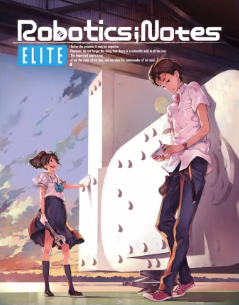
 Robotics;Notes Elite on Switch
 Dunamis 15 on PS3










 Another SquareThought Site