

 Aug 2021
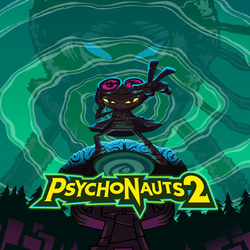

Psychonauts 2 arrives like a therapy session you didn't know you needed-except with fewer tissues and more exploding regrets. Double Fine's long-awaited sequel swaps nostalgia for narrative muscle, sticking Razputin "Raz" Aquato back into a world where psychic espionage is a job title and someone's inner trauma is a stage set. On PS4 the game keeps the acrobatic platforming of the original but leans harder into character: the campaign is essentially a rotating roster of intimate sessions, each level a therapy hour rendered in color and nonsense. The heart of the game isn't just Raz's skill upgrades or collectible hunts; it's the way the story treats people as whole, messy things. We enter minds not to loot them but to understand them-then sometimes to stop them from causing literal floods. At its core Psychonauts 2 is a study in consequence and memory. Raz is still the eager acrobat-cum-psychonaut, but here his growth is less about final-swinging combos and more about the ethics of poking around in someone's head. He's surrounded by a tapestry of characters who earn narrative arcs: Ford Cruller, the capricious founder who carries a guilt that could sink ships; the Psychic Six, each damaged in different, fascinating ways; and a villain whose name-Maligula-sounds like an ice cream flavor gone wrong but carries the weight of a family secret. The plot peels back the layers: Truman's apparent coma (itself a plot device that becomes a moral minefield), Hollis's gambling relapse triggered by Raz's mistake, and the staggering reveal that Raz's grandaunt Lucrecia was hidden away under false memories. It is a game that treats identity like an archaeological dig, and like a bad dig site you keep finding bones that make you uncomfortable. Humor is the game's respirator: jokes and absurdity keep the heavy themes from collapsing the structure. But don't be fooled-beneath the punchlines are finely tuned character arcs. Raz learns the responsibility attached to his powers. Ford confronts what happens when 'fixing' someone becomes erasure. Nona/Lucrecia's dual identity raises questions about consent, trauma and who gets to decide how a life is remembered. Even secondary characters-Hollis, the interns, the Psychic Six-are given emotional beats rather than throwaway quips. The result is a sequel that earns its sentimental moments, and often makes you feel them while simultaneously making you laugh at how weirdly relatable it is to fix people's brains with a levitation ball and a yo-yo.
Psychonauts 2 is a third-person platformer with a toolkit of psychic powers that feel like your overloaded high school extracurricular schedule-levitation, telekinesis, pyrokinesis and new toys like Mental Connection, which lets Raz tether between floating points. In practice the platforming is nimble and playful: Raz runs, jumps, wall-scales and slides along rails with an acrobat's grace. The hub overworld-the Motherlobe and its surrounding regions-gives the game a comfortable home base for exploration, side missions, and the kind of character banter that reveals more about people than most RPG dialogue trees. What truly separates the gameplay is how mechanics are married to character. Levels are consciousnesses-environments that physically represent someone's mental state. A gambling addict's mind becomes a casino-hospital mashup; an alcoholic's interior is littered with beer-bottle set pieces; Ford's fractured psyche requires literal personality piecing. These are not skin-deep visual gags: they inform puzzle design and combat. Enemies are personifications-Censors stamping opinions, Regrets dropping weights-so combat often reads like solving a behavioral riddle rather than button-mashing. That design choice is brilliant because it makes you think about why an enemy exists beyond 'HP and aggression'. Combat is where the game bickers with itself. Raz can equip up to four powers and must swap them as situations demand. That system encourages experimentation, but critics were right to call the limitations disruptive: switching mid-fight can interrupt flow, especially when enemies demand varied approaches. Boss fights, in particular, tend to fall into pattern repetition that contrasts with the otherwise creative level design; they feel like older-school combat encounters pasted into an otherwise modern game. Upgrade paths-PSI Cards, pins and the like-offer meaningful customization early on, but as you near the top tier the incentive to continue stacking feels weaker. By the time Raz is fully decked out there isn't always a compelling reason to expend his well-earned toolkit. Still, the gameplay shines when it's used as storytelling. The sequence where Raz tampers with Hollis's mind and then has to reckon with the consequences is gameplay as ethics lecture. Side content is rich-collectibles like Figments and Memory Vaults illuminate both story and character development. The worst of the mechanical gripes (occasional jump misjudgments, the fiddliness of ability swapping, some overlong attack animations) are real, but they are also forgivable when level design is inventing new ways to visualize regret or family memory. In short: you'll spend a lot of time smiling at set pieces and sometimes banging your head at combat, but the times the two converge are where Psychonauts 2 feels truly special.
Psychonauts 2 dresses its psychology in an outfit stitched from Tim Burton, Terry Gilliam and a sprinkle of Pixar-bright, off-kilter, and often deliciously absurd. Levels are wildly distinct, each a stylized manifestation of a person's life experience. The art direction leans into abstraction and environmental storytelling: a chef's psyche becomes a bizarre cooking-show stage with a soundtrack to match; Ford's mind is literally compartmentalized; Green Needle Gulch feels like the collective hangover of a hundred creative decisions. This variety is not window dressing. It deepens characterization: you understand a person because you can walk around their problem. The game uses Unreal Engine 4 to good effect. Character models, architecture and environments are lovingly detailed; sometimes textures feel a touch dated, and facial animations can look stiff in tight dialogue beats, but these are minor quibbles in a game that otherwise revels in design ingenuity. Color palettes shift masterfully to set mood-sudden, almost cartoonish violence of color when someone's trauma erupts, muted palettes for memory rooms where recollection is incomplete. Musical motifs by Peter McConnell add cohesion between disparate areas; recurring themes cushion the game's tonal pivots and elevate what could be purely bizarre into something emotionally resonant. Voice acting completes the package. Richard Horvitz returns as Raz with charm, while newer additions like Jack Black (Helmut Fullbear) and Elijah Wood (Nick Johnsmith) give memorable performances. Kimberly Brooks' Hollis won a BAFTA for good reason: her delivery turns vulnerable beats into living, breathing moments. The cast is a cavalcade of idiosyncrasy, and combined with the art direction it makes the game feel like a hand-painted scrapbook that's occasionally on fire.
If you're judging Psychonauts 2 by its platforming pedigree you'll find a game that mostly hits the mark: inventive level design, polished traversal, and a delightful array of psychic toys. If you're judging it by its story and character work, it practically holds a graduate seminar on empathy. Raz's arc is the backbone-he starts as an impulsive fixer and ends as someone who understands the weight of altering another's mind. Ford Cruller's journey is tragic and quietly redemptive; his choice to use the Astralathe to bury Maligula raises thorny ethical questions about 'fixing' versus respecting autonomy. Nona/Lucrecia's arc (and the reveal of her being the missing Psychic Seven) is the emotional core: Maligula is a trauma-made persona, and unearthing that truth forces characters and players alike to reckon with memory's cruelty and kindness. Villainy in Psychonauts 2 is rarely cartoonish. Gristol Malik-posing as Nick-earns a thread of empathy even as his revenge plot fuels the catastrophe. The interns give the narrative generational depth; they are not just side jokes but the next wave of agents learning the costs of the work. Even small beats, like Raz's family reconciling uncomfortable truths, are handled with warmth. Critics' common gripes-combat clunkiness, the occasional boss monotony and a somewhat underwhelming upgrade economy-are valid, but they don't eclipse what the game aspires to do narratively. Psychonauts 2 is brave in its blend of levity and difficult themes, treating mental illness and memory with a nuance often absent in entertainment. It is smart, frequently hilarious, and emotionally earnest in a way that avoids cheap manipulation. On PS4, Psychonauts 2 is a triumph of character-first design. It's the kind of sequel that respects its cult roots while growing up with them-still silly, still stylish, but wiser about consequences. If you want to play a platformer that makes you laugh and then quietly asks you to consider the ethics of rewriting people's pasts, buy Raz a ticket. He won't stop at the snack bar; he'll fix things, then apologize for the mess. Score: 9/10.
 The Wacky History of Platform Games
 PlayStation Home on PS3
 Obscure: The Aftermath on PS2
 Cocoto Platform Jumper on PS2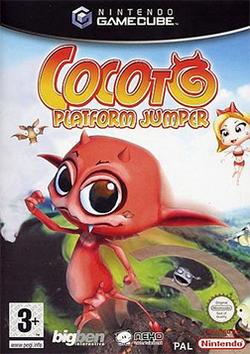
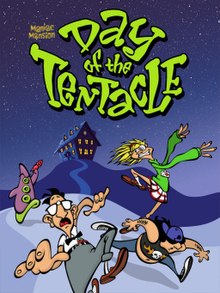
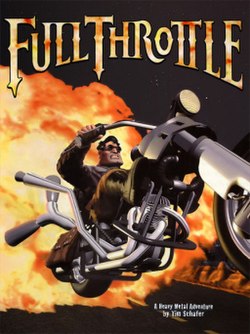 Day of the Tentacle: Remastered Edition on PS4
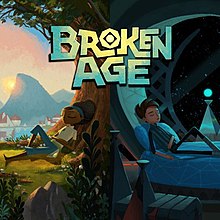
 Broken Age: The Complete Adventure on PS4
 Headlander on PS4
 Broken Age on Switch










 Another SquareThought Site