

 Aug 2025


Radial-G: Racing Revolved is a lean, technically focused indie VR racer that wears its design decisions on its sleeve. Built in Unity by Tammeka Games, it started as an early access experiment and graduated into a cross-platform VR title with an oddly satisfying core mechanic: hurtling spacecraft through neon-lined tubes while aligning with speed gates. The game's development arc - from a failed Kickstarter and early access iterations to a full launch and later platform ports - explains much of what you get on PS4/PSVR: a tight, performance-conscious experience with deliberate content trade-offs and a few polish scars. If you care about how a game is put together rather than just whether it's cute or cinematic, Radial-G gives you an object lesson in making VR racing feel immediate without collapsing under the weight of ambitious scope.
Radial-G's gameplay is deceptively simple on paper and technically interesting under the hood. Races take place on tubular tracks - nine distinct courses at the time of the main releases - each built around the constraint of a cylindrical collider space. That tubular design is a clever technical choice: it both limits the world geometry you need to render and gives the player a consistent set of locomotion rules. The core loop is gate-based speed management. Green gates provide substantial speed boosts when your ship is properly aligned; red gates penalize you with heavy slowdowns. From a systems perspective, that gate mechanic replaces complex racing lines and racing physics with a precision-window problem: steering inputs must position the craft to ride the boost windows while avoiding slow tiles. It's almost rhythm-game-adjacent - your inputs are scored by whether you hit the optimal gate angle rather than by subtle drifting physics. Ship handling is split into speed classes and unlockables: three speed classes were introduced post-launch to vary the sense of momentum, and seven ships are available overall. Each ship is essentially a different set of tuned handling parameters (mass, thrust, damping, rotational responsiveness) rather than radically different physics engines. That's a sensible approach for an indie dev working in Unity: reusing a single physics model and varying coefficients keeps feel consistent while allowing meaningful differentiation. The single-player mode supports up to fifteen AI opponents, and the AI behavior is tuned for competitive racing through these gate windows rather than for line-following realism. Multiplayer expands the pressure by letting up to sixteen human pilots race simultaneously; for networked play this raises interesting technical considerations around latency and state sync, especially in VR where perceived position jitter is immediately nauseating. Tammeka handled this by focusing on short, tightly-bounded track segments and by keeping the player's perceived motion authoritative on the client, thereby minimizing rubberbanding in observable ways. VR integration is central to the game's DNA. The primary perspective is first-person, placing you in the pilot's cockpit with full head-tracking and hand-controller steering. Input mapping leans on the VR controllers to control steering and throttle directly; head orientation is used only for camera look, not for steering. This separation is vital for comfort and mechanical clarity: the game avoids forcing the user to twist their torso to steer, which would mix control spaces and increase VR sickness. For non-VR play there's a third-person camera option, but it's explicitly unavailable to VR users - a deliberate technical limitation because switching cameras in VR often introduces motion conflicts and requires reworking spatial audio and cockpit-relative UI. Radial-G's content roadmap is typical of small-studio titles optimized for VR. Early access from December 2014 through 2015 saw steady additions: more tracks, a third-person camera for desktops, quick race and lap attack modes, and single-player functionality. Combat modes and weapon systems arrived in a later patch, introducing five weapons and three additional ships. Adding combat represents a non-trivial systems expansion: projectiles, hit detection inside the tube environment, and weapon state synchronization across multiplayer all add CPU and network load. Tammeka's decision to add combat later avoided overloading the initial physics-and-speed feel, and the modularity of their Unity project appears to have made that expansion feasible without rewriting core movement code. There are compromises driven by platform constraints. The Daydream (mobile VR) release is a slimmed-down version limited to races against 4 AI, which reflects the CPU/GPU headroom limits of mobile hardware compared to PC/console VR. On PS4/PSVR, the game benefits from more consistent performance budgets than mobile, but the studio still needed to optimize shaders, draw calls, and occlusion for VR stereo rendering. Audio is functional and pragmatic: a 20-track soundtrack was released officially, and music plays a significant role in pacing races, but the emphasis remains on clarity and feedback rather than on elaborate dynamic scoring. Overall, the gameplay is a study in constraints: tubes + gates + tuned ship coefficients + VR-first camera and controls. It's less about hyper-realistic simulation and more about delivering a responsive, high-frame-coherent sensation of speed. That focus yields intense, short races and a gameplay loop that rewards precision and memorization of gate sequences rather than vehicle upgrades or sprawling track exploration.
Graphically, Radial-G opts for a neon, high-contrast aesthetic that supports performance and readability in VR. Tube-based tracks mean that most of the visible world is near the player and consistent in geometry: there are external set-pieces, but the player rarely sees sprawling vistas that demand view-distance LOD systems. From a rendering architecture standpoint, that reduces the number of dynamic objects and allows the engine to concentrate on shader simplicity and post-process clarity. The Unity engine is a pragmatic choice here: it provides cross-platform rendering pipelines and VR integrations that Tammeka leveraged to ship across Rift, Vive, OSVR, Gear VR, Daydream and PSVR. Because Radial-G is intended for VR, the visual design prioritizes legibility and frame-rate stability over photorealism. High-contrast gate markers (green for boost, red for slowdown) are unambiguous, which is critical when your brain has to decide in a split second whether to steer left or right. The lighting is stylized: emissive materials and bloom are used to sell speed without forcing expensive dynamic global illumination. That's a wise trade-off; VR's stereo rendering doubles the pixel cost, and bloom + emissive surfaces can create a convincing sense of motion at much lower polygon and texture budgets. The game does not attempt to hide its indie roots. Textures and environment complexity are modest, but the art direction compensates by delivering a clean, fast read during play. Polygon's early praise - calling it "fast, beautiful and showing mastery of virtual reality design" - mostly applies to how visual clarity enables gameplay rather than to raw graphical fidelity. On PS4/PSVR, the implementation is tuned to maintain consistent timing for head tracking updates and to minimize judder; the third-person desktop camera is more permissive with visual detail, but that view is deliberately separated from the VR pipeline to avoid cognitive and technical conflicts. One area that betrays the limited resources is variety: nine tracks and seven ships keep the rendering systems simple, but they also limit the visual novelty over long play sessions. Still, the payoff is consistent performance and low motion-sickness risk - the two most important visual technical goals for a VR racer.
Radial-G: Racing Revolved is an instructive example of how technical constraints can be turned into design strengths. Tammeka Games chose a cohesive set of limitations - tubular tracks, gate-based speed mechanics, a singular physics model, and a VR-first control scheme - and executed them with focus. The result is a game that feels fast, responsive, and comfort-aware in VR. The price of that discipline is relatively lean content: the base package ships with nine tracks and a handful of ships, and while later patches add combat, weapons, and extra ships, the breadth never approaches AAA racing games. That's not a flaw if you judge Radial-G on its own terms: tight races, clear visual feedback, and consistent networking for up to sixteen players. On PS4/PSVR specifically, the title benefits from the console's stable hardware profile and the Unity toolchain's cross-platform capabilities, but it still reflects the trade-offs of an indie studio working in VR: deliberate art direction, careful optimization, and a small but polished feature set. If you prize technical clarity, low-latency feel, and VR comfort over a buffet of tracks and deep vehicle progression, Radial-G is an efficient, enjoyable racing experience. If you want sprawling modes, dozens of cars, or photoreal environments, this isn't your game. Score: 7.5/10 - A technically disciplined VR racer that nails speed and readability, with content limitations that are hard to ignore but easy to forgive if you play it for short, intense races and competitive leaderboards.
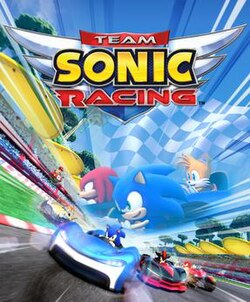
 Team Sonic Racing on Switch
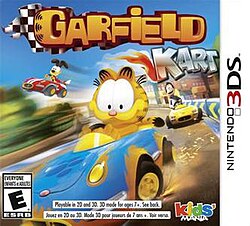
 Garfield Kart: Furious Racing on Switch
 Ben 10: Galactic Racing on PS3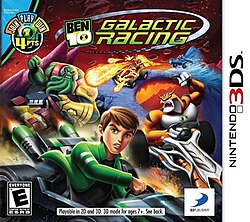










 Another SquareThought Site