

 Aug 2025
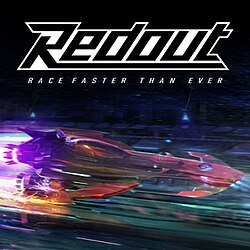

Redout arrives on PS4 wearing a neon suit, an attitude problem, and a thrumming soundtrack that loudly announces: you are now going very fast and the laws of physics will complain politely. Developed and published by Italian studio 34BigThings, it is the kind of futuristic, anti-gravity racer that nods at F-Zero and Wipeout while trying not to be accused of cosplay. The premise is cheerfully bleak: humanity wrecks Earth, hops to Mars, and invents professional racing because what else do you do with an apocalypse other than create lucrative spectator sports? You pilot the ESA Vanguard - a lovingly modified patrol aircraft turned racing ship - around tracks that span the reclaimed ruins of Cairo to the frozen oceans of Europa. If you enjoy the sensation of skimming death at three hundred kilometers an hour while video-game music tells you to take the corner, this is the console version to consider. Critics liked it on major platforms and the PS4 release sits comfortably in the 'this is good' camp: polished, loud, and precise. It nails look, sound and speed, and occasionally forgets to hand you the part labeled "sensation". That omission mostly matters to people who measure victory by the existential tremor of their soul rather than the leaderboard.
Redout is arcade racing with a side of stern aeronautical lessons. Controls you expect - accelerate, brake, turn - are present and useful, but the game layers in strafing and pitching and tells you, in a calm voice, that cornering is now a serious conversation. Strafing moves you sideways without losing speed, which is useful for sharper turns, drifting and generally pretending you meant to hug that wall. Pitching is your altitude etiquette: lean up to resist the blackout from uphill climbs and lean down to avoid the redout of downhill mayhem. It sounds like something pilots whisper to each other in the shower, but it works. There are seven racing teams, each with a distinct driving style, and every team offers four classes of ships. Classes are simple: higher class equals better ship. Money earned in career mode buys ships and upgrades, and you'll also unlock active and passive power-ups to fine-tune performance. The career itself is forgivingly non-linear. Aside from the tutorial, events can be tackled in any order provided your ship matches the class requirement - a feature that encourages you to be selective about which expensive spaceship you commit to emotionally. Progression unlocks five racing complexes (plus seven extra via DLC), with each complex containing five tracks. The tracks are designed to feel like mood swings in metal and neon: tight chicanes, sweeping hyperspeeds, obstacles that exist to remind you humility is a slippery concept. Game modes are plentiful. The listing in the manual reads like a buffet for competitive types: Race and Pure Race (the latter bans power-ups), Time Attack and Pure Time Attack, Speed (stay fast and get seconds shaved off your time), Instagib (one crash and you're gone), Knockout, Arena Race, Survival, Score and the concatenated romp that is Boss mode, which chains five track layouts together with teleporters just to make sure you never quite know which disaster you are about to commit to next. If you like variety, Redout supplies it like a vending machine that dispenses rocket fuel instead of snacks. Multiplayer supports up to twelve players online and two-player local split-screen. The split-screen arrived via patch, which is the game politely saying, "yes, you and your friend can crash into each other on the same couch," a wonderful throwback to a time when friendship was defined by who could shove you into a wall the fastest. Online lobbies feel functional and competent; the PS4 edition avoids the Switch's performance criticisms and serves the multiplayer experience with fewer excuses. Difficulty rises through event classes: each class increases AI aggression and raises the bar for what counts as acceptable humiliation. The ship upgrade tree and purchasable power-ups give you options to tweak handling, speed, and survivability, meaning you can approach the career as a meticulous economist or a lucky gambler. Either will work, but the meticulous economist will probably cry a little less.
Redout runs on Unreal Engine 4 and it shows. The visuals are crisp, clean and designed around the core promise: you will go fast and you will look good doing it. Track design uses the Solar System as a postcard generator, from reclaimed Cairo skylines stacked like urban sushi to Europa's icy expanses that gleam like someone polished the future. Lighting and particle effects make the ships and environments pop - boost trails, neon signs, and impact sparks all perform their jobs with the seriousness of a high-speed light show. On PS4 the frame-rate is stable enough that your reflexes will be the limiting factor rather than the console deciding it needs a coffee break. Textures and environmental detail hold up at speed: you'll notice architectural flourishes and terrain changes instead of a smear that reads: fast. The soundtrack, composed by Aram Shahbazians and Nils Iver Holtar, complements the visuals tightly; it's not subtle, but subtle isn't on the menu. The music and sound design work together to sell momentum in a way that makes the few criticisms about "sensation" feel more like picky anthropological notes than genuine flaws. There are occasional moments where the pace fights the camera - tight turns can feel slightly disorienting when everything is trying to get out of the way - but that's mostly by design: Redout wants you to respect the track and fear the walls. Compared to the Switch port's performance issues reported elsewhere, the PS4 edition is a clean presentation with the technical polish required to let its visuals shine.
Redout on PS4 is a confident, polished anti-gravity racer that understands what it is: a neon-fuelled test of reflexes, patience and how much you enjoy electronically enhanced terror. It borrows from its spiritual ancestors without becoming a slavish copy, and it improves on the formula with satisfying control nuances like strafing and pitching that reward practice rather than button-mashing bravado. Critics were broadly positive for the PlayStation release - Push Square called it "one of the best examples of the genre" and PC Gamer praised its look, sound and speed while grumbling about the fleeting nature of sensation. That complaint matters if you want a game that will rearrange your emotional furniture; it matters less if leaderboards and clean lines matter to you. If you want to impress a friend, buy the game; if you want to ruin a friendship, choose split-screen. If you want to feel like a missile that was politely asked to win a race, Redout will oblige. It's fast, focused and attractive, with enough modes and customization to keep you busy between the occasional existential screams the tracks inspire. Score: 8/10.
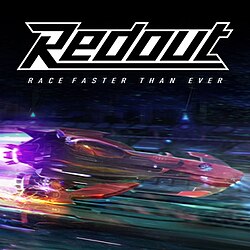 Redout 2 on Switch
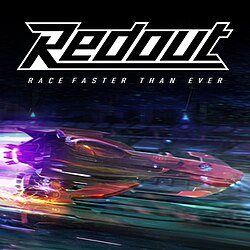 Roary the Racing Car on DS
 Team Sonic Racing on Switch
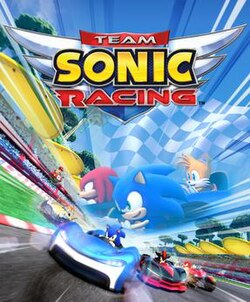 Garfield Kart: Furious Racing on Switch
 Ben 10: Galactic Racing on PS3










 Another SquareThought Site