

 Oct 2018


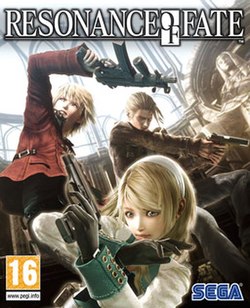
Resonance of Fate arrives on PS4 as the 4K/HD Edition, which is a polite way of saying the game finally had its photos touched up and was allowed to wear a nicer hat. Originally birthed by tri-Ace and published by Sega in the PS3/Xbox 360 era, this oddball JRPG has always been less about sweeping heroics and more about three people with a troubling fondness for firearms and a city that thinks people should be scheduled like light bulbs. If you like your role-playing games with gears in the aesthetic, grit in the dialogue, and an actual battle system that makes you think instead of noodle-swing, Resonance of Fate is the sort of eccentric date you might bring home to meet your tactical instincts. The game sets itself in Basel, a steampunk vertical city built around a purification tower called Zenith. Zenith keeps everyone alive, tells them how long they get to live, and invents social strata like an overenthusiastic spreadsheet. Into this polite dystopia walk three Hunters - Vashyron, Zephyr and Leanne - who shoot things in ways that look cinematic and occasionally reveal unsettling details about predetermined fates. The 4K/HD Edition is mostly notable for giving the game a modern coat of paint and making the dialog fonts easier to read while you try to parse the battle system for the first time.
Resonance of Fate's combat is the part people usually describe with a mixture of delight and mild traumatic memory. It runs on tri-Ace's tri-Attack Battle system, which is where turn-based restraint and real-time flair meet in a neutral church basement and decide to work together. Each character gets a turn, during which you can move, position, and perform actions constrained by action points. Attacking is a charged affair: you lock onto a target, the meter fills, and then you unleash. You can charge multiple times for more oomph, but charging and proximity introduce risk - close quarters are faster to charge in but also leave you philosophically exposed. The tactical twist is that not all damage is created equal. Sub-machine guns dole out scratch damage: it piles up, but it cannot directly kill. To convert scratch into lethal direct damage you need pistols, grenades, or combination moves. This structure forces teamwork between your party and demands planning; it also makes every engagement feel like a practical chemistry experiment where bullets are reagents. Bezels are the game's other brilliant eccentricity. Think of them as physical talismans that both fuel flashy 'Hero' actions and act as a protective buffer. As long as you have Bezels, you don't take direct damage; instead a shattered Bezel throws shards across the battlefield. If you find yourself bezelless, the party slips into critical mode, panics, and becomes aesthetically displeasing to your enemies. Recovering shards is a battlefield scavenger hunt that can swing a fight in either direction, since enemies can also pick them up to heal. Hero actions, which require Bezels, let characters dash through preset movement paths immune to damage, speed up charge times, and pull off cinematic midair gunplay that looks like someone remixed a gunfight with ballet choreography. Movement is freer than most turn-based RPGs of the era: you can run about the battlefield, set predefined paths for combo-friendly Hero actions, and use the environment. Enemies only move while your current character moves, which makes positioning feel like a tempo exercise. The world map and exploration adopt a board-game style where you flip tiles to reveal new areas. It's not an open-world, but the map's puzzle-like expansion complements the strategic combat and stops everything from feeling like linear teeth-grinding. The game is not afraid to be hard. It has ten difficulty levels and a robust New Game Plus that carries progress forward while unlocking tougher settings. Weapon customization is unusually deep for a gun-forward RPG: you don't just find better guns, you enhance and tinker with what you already have. The interface for upgrades is diagrammatic and surgical, rewarding investment and patience. The learning curve is honest; skip the optional tutorial and you will be confused. Play through it, absorb the logic, and the system stops feeling like a riddle and starts feeling like a diabolically clever toy.
Resonance of Fate was built on tri-Ace's ASKA engine, which tried to squeeze personality and mood out of mid-generation hardware. The original versions pushed techniques like HDR, layered shaders, and cinematic motion blur, while main character models received a disproportionate share of polygons and facial bones to allow for richer expressions. Hair used extra shaders and layered textures to behave like hair and not rubbery hats. The engine's ambition is evident: the cast looks detailed and expressive, and cutscenes by Marza Animation Planet lean into cinematics the way a stage director leans into dramatic lighting. That said, the world can be stubbornly monochrome. The city of Basel works as a grim, inorganic backdrop - cogs, brick, and a pretty strict color diet of concrete and rust - and the environments sometimes feel sparse, which critics at the time noted as a lack of visual variety. The character costumes and occasional color splashes help, but the palette stays moody rather than cheerful. On PS3 versus Xbox 360 the original release had subtle differences in shadowing and blur, and the 4K/HD Edition on PS4 mostly benefits from higher resolution and cleaner edges rather than a full graphical reimagining. If you play it expecting a modern open-world to romp through, you will find instead a tightly designed aesthetic that favors atmosphere over spectacle. Where the graphics really pay off is in combat cinematography. Hero actions and special attacks get camera work and motion blur that turn what could have been functional menu-slicing into sequences that look like someone slapped an action movie onto a tactical grid. It's the rare JRPG that makes you smile simply because the camera did a little flourish when your party vaulted off a lamppost and shotgun-punched a robot.
Resonance of Fate is the kind of game that rewards people who like systems that teach you to be clever rather than simply grinding for numbers. Its combat is a rare hybrid that manages to be stylish, strategic, and occasionally ruthless. The story and setting are satisfyingly strange: a city run like a clockwork cult, protagonists who are part sarcasm and part reluctant pathos, and a narrative that unfurls deliberately. If you want jaw-dropping environmental variety, this is not the game to make your heart melt, but if you want a combat system that will make you grin and then promptly scold you for a tactical lapse, it's a delight. The 4K/HD Edition is mostly a preservation effort - it sharpens, clarifies, and re-presents a game that was always more interesting than popular. There are rough edges: a patient tutorial is not optional if you hate confusion, and some pacing and visual repetition can make late-game stretches feel long. But tri-Ace built something unusual and stubbornly original, and polish for the PS4 has let that originality show up in better clothes. Recommended for players who want an RPG that treats gunplay like a conversation and expects you to bring logic, timing, and curiosity. For everyone else, think of it as an acquired taste served with a very stylish muzzle flash.
 Hand of Fate 2 on Switch
 Shining Resonance on PS3
 Combat Elite: WWII Paratroopers on PS2
 The Banner Saga 2 on PS4
 Arcania: The Complete Tale on PS3
 Gnosia on Xbox Series X/S
 Star Ocean: The Divine Force on PS5
 Exist Archive on PS4










 Another SquareThought Site