

 Aug 2017


Rock of Ages 2: Bigger & Boulder is the sequel ACE Team promised after flirting with cosmic movie-monsters and deadly towers. Built in Unreal Engine 4 and released for PS4 in August 2017, it blends tower-defense lane control with physics-based rolling races: you build a boulder, send it careening down a gauntlet of enemy traps, and hope the game's physics, collision, and netcode don't conspire against your geological ambitions. Critics generally liked it (Metacritic places the PS4 version in the high 70s), and from a technical perspective the game is interesting because it's a deliberate mash-up of real-time strategy placement systems and chaotic, simulation-heavy driving physics. That hybrid design is where the game shines and occasionally creaks - in ways that are fun, mechanically instructive, and, yes, smashingly violent toward wooden gates.
At the core of Rock of Ages 2 is a tight loop of resource management and physics simulation. The economy is simple: you earn resources over time and by destroying enemy defenses, then spend them on traps, units, and boulder upgrades. The interesting part is that all of these strategic choices immediately feed into a physics system - the boulder itself is a simulated rigid body that reacts to slope, surface friction, and the precise geometry of obstacles you place. From a technical-design standpoint, ACE Team leaned into predictability where they needed it and chaos where they wanted fun. The placement UI is deliberately deterministic: you snap trap modules to lanes, get cooldowns and clear visual feedback on cost and range, and can plan ahead during the build phase. Once the gate opens and the player gets control of the boulder, the deterministic interface hands off to the physics engine. This handoff is where design and tech meet: animation and camera systems switch modes, input polling moves from UI navigation to analog steering, and the boulder's motion is governed by the physics substep and collision mesh fidelity programmed in Unreal Engine 4. The ballistics of the boulder feel weighty because the game uses momentum-driven movement instead of sprite-based illusions. You get torque, angular velocity, and real collisions - which means that trap timing and obstacle geometry matter. For example, a well-placed saw will impart angular impulses that can flip your boulder or destroy it, and sloped terrain alters both linear speed and rotational behavior. This creates a satisfying feedback loop: place a trap to disrupt the opponent, then attempt to design your boulder's mass distribution and upgrades to counteract likely hazards. Multiplayer and AI lanes introduce additional technical demands. The AI leverages path heuristics and trap-targeting logic so lanes remain competitive even offline; in player-versus-player matches the game must synchronize physics events (boulder collisions, trap activations) so both clients see the same chaotic outcome. ACE Team's choice of authoritative events during placement and event-driven replication during rolling reduces desync chance - a sensible architecture given how expensive continuous physics replication would be. On PS4 this yields generally coherent matches, though very chaotic scenes with lots of dynamic debris can create momentary visual noise and, in rare cases, small divergence in perceived telegraphing of hazards. Controls and input mapping on PS4 are straightforward: analog steering, a brake, and simple attack or deploy buttons. The control deadzone tuning is important here because the interplay between subtle steering and massive momentum is the difference between graceful gate-crushing and an embarrassing tumble into a moat. The game generally gets that feel right: tight enough to be skillful, loose enough to be ridiculous. Level design supports this duality: lanes are hand-crafted with choke points, branching rails, shortcuts and visual telegraphs that cue players to potential physics interactions. This makes the game less about random wreckage and more about reading geometry, anticipating impulses, and engineering boulders and defenses to exploit those interactions.
Rock of Ages 2 adopts a caricatured, painterly art direction that masks a solid technical backbone. Running on Unreal Engine 4, the game uses stylized materials and baked lighting on much of the static geometry, which keeps memory usage and shader complexity manageable on PS4. Dynamic elements - rolling boulders, particle dust, splinters and trap animations - are mostly driven by GPU-friendly particle systems and short-lived rigid-body debris. This approach reduces the chance of overdraw spikes while preserving visual punch when gates explode. Level-of-detail (LOD) cascading seems carefully tuned: distant classical statues and terrain drop to cheaper meshes and simpler normal maps quickly, which helps maintain a consistent frame pacing during the slower planning phase. During boulder runs the engine increases GPU work (dynamic shadows, collision debris, particle trails), and that's where you can notice the console hitting its thermal ceiling. On the PS4 the experience is overall stable - frame pacing is solid during most runs and the animation-driven camera hides microstutters - but on very chaotic maps with numerous simultaneous trap effects there are occasional dips or judder. These are typically mercifully brief and do not break gameplay, but they're visible if you're staring at the profiler instead of the gate. The UI is clean and effective on the DualShock 4. HUD clarity is a design win: you can see resource counts, cooldown timers and trap previews without taking your eyes off the lane geometry. The camera system deserves credit: it transitions from a strategic top-down build mode to a dynamic, slightly cinematic third-person chase without losing situational awareness. Textures keep their stylized promise and compression artifacts are minimized, which matters when you're trying to read subtle visual cues about trap orientation and lane slope.
Rock of Ages 2: Bigger & Boulder is a focused technical experiment wrapped in a silly historical pantomime. ACE Team successfully fuses a straightforward RTS-like build phase with a physics-first racing module, and the result is a game where mechanical depth emerges from the interaction between placement systems and a credible physics simulation. On PS4 the Unreal Engine 4 implementation hits most notes: stable performance, clear LODs, responsive controls and a camera system that sells the mayhem. The game isn't without flaws - extreme on-screen chaos can produce momentary frame hiccups and the replication model has to be conservative to avoid desyncs in multiplayer - but those are quibbles rather than structural problems. If you enjoy games that invite you to tinker with mechanical systems and then gleefully watch them collide, Rock of Ages 2 delivers. Its Metacritic-level consensus in the high 70s feels about right: technically competent, cleverly designed, and consistently entertaining even when the stone hits the fan. Recommended for players who like their strategy with a side of physics and don't mind the occasional graphical stutter when everything on-screen decides to explode at once.
 AC/DC Live: Rock Band Track Pack on PS2
 Rock Band 2 on PS3
 AC/DC Live: Rock Band Track Pack on PS3
 Roary the Racing Car on DS
 Team Sonic Racing on Switch
 Garfield Kart: Furious Racing on Switch
 Ben 10: Galactic Racing on PS3
 Clash: Artifacts of Chaos on Xbox Series X/S
 Clash: Artifacts of Chaos on PS5
 The Deadly Tower of Monsters on PS4
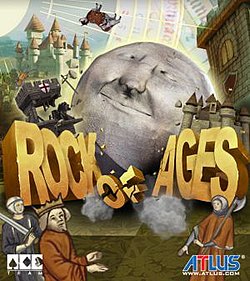
 Rock of Ages on PS3
 Abyss Odyssey on PS4










 Another SquareThought Site