

 Nov 2014


If you have ever wanted to be the person at the party who casually whips out a real guitar and makes people go quiet for the right reasons, Rocksmith 2014 on PS4 is about as close as a video game will get you to instant credibility. Unlike the plastic controller era where you faked solos with a toy pick and questionable rhythm, this game actually asks for the real deal. Plug an electric or bass guitar into your console using the USB adapter the game prefers and Rocksmith listens to what you play, adapts to your skill, and then lovingly judges your timing. It manages to be both a ruthless coach and a very patient friend who will not let you off the hook for sloppy bends.
Rocksmith 2014 trades spectacle for substance. Its core concept is gloriously simple: connect a real instrument and play along to charted note tracks while the game does real-time note detection. The Real Tone USB cable is the recommended way to go, and in practice that plug-and-play setup makes firing up a session as painless as possible. In late updates the game added Microphone Mode so acoustic guitars and alternative inputs can be used, although that mode sacrifices the authentic plugged-in tones and some nuance of note detection. One of the things that separates Rocksmith from karaoke-style rhythm games is its split personality as both game and tutor. The title gives you three distinct development paths for lead, rhythm, and bass, so you can focus on the thing you actually want to sound like. The adaptive difficulty system is clever: instead of forcing you to start at the lowest rung and grind up, you can set a starting difficulty and the game will dynamically tweak the chart to match what you can play. This means beginners can get early wins on simpler parts while more experienced players still get a workout. If teaching is Rocksmith's mission, it goes to school in style. The package includes more than 85 lessons covering techniques such as bends, slides, hammer-ons and pull-offs, accents, and more. A finger positioning tool demystifies fretboard logistics in a friendly, non-smug way. The Master Mode nudges you toward memory-playing by slowly removing visual cues so you actually learn the song instead of just playing follow-the-dots. Missions and stat tracking give you specific, bite-sized goals to work on, which is great for motivation and for avoiding the classic guitar-player trap of flailing at everything without improving. For people who get bored doing the same things over and over, Rocksmith also packs Session Mode where you can jam with in-game musicians and Guitarcade minigames that sneak in technique practice behind the costume of playful challenges. These minigames are short, oddly addictive, and perfect for warming up or torturing a fingertip that thought it could handle a new riff without consequences. The soundtrack that ships with the disc is an eclectic mix of 66 songs across genres and eras, from classic rock staples to modern alt hits. Beyond that, the game supported a massive DLC ecosystem for years, with over a thousand tracks available at its peak and a staggering weekly DLC schedule that lasted until early 2020. The import tool also allows many songs from the original Rocksmith to be brought forward, though licensing quirks mean a few tracks did not make the trip. Be warned that licensing is the one thing even the best games cannot control; the title was pulled from digital storefronts in 2023 when music licenses expired, although it received a remastered relist on PC later on. On PS4 you will likely rely on whatever retail disc or existing purchases you have access to. Practical caveats: Microphone Mode is a nice bridge for people without the official cable, but it disables the authentic amp tones and limits some of the nuanced sound processing. Also, the DLC machine ran for years and then stopped in 2020, so the long tail of new content ended. If you want every single song ever released as DLC, timing and storefront availability can be a drama of its own.
Graphically, Rocksmith 2014 is not out to melt your eyes; its visuals are functional, clean, and designed around clarity rather than spectacle. The note highway is crisp and readable, which is exactly what you want when your brain is trying to do three things at once: read tabs, keep time, and not panic. Menus are sensible and improved with the Remastered update, which added nicer navigation and more robust practice tools. The game scores extra points for accessibility. Colorblind modes alter hues so the critical gameplay elements remain distinguishable, which is a thoughtful inclusion that too many games skip. The Remastered update also added stat tracking and a customizable learning curve, tidy quality-of-life improvements that show the developers were listening to the community. When you do play songs, the in-game band and backing tracks sound solid and supportive, though the PS4 version does not claim to be a new-gen visual showcase. It never needs to be; when the aim is learning music, legibility beats glossy shaders every time.
Rocksmith 2014 on PS4 is one of those rare music games that actually teaches you the instrument you are holding instead of letting you shamelessly pretend. It is part game, part tutor, and part relentless accountability partner. New players will appreciate the lessons, missions, and adaptive difficulty, while more practiced players will value the three-path progression and ability to isolate lead, rhythm, or bass. The massive DLC library made it a living songbook for years, even if the DLC era has wound down and licensing hiccups have made storefront availability a moving target. If you are serious about learning guitar and prefer doing it with a bit of game-like structure and encouragement, Rocksmith 2014 is an excellent pick. If you mainly want to play pure, unprocessed guitar tones without cables, keep in mind that microphone-based input is a workaround with trade-offs. On PS4 the game landed as a mature, well-polished experience and still stands as one of the best real-instrument music games around. Score it like a solo that lands clean and gets the crowd cheering: 8.5 out of 10.
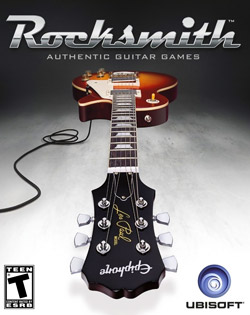 Rocksmith 2014 on PS3
 PES 2014: Pro Evolution Soccer on PS3
 Coloball 2002 on PS2
 Game Dev Story on PS4
 Press Your Luck on PS3
 Mom Hid My Game! on Switch
 XDefiant on Xbox Series X/S










 Another SquareThought Site