

 Dec 2016
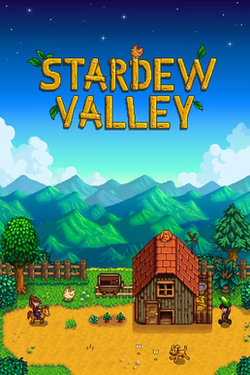

Stardew Valley is the video game equivalent of quitting your job, moving to the countryside, and discovering that nurturing a crop of parsnips will probably be less emotionally complicated than most of modern life. Created almost single-handedly by Eric "ConcernedApe" Barone, it arrived on PS4 in December 2016 after winning hearts (and an alarming number of Steam sales) on PC. The premise is elegantly modest: you inherit a run-down farm from your grandfather and are given permission by the universe to do what humans have always done in pixel form - chop wood, hoe soil, and slowly become emotionally attached to an animal that will only reward you with eggs. The game is open-ended rather than goal-obsessed, which means it is perfectly fine if your entire playthrough consists of growing high-value strawberries and ignoring the needs of Pelican Town. That is a design choice, not a crime (unless you owe rent to Joja Corporation, in which case the town hall may have some words). Stardew Valley is inspired by Harvest Moon and borrows its cozy rhythms, but it dresses those rhythms in so much content and personality that it rarely feels like a nostalgia cover band. It also happens to be the kind of game where the soundtrack will quietly make you cry into a stack of fertilizer while you plan the perfect irrigation layout.
If you map out Stardew Valley's systems, it looks suspiciously like a life plan you could absolutely fail at while still getting a pat on the back. The core loop revolves around farming: till a plot, plant seasonal seeds, water them daily, harvest when mature, and sell or process for profit. Seasons matter. Crops live by the calendar, which means your meticulous charting of summer squash will be frowned upon by winter. Each in-game season lasts 28 days, which feels like both a generous sandbox and a slightly judgmental calendar reminder. Outside the soil, the game quietly hands you five different career paths to dabble in: farming, foraging, fishing, mining, and combat. Foraging rewards the patient scavenger; fishing is an exercise in zen and thumb dexterity; mining introduces an action-RPG vibe as you swing pickaxes, battle monsters, and extract ores to upgrade tools. Combat is competent but rarely the main event - unless you find joy in karate-chopping slimes at three in the morning. All of these skill trees improve through use, which is a polite way of saying if you do one thing a lot the game will stop judging you for doing it and will start handing out bonuses. A surprisingly large portion of Stardew's heart lives in Pelican Town. Relationships with NPCs are more than cosmetic; gifting and conversation slowly reveal personalities, backstories, and quests. You can marry one of twelve townsfolk regardless of your character's gender, and spouses help with chores in a way that pairs romantic realism with household efficiency. Children are possible too, but they are optionable - a good feature for people whose farming ambitions and parenting ambitions can't be scheduled in the same calendar slot. There are broader objectives: restore the Community Center by completing bundles of items, or take the corporate path and support JojaMart if moral complexity is your thing. Completing bundles unlocks new areas and activities, so the game gently nudges exploration rather than demanding obedience. Multiple farm types let you specialize from the outset (river farm for fish, wilderness for foraging, etc.), which is useful if you want to double down on a preferred hobby. Energy and time are the main constraints here. You begin each day with an energy bar that drains as you chop, hoe, and mine. Food restores energy and offers stat bonuses; cooking is intentionally not a get-rich-quick scheme but rather a mechanic that supports exploration and efficiency. The game resists the spreadsheet-maximization impulse by giving the pleasures of discovery and routine a higher currency than raw profit - though, with enough spreadsheeting, you can still become a very wealthy pixel farmer. Multiplayer was added later, allowing cooperative play both locally and online. The PS4 experience benefits from couch-friendly controls and the comforting knowledge that your partner can be the one who waters the crops while you go spelunking. Mods are not a PS4-friendly playground (they mostly live on PC), but the console version still carries the full weight of the game's updates and content expansions. Barone's choice to keep Stardew open-ended means there is no official 'end' pressing down on you. If you prefer existential closure, there are objectives and big rewards; if you prefer a comfortable loop of planting and polite socializing, the game happily obliges. Either way, the game manages to be both addictive and relaxing, which is a rare trick and a dangerous one if you have responsibilities in the real world.
Stardew Valley dresses its ambition in pixel art that looks like it was designed to be framed and yet still somehow handles a minute level of detail that surprises on repeat viewing. The top-down perspective is old-school but the animations are witty and surprisingly expressive: villagers blink, run errands, and have sufficiently characterful idle animations to make you feel slightly guilty when you ignore them. Barone created the art and music himself, and that unity of vision gives the game's aesthetic a focused charm - everything feels like it belongs to the same mildly eccentric, very wholesome universe. The soundtrack deserves a sentence that does not overpromise: it is quietly excellent. The title theme alone sets the mood for the entire game, and tracks change with the seasons and moods, nudging you toward nostalgia without making you feel manipulated. The sound design and music integrate with the game's atmosphere so thoroughly that playing Stardew on PS4 with a decent headset is borderline therapeutic. From a technical perspective, the game was originally built in C# and later moved to MonoGame to futureproof it. On PS4, performance is stable; this is not a graphics card stress test, it's a cozy harborside retreat. The art isn't trying to impress, and that's the point - the visuals are functional, rich in personality, and mercifully free of photorealistic anxiety.
Stardew Valley on PS4 is the consoling friend you didn't know you needed and the addictive hobby you can justify as 'research' when questioned by roommates. It took a single developer years of meticulous, mildly obsessive work to craft a deceptively simple game that folds together farming, relationships, light combat, and arcade-adjacent chores into something that feels like a full life in a compact package. The PS4 port gives you the same generous content as other platforms: community bundles, farm types, marriage options, multiplayer, and many post-release updates that kept growing the game long after launch. If you want a strict, timer-obsessed simulation, look elsewhere. If you want a game that rewards routine, curiosity, and a willingness to name animals things like 'Mr. Peepers', Stardew Valley will charm, absorb, and occasionally humble you with a fish that refuses to be caught. It's cozy, occasionally profound, and commercially successful enough to have sold millions of copies and inspired a small cultural phenomenon. For a PS4 purchase, it is one of the better decisions you can make between buying something flashy and buying something that will still be quietly glorious three months from now - at which point you will wonder where all your free time went. The score: 9/10 - high marks for content, warmth, and a soundtrack that will ruin you for lesser pixelated pastures.
 Roots of Pacha on PS4
 Disney Dreamlight Valley on Xbox Series X/S
 DX Jinsei Game V on PlayStation
 Fantasy Life i: The Girl Who Steals Time – Nintendo Switch 2 Edition on Switch 2
 DX Jinsei Game IV on PlayStation
 Jinsei Game DS on DS










 Another SquareThought Site