

 Dec 2016
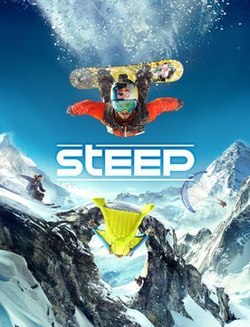

Steep arrives like a gust of Alpine air: wide, cold, and likely to make you squint dramatically into the distance. Presented as an open-world extreme sports playground centered on Mont Blanc, the game asks you to inhabit a blank-slate protagonist and live out a series of dramatic yet oddly philosophical arcs. If videogame characters who grow, struggle, and sometimes take fatal tumbles into snow could enroll in drama school, Steep would be their method-acting instructor. At first glance the narrative seems to be a minimalist indie play: no scripted cutscenes, no voiced mentors, just a player character and the mountain. Yet underneath the snowpack there are distinct character threads - the Rookie who learns to fly, the Freerider who refuses ropes, the Olympian who chases medals, and the World as Antagonist and Ally. This review treats those threads like soap operas happening on skis and wingsuits, with the usual Ubisoft production values and a stubborn insistence on always-online drama.
If the game has a protagonist it is definitely the player character, a hollowed-out hero whose personality is the sum of the gear choices, the tricks they attempt and the heights they are willing to flirt with. The Rookie arc begins with simple downhill skiing and snowboarding challenges. These are charming training montages - simple trick systems, fast retries and an inviting learning curve. The trick system rewards spins and grabs with satisfying points, and failing spectacularly is treated like physical comedy: your character measures g-Force and the mountain files a police report. Progression toward the title of Ultimate Legend is the backbone: conquer six play styles and you graduate to myth, a classical arc of apprenticeship to mastery cleverly disguised as a leaderboard obsession. The Freerider arc is where Steep's open-world design shines as character work. The Alps, Alaska, Japan and Korea are not mere backdrops but co-stars that shape the arc. Exploring via mountain view and drop zones turns discovery into plot beats; binoculars and hidden races function as narrative breadcrumbs. You carve a personal storyline by setting trails for others, sharing replays and trying to one-up friends in community challenges. Online multiplayer amplifies this: other players can appear on your slope, sometimes helping you, more often photobombing your heroic moment. That social improvisation writes many short, funny micro-arcs - the brief friendship formed on a ridgeline, the friendly collision that ends someone else's flawless run. The Aeronaut arc - wingsuit flying and paragliding - is the game's moodier, contemplative strand. Wingsuit runs feel like a romantic subplot: you, the wind, and the geometry of cliffs. DLC additions like rocket-powered wingsuits and basejumping kick the melodrama up to action-movie levels, turning quiet swoops into comic-book heroics. Paragliding, despite its poetic description, is the least popular chapter among critics and players: it often feels like mandatory homework on the road to completion, a filler episode required to unlock the season finale. The Competitive arc comes with races, medals and later expansions. Road to the Olympics attempts to graft a classic sports-campaign structure onto Steep's freeride identity, creating a forced rivalry between arc styles. The X Games and Winterfest expansions try to add stakes and villains - costumed adversaries and televised competitions - but sometimes these feel like guest stars who steal a few scenes and then leave. Mechanically, the game encourages replayability: instant retries, replay sharing, and the mountain mode that records your path are all narrative devices that let you rewrite mistakes and sculpt a cleaner character arc. The most stubborn antagonist in all these arcs is the game's always-online requirement, a plot device that sometimes prevents the solo, introspective moments the game tries to stage.
Visually, Steep is a star player. The mountains act like expressive scenery in a good film, changing mood with light and weather. Mont Blanc and later regions are rendered with an eye for scale and character: each slope has a personality. Critics praised the gorgeous, gargantuan environments and that praise is earned. Camera angles emulate GoPro footage, lending authenticity to the POV shots during frantic descents. Weather, day-night cycles and the rendering of snow all contribute to a sense that the world is alive and judging your fashion choices. Costume customization is surprisingly deep and feeds into character identity: your avatar's outfit is an external monologue about who they aspire to be. Ubisoft Annecy won awards for this presentation and you can feel why: the mountain often looks like a character in its own right, brooding or benevolent depending on how you approach it. Even the glitched or awkward animation moments feel like eccentricities of a living character rather than technical failures.
Reading Steep as a study of characters and arcs yields a game that is unexpectedly rich. The player character may start as a blank slate, but the mountain, the disciplines and the online community craft a credible journey from awkward rookie to headline-seeking legend. Steep's strengths are its environments, its visceral physics, and its social storytelling, where other players co-author many of the best scenes. Its weaknesses are narrative: the lack of focused single-player direction makes some arcs feel episodic rather than a cohesive drama, and mandatory online connectivity is an annoying plot twist that can cut a session short. DLCs attempt to add new acts - the Olympics, the X Games, rocket wings - with varying success: some episodes feel like genuine growth, others like cameos. For players who want a personal story they can write themselves, who enjoy experimenting and broadcasting their best fails and best landings, Steep is a convincing protagonist-builder worth the climb. For those who prefer neatly tied-up arcs and emotional payoffs served with cutscenes and a guiding hand, the mountain's indifferent vastness will feel hollow. Ultimately, Steep deserves a solid recommendation for its ambition and atmosphere; the score reflects a game that is gorgeous, occasionally frustrating, and frequently hilarious when your character spectacularly reminds you who is boss. Watch your speed, choose your arc and try not to become a cautionary tale for future wingsuit trainees.
 One Step From Eden on Switch
 SimAnimals Africa on DS
 Accolade Sports Collection on Xbox Series X/S
 Deca Sports DS on DS
 Alan Hansen's Sports Challenge on PS2
 EA Sports MMA on PS3
 Riders Republic on PS5
 Riders Republic on PS4










 Another SquareThought Site