

 Jun 2017
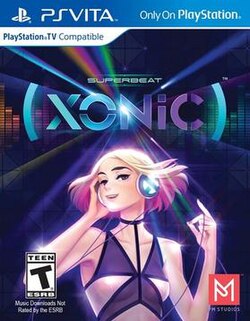

Superbeat: Xonic arrives on the PlayStation 4 bearing a pedigree rather than a pedigree dog: Nurijoy, a studio made up of veterans from Pentavision, has crafted a rhythm title that feels like a direct descendent of the old-school DJMax lineage while trying to sit comfortably on a modern console. Released in 2017 as an enhanced port of a 2015 Vita original (and a refined iteration of the arcade Beatcraft Cyclon), Xonic is a disciplined, unapologetic riff on the fundamentals of music games. It does not try to disguise its intentions with sprawling narratives or curious mini-games. Instead it offers a strict, nightclub-lit curriculum in timing, repetition and groove. Those hoping for revolution will find modest refinement; those who want a tightly tuned rhythm engine and a sizeable dose of electronic, RnB and metal-influenced tracks will find themselves increasingly invested. The PS4 version pushes the game's visuals onto a bigger canvas, but the heart of Xonic is the music and the muscle memory it demands. Think of it as a trained piano teacher with a neon tie: stern, fair, and quietly proud when you hit a streak.
The core of Superbeat: Xonic is deliberately simple and therefore ruthlessly demanding. Each play session consists of selecting a mode-4 TRAX, 6 TRAX, or 6 TRAX FX-and then playing through three tracks in succession. The modes indicate note density and pattern complexity; 4 TRAX is the approachable doorway, 6 TRAX is the steady ladder, and 6 TRAX FX is the room at the top where the choreography gets fussy and your thumbs start to complain. On the Vita the inputs were divided between face buttons and the touchscreen. On PlayStation 4 the inputs are mapped to the DualShock's face buttons and shoulder inputs, and the transition is straightforward: the timing windows, note types and flow are faithfully preserved. Notes stream across a clean, informative HUD that keeps a laser focus on timing. There is no pretense of a story-mode affecting core mechanics; instead World Tour serves as the progression structure. You unlock missions and venues as you level up, and each mission forces you to accomplish objectives-hit a song with a high accuracy, maintain a long combo, or clear a track at a higher difficulty. The missions are staged across fourteen nightclubs from around the globe, which is a neat conceit if you enjoy virtual itineraries that amount to different wallpaper and a steadily escalating setlist. Where Xonic earns its salt is its tracklist. More than fifty compositions span soulful house, RnB, indie pop, progressive metal, big beat and other electronic subgenres. The roster includes original work from names like 3rd Coast, ND Lee and Tsukasa, producers who write in a way that suits not only listening but the choreography of a rhythm game: peaks, drops and consistent beats that translate into satisfying note chains. Each song is three minutes or so of concentrated design, and the three-track sets create a small arc of energy that keeps you warmed up without exhausting attention. Scoring is conventional but effective: accuracy on each tap determines your grade at the end of the set, and local scores can be uploaded to a global leaderboard when online. This gives Xonic a competitive leash; the leaderboards are not as social as a modern live multiplayer suite, but for score chasers they provide motivation to refine specific charts. The single-player focus suits the game's precise, almost laboratory approach to rhythm: practice, parse a pattern, refine muscle memory, repeat. It's addictive in the same way a well-tuned arcade cabinet is addictive-short runs, immediate feedback, and the nagging knowledge that one replay could shave a few points off your grade. The engine beneath Xonic is Unity, which is used here as a reliable stage rather than a showpiece. The interface is brisk and responsive, and the game supports PlayStation TV. There are occasional frustrations: the lack of deeper meta modes (no real online tournament structure, little in the way of unlockable cosmetic fluff) and the mechanical sameness after long sessions. That sameness is partly the point; this is a music game for people who care about charts and timing more than narrative variety. If you want a 40-hour campaign with plot twists, look elsewhere. If you want a concentrated rhythm workout with a generous and varied song list, this will do business.
Graphically, Superbeat: Xonic is a neon-lit postcard from the nightclub era. The PS4 version ups the resolution and gives the HUD a crisper edge compared to the original Vita release, but the game's visual ambitions were never to push photorealism. Instead it presents bold, high-contrast backdrops-club interiors, minimal animated flourishes and a HUD designed to minimize distraction. This is an interface-first aesthetic: readability and clarity trump eye candy. The art direction leans into vibrant colors and stylized stage designs that match the music's mood. When a progressive metal track is on, expect darker tones and more aggressive iconography; a soulful house cut brings warmer palettes. It's modest, functional and occasionally stylish in a way that complements the audio focus. For a rhythm game the visual design is more than adequate: the notes are visible, the timing cues are clean, and the backgrounds add atmosphere without obscuring gameplay. Unity provides stable performance on PS4, and the experience feels as snappy and immediate as the DualShock's buttons demand.
Superbeat: Xonic is not a revolution; it is an heir. The pedigree of DJMax and the DNA of Beatcraft Cyclon are clear in every beat and chart. That lineage is comfortable here: Nurijoy has produced a serviceable, well-balanced rhythm game that rewards perseverance, timing and a taste for electronic and genre-crossing music. For those who loved DJMax or who live for leaderboard challenges, Xonic on PS4 is a tidy package-polished, punchy and built for repeat plays. The game's shortcomings are honest rather than fatal. It offers no grand multiplayer ambitions, and after dozens of runs the mission-and-club structure shows its limits. Some players might wish for a more elaborate progression system or additional social hooks. Yet its strengths-tight input responsiveness, a diverse and well-composed tracklist, and clear, unfussy presentation-carry it through. Critics and aggregators agreed: the reception was generally favorable, and that feels about right. If you grew up reading printed gaming magazines, nodding at scores, and rubbing the edge of a page where a preview once promised fire, Superbeat: Xonic will feel familiar in the best way. It's a focused, old-school rhythm title translated into the modern era. Buy it if you crave well-mapped charts, a broad mix of songs, and a rhythm engine that respects you for learning its pace. Leave it on the shelf if what you want is story, sprawling online modes or endless unlock trees. For the rhythm faithful, Xonic is a confident eight out of ten.
 Pop'n Music 9 on PS2
 Pop'n Music 12 Iroha on PS2
 Touhou Spell Bubble on Switch
 Pop'n Music 11 on PS2










 Another SquareThought Site