

 Feb 2017
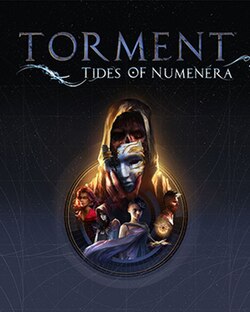

Torment: Tides of Numenera arrives on PS4 as a literary-ish, sometimes obtuse love letter to the kind of RPGs that prefer long conversations to flashy combos. It's a spiritual successor to Planescape: Torment, and wears that lineage like a slightly patched cloak - familiar to veterans, weirdly alluring to newcomers. The Last Castoff, our protagonist, is less an avatar and more a walking set of philosophical questions with inventory slots. Their arc - unmoored memory, hunted existence, a search for meaning against the ticking clock of the Sorrow - is the game's engine. The Ninth World itself, a far-future playground of decayed technology that reads like medieval archaeology, supplies the bones. What inXile built on Unity is less about how you kill things and more about what happens to you and to the people you meet on the way. If you like your RPGs as much about moral calculus and identity as about loot, this one is a delicious, occasionally stubborn, feast.
If you come for the combat, Torment hands you a polite shrug and slides a tome of dialogue across the table instead. The rules are adapted from Monte Cook's Numenera tabletop system and the game gives you three base mechanical archetypes - Glaive (warrior), Nano (wizard), and Jack (rogue) - but the emotional heft comes from the characters and how your choices alter their arcs. The Last Castoff starts as a blank slate, which is both freeing and terrifying: they have no past bookmarks, only the vaguest imprint of someone else's pattern. That blankness is the game's primary story trick - you are constantly filling the cracks with decisions that ripple out as Tides, the system that replaces old-school alignment. Tides are not 'good' or 'evil' in deodorized labels; they are emotional signatures that others sense when you act. Because of that, relationships in Torment feel less like meters to be filled and more like tapestries that are rewoven when you tug a thread. Your Legacy - the composite of the Tides you've used - evolves and changes how relics behave toward you and what abilities you can unlock. This mechanical intimacy mirrors the narrative intimacy: your choices define you in ways that matter for how companions respond and how the world remembers you. Speaking of companions, the party is a gallery of fractured people who treat the Last Castoff like an accidental magnet for damaged souls. Aligern is a veteran with his own baggage and skills tuned for practical solutions; Callistege is a thinker whose arc involves reconciling wit with consequence; Erritis brings an unsettling edge and moral ambiguity that forces the player to ask whether 'practical' can be cruel and still be right. Matkina is one of the most narratively satisfying companions because her story actually shifts when the Last uses a Mere - an artifact that lets you inhabit other castoffs and stitch time and memory. Oom, Tybir and Rhin round out the group with distinct tones: the small, earnest or odd characters who keep the party grounded, the pragmatic survivalist, and the wildcard respectively. Each companion rarely reads like filler; they are scaffolds for the central question of the game: What does one life matter? The Changing God and the Sorrow form the bookends of the Last Castoff's existential crisis. The Changing God represents hubris and the refusal to accept an end, rewriting life through relics to become effectively immortal; the Sorrow is the cosmic, personal consequence of that refusal, hunting the castoffs that result. The Last Castoff's arc is a slow unspooling of agency: at first they seek to escape annihilation or simply survive, then to locate their maker, and finally to understand what they themselves have been doing to the world as an after-effect of someone else's immortality. Sanctuary and the resonance chamber are narrative set pieces where choices feel crucial: do you destroy legacies to stop the Sorrow and risk erasing lived lives, or do you sacrifice the possible safety of the many for the integrity of the self? The Meres are clever narrative devices: they let the Last inhabit and affect other castoffs' lives, changing past wounds and testing the ethics of meddling. Matkina's healing when visited via a Mere is one of the most thoughtful uses of a mechanic-as-narrative tool in modern RPGs; it forces you to live with how your interventions alter the arcs of others. This is where character and systems fuse - the game doesn't let you treat people like variables on a spreadsheet without making you feel it. Dialog trees are dense and rewarding for players who like to play with language. The writing, overseen by Colin McComb and awarded nods for its setting, often rewards patience. Parties will argue, romance, betray and comfort; rarely is any interaction purely cosmetic. The story branches wildly based on personality, choices, and which Tides you cultivate. Combat exists and has tactical elements, but it's often serviceable rather than cinematic; critics cited it as clunky and less inspired than the rest of the package. In practice that means your battles might feel like chores between conversations, which is fine if you enjoy the conversations more than the grind. The game's Kickstarter roots are visible in its ambition: it doesn't pander to the lowest common denominator. It instead gives you philosophical puzzles, a setting that earned Game Informer's 'Best Setting' in 2017, and companions who behave like people with histories rather than quest markers with opinions. If you're invested in characters and their arcs - if you want to watch a character's Legacy be shaped by your decisions and then watch how the world changes its face in response - then Torment rewards you with scenes that linger.
On PS4, the game presents itself in a pre-rendered 2.5D isometric style built on Unity. It's not trying to be a photorealistic showcase; instead it looks like a painterly diorama where every ruined machine and weird organism gets a sculpted moment to stare at you. Areas such as the Bloom and Sagus Cliffs show off the game's palette of strange biomes and broken tech-ruins, and character portraits and set pieces carry most of the emotional load visually. The aesthetic supports the storytelling: it's evocative rather than flashy. Performance on PS4 is generally solid, though the port doesn't add anything groundbreaking to the visuals compared to PCs; the charm is in art direction, not polygon count.
Torment: Tides of Numenera for PS4 is a game that insists you care about people like they're complicated roommates you keep arguing with until you both learn something. It won't win you over with action sequences, but it will hook you with questions about identity, memory, and consequence. The Last Castoff's story - from a hollowed shell to an agent who must weigh the ethics of existence against survival - is one of the more thoughtful arcs in recent RPGs, and the companions complement that journey rather than clutter it. The Tides system smartly ties mechanics to narrative identity, and Meres let you play with the moral implications of changing others' fates. If you prize writing, setting, and character development, this is a must-experience on PS4. If you demand polished combat and instant gratification, this might feel slow and occasionally clunky. For those who enjoy being stretched intellectually by their entertainment, Torment offers a strange, rewarding pilgrimage into what it means to leave a mark - and whether that mark is worth the cost.
 Far: Changing Tides on Switch
 Rune Factory: Tides of Destiny on PS3
 Combat Elite: WWII Paratroopers on PS2
 The Banner Saga 2 on PS4
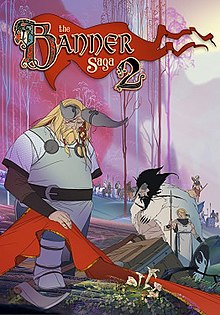 Arcania: The Complete Tale on PS3
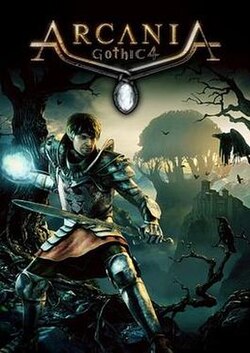 Gnosia on Xbox Series X/S
 The Bard's Tale IV: Director's Cut on PS4
 Hunted: The Demon's Forge on PS3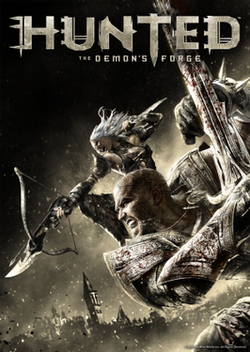










 Another SquareThought Site